
Movable and Demountable Toilet
A movable and demountable toilet, also known as a mobile toilet, is a facility that can be moved as a whole to provide public toilet services.
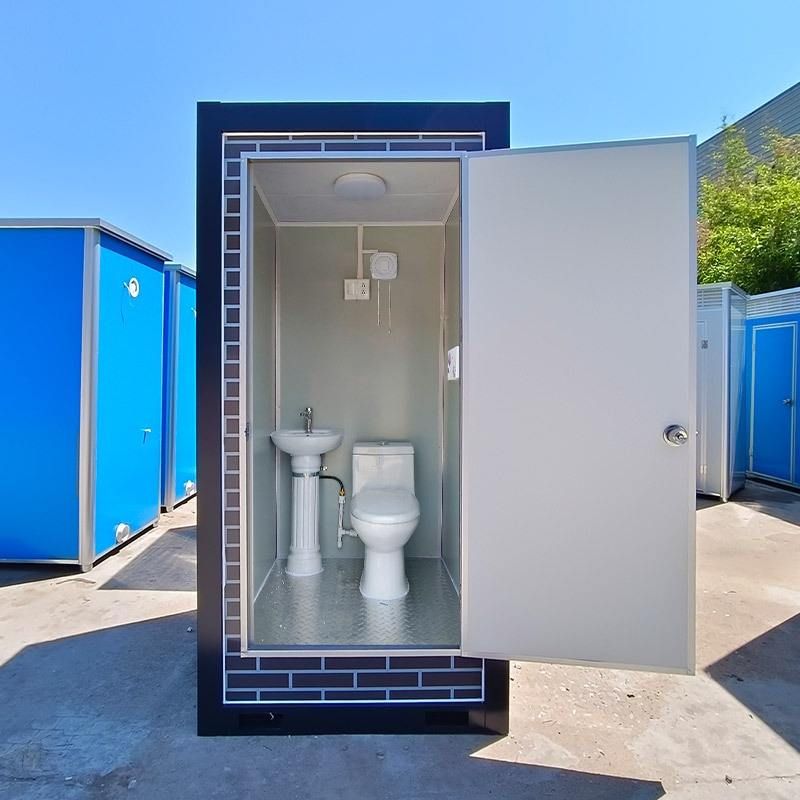
I. Application Scenarios Mobile toilets have a wide range of application scenarios. On construction sites, they can solve the toilet problems of construction workers and ensure the normal progress of the construction process. For large-scale outdoor events such as night markets and exhibitions, where there is a large influx of people and a concentrated demand for toilets, mobile toilets can be flexibly arranged to meet the toilet needs of people during the events. In tourist attractions, stations, docks, villa areas, newly built residential areas, squares, and densely populated public places and bustling commercial streets, mobile toilets are also often installed to cope with changes in pedestrian flow at different times and scales and improve public service levels.
II. Composition Structure A mobile toilet generally consists of multiple parts. The fecal sewage storage tank (or fecal sewage treatment device) is used to collect and treat fecal sewage. The floor provides a stable standing and activity space for users. Sanitary ware such as toilets is the core equipment for using the toilet. The walls serve to separate and protect privacy. The washing equipment, including faucets and washbasins, facilitates user cleaning. The water tank provides water for flushing and other purposes. The roof can shelter from wind and rain. The mobile device enables the entire toilet to be moved.
III. Development History and Materials Initially, mobile toilets were made of materials such as wood, with simple structures and functions, and were prone to absorbing odors. With technological development, materials such as fiberglass-reinforced plastic and polyethylene have gradually been adopted. These materials offer better durability, airtightness, and odor resistance.
IV. Classification Methods According to the structural form, they can be divided into single-structure mobile toilets and composite-structure mobile toilets. According to the moving method, they can be divided into lifting and handling mobile toilets and powered and towed mobile toilets. According to the sewage treatment method, they can be divided into water-flushing and waterless-flushing suction-type mobile toilets, circulating water-flushing mobile toilets, and dry-packing mobile toilets.
V. Main Features Mobile toilets have the advantages of being movable, combinable, and easy to transport. They can be conveniently transported to any place where toilets need to be installed and can be used repeatedly. They effectively solve the problems of high construction costs and difficult site selection for fixed toilets.



