
Monkey Hair Container House
The term 'Monkey Hair Container House' is not a standard product name. It is speculated to refer to a unique type of container house that uses containers as carriers and incorporates monkey hair cultural elements or handicraft experience functions, essentially representing a customized application of container houses. The following provides an overview of the classification, application scenarios, and customization directions of container houses:
Common Types of Container Houses
Container houses can be classified into three categories based on structural design and functional orientation:
The first type is standard packing-box container houses, which use hot-dip galvanized cold-formed steel frames paired with fire-resistant polyurethane sandwich panels, offering thermal insulation and fire resistance. These houses can be used independently or stacked in multiple layers, commonly found in construction site dormitories, office areas, and temporary meeting rooms. For example, a 20-foot modular container house produced by a company in Suzhou comes with an electrical system and has a minimum order quantity of 18 square meters.
The second type is light steel keel houses, which utilize cold-formed thin-walled light steel keels for load-bearing, with walls filled with insulation materials. The appearance and layout can be flexibly customized, making these houses more suitable for self-built homes, homestays, and scenic area support facilities. For instance, a 20-foot modern modular container house launched by a company in Shanghai is suitable for villa garden offices.
The third type is functional kiosks and support facilities, with sizes and layouts adjustable according to needs, commonly used in security kiosks, property management kiosks, and environmental protection public toilets.
Application Scenarios of Container Houses
The modular design of container houses enables rapid assembly and repeatable disassembly, making them suitable for a wide range of application scenarios:
- Temporary construction sector: Such as construction site dormitories, temporary offices, and emergency housing, where standardized production lines shorten construction periods and reduce on-site wet work. For example, a two-story container house produced by a company in Jiangxi is suitable for bedrooms or dormitories, with a minimum order quantity of 20 square meters.
- Commercial support sector: Pop-up shops, coffee shops, and food stalls often use 20-foot small mobile prefabricated container houses, such as the detachable houses produced by GD WinFair, with a minimum order quantity of 6 units.
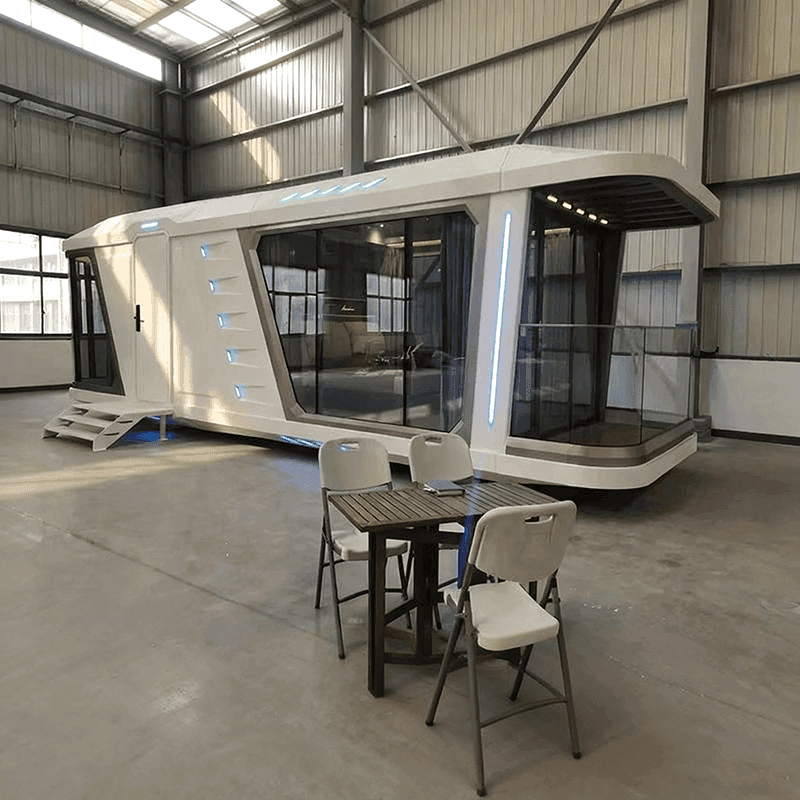
- Cultural tourism and homestay sector: Through personalized exterior customization and internal functional renovations, container houses can be adapted for vacation villas, campsite cabins, and other scenarios. For example, a space capsule house launched by a company in Hubei is suitable for hotels and camping, with a minimum order quantity of 22 square meters.
Customization Directions: Integration of Cultural Elements
To incorporate cultural elements such as 'monkey hair' into container houses, the following approaches can be taken:
- Internal functional design: Set up handicraft experience workshops or intangible cultural heritage display areas inside the container, such as the No. 1 container on Nanjing Jinyin Street, which attracts tourists to participate in handicraft experiences by displaying intangible cultural heritage monkey hair.
- Exterior decoration: Use imitation wood grain finishes, cultural theme coatings, and other methods to highlight uniqueness, such as the imitation wood grain container house produced by a company, which is equipped with steel ladders and balcony railings, combining aesthetics with practicality.
- Structural expansion: Create composite functional spaces through multi-layer stacking or combined assembly, such as the 40-foot expandable container house produced by a company in Tangshan, which comes with one bedroom and mobile house functions.



