
Modern Prefabricated Housing
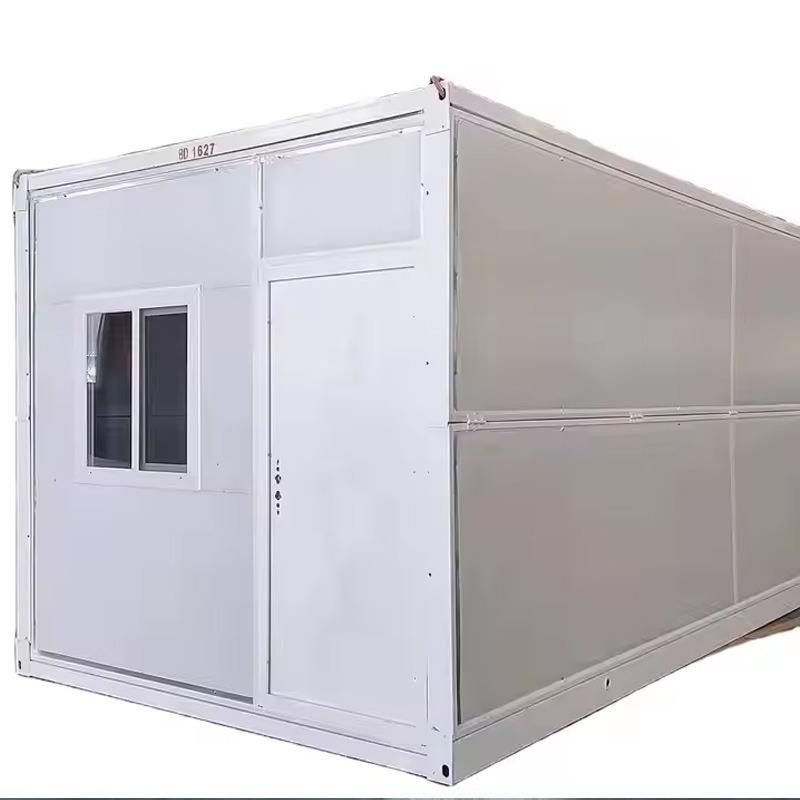
Modern prefabricated housing is a form of construction that involves the industrial production of building components and their assembly on-site. It is also known as prefabricated assembly-type construction or modular construction. Its core lies in breaking down the building into independent modules, which are manufactured in factories and then transported to the construction site for assembly. The specific characteristics are as follows:
Technical Types and Components
Modern prefabricated housing encompasses prefabricated concrete structures and steel structures. The components include prefabricated products such as beams, slabs, walls, and columns. The main types are panel-type prefabrication, box-type prefabrication, and frame-type prefabrication. Panel-type prefabrication uses prefabricated wall panels and floor slabs as core components, suitable for multi-story residential buildings. Box-type prefabrication combines prefabricated functional units (such as kitchens and bathrooms), increasing construction speed by 50%-70%, and is suitable for rapid construction needs. Frame-type prefabrication uses prefabricated beams and columns as supports, offering high flexibility and is suitable for public buildings.
Construction Process and Advantages
- Factory Prefabrication: The ceilings, walls, water and electricity pipelines, and other components of the house are all prefabricated on factory assembly lines, utilizing parallel operations and automated production lines. The construction period is shortened by more than 60% compared to traditional construction. For example, a public housing project in Shenzhen, Guangdong, was assembled from 6,028 concrete modules, reducing the completion and delivery time from 2.5-3 years to 1 year, and reducing on-site labor by about 50%.
- On-site Assembly: After the prefabricated modules are transported to the site, they are quickly assembled using high-precision connection technology. Each module has a detailed 'ID card' (such as project name, product model, production date) to ensure accuracy. Zhan He, the executive dean of the China Construction HaiLong Design Institute, pointed out that modular construction controls errors in millimeters, ensuring quality control.
- Environmental Protection and Efficiency: Factory production reduces dust, noise, and construction waste, and on-site cast-in-place connections further reduce disturbances to residents. Fujian Province has established industrial bases with policy support, achieving a reduction in construction waste of more than 70%.
Application Scenarios and Market
China's prefabricated concrete technology began in the 1950s and was initially used for factory and residential construction. It has regained popularity in the 21st century due to its production efficiency and environmental advantages. For example, Vanke Group has developed a prefabricated shear wall residential structural system, and the Nanjing Jindi Yufang project uses a prestressed prefabricated concrete assembled integral frame structural system. In overseas markets, Chinese-made prefabricated houses are in high demand. In the first four months of 2026, the Guangzhou Customs District exported mobile homes worth 1.4 billion yuan, a year-on-year increase of 38.1%; Shenzhen Port exported 1.68 billion yuan worth, a year-on-year increase of 19.6%. Their advantages lie in the lightweight nature of steel structures, which are suitable for ocean transportation and high-rise buildings, while concrete structures are closer to traditional living experiences.
Technical Challenges and Development
Modular construction places extremely high demands on industrial foundations, requiring support from technical systems, production systems, and industrial clusters. With the improvement of industrialization standards, digital precision, and automation efficiency, housing is shifting from 'on-site construction' to 'factory manufacturing', becoming an important trend in the global construction industry. According to market research agency predictions, the global modular construction market size will exceed 142.8 billion US dollars by 2030.



