
Modern High-End Prefabricated Houses
Modern high-end prefabricated houses are a new type of housing that utilizes modular construction methods as their core, combining factory prefabrication with on-site assembly to achieve efficient and high-precision construction. Their key features and advantages can be explored from the following aspects:
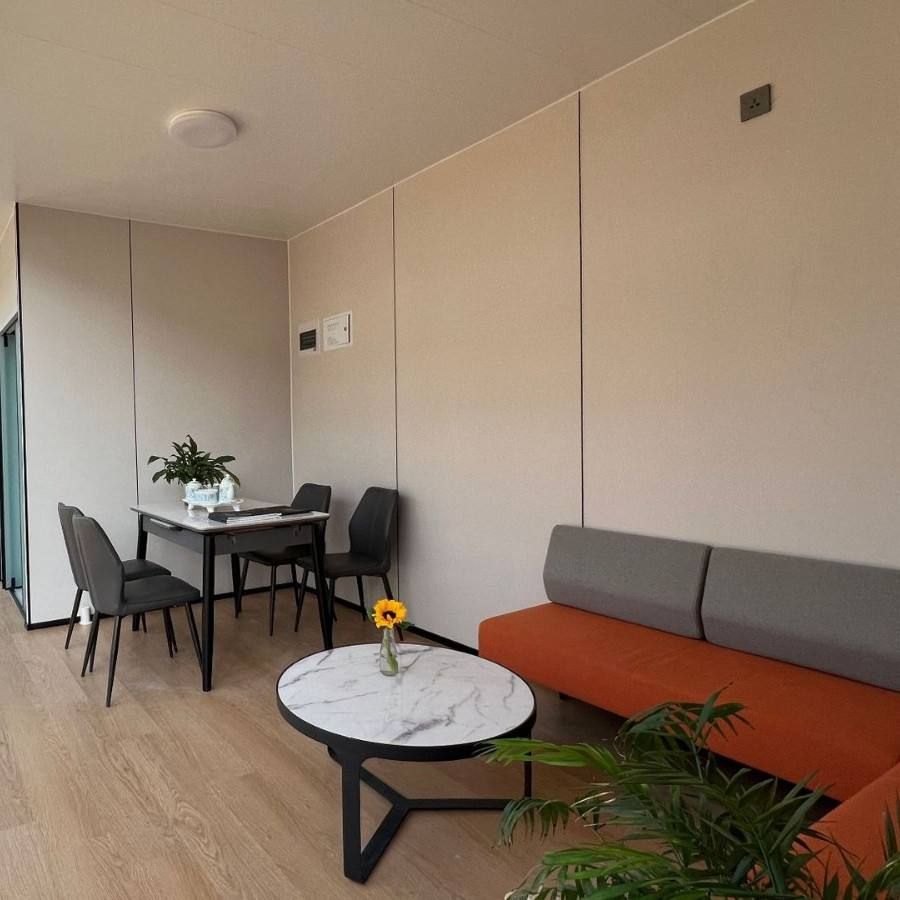
I. Modular Construction Model and Efficiency Advantages Modern high-end prefabricated houses adopt modular design, dividing the building into independent modules (such as bedrooms, living rooms, and bathrooms). These modules are prefabricated in the factory and then transported to the site for assembly. Taking high-end single-story villas as an example, the foundational structure, plumbing and electrical systems, and interior decoration are all completed in the factory. On-site, only the assembly of modules and connection of utilities are required, reducing the overall completion time to about one month, nearly half that of traditional construction. Inside the factory, parallel operations, automated vertical warehouses, and intelligent production lines enable simultaneous construction of ceilings, walls, waterproofing layers, and other processes, shortening the construction period by over 60% compared to traditional methods. This model not only enhances construction efficiency but also reduces the environmental impact of on-site construction.
II. High Precision and Quality Control Modular construction demands extremely high design precision, with the position of each steel bar precisely located in millimeters and strict error control to ensure accurate module assembly. Standardized production processes in the factory (such as automated cutting and welding) further minimize human errors, making key indicators like structural stability and waterproofing performance superior to those of traditional buildings. For example, the waterproofing layer in bathrooms is manufactured on the factory assembly line, avoiding potential leakage issues that may arise from on-site construction and significantly improving quality controllability.
III. Diverse Types and Customized Services The market offers a wide range of prefabricated house types, including anti-corrosion wooden houses, container house combination villas, assembled houses, and light steel villas, meeting the needs of various scenarios. Anti-corrosion wooden houses are suitable for eco-tourism areas, container house combination villas are ideal for temporary residences or commercial spaces, and light steel villas are characterized by strong earthquake resistance and short construction periods. Additionally, prefabricated houses support personalized customization, allowing adjustments to layout and decoration styles according to demand. Some products even have export capabilities, enabling cross-border shipping and expanding their application scope.
IV. Cost and Environmental Benefits Modular construction reduces material waste and on-site labor costs through factory-scale production, resulting in overall construction costs nearly half those of traditional buildings. Meanwhile, centralized disposal of construction waste in the factory and significant reductions in on-site noise and dust pollution align with green building principles. For example, light steel villas use recyclable steel, further enhancing resource utilization.



