
Model Mobile Toilet
A mobile toilet is a facility that can be moved as a whole and provides toilet services to the public, capable of flexibly meeting temporary or fixed needs in different scenarios.
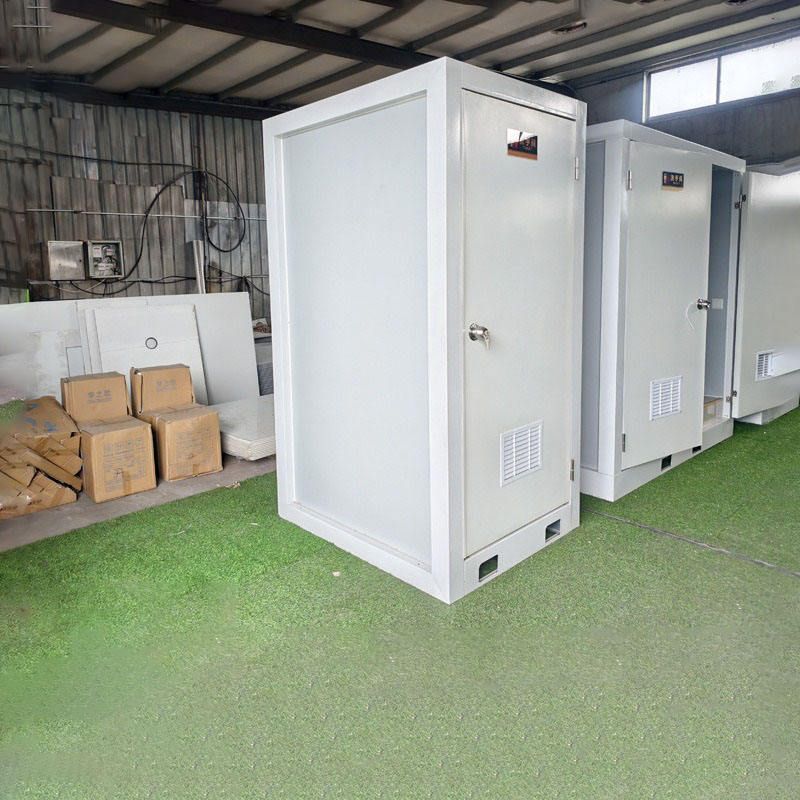
I. Basic Components A mobile toilet typically consists of core components such as a fecal sewage storage tank (or disposal device), flooring, sanitary ware, walls, washing equipment, a water tank, a roof, and a mobile device. Among them, the storage tank is used to collect excreta, the sanitary ware includes toilets or squat pans, the water tank provides flushing water, and the mobile device supports overall handling or hoisting. Some high-end models are also equipped with ventilation systems, lighting equipment, and disinfection devices to enhance the user experience.
II. Classification Methods
- By structural form: They are divided into single-unit structures (independent units) and composite structures (multi-unit combinations). The latter can meet greater pedestrian flow demands through splicing.
- By mobility method: They include hoisting and handling types (requiring hoisting equipment), powered towing types (can be towed by vehicles), and manual handling types (small and lightweight).
- By sewage treatment:
- Water-flushing type: Relies on water tank supply for flushing and requires regular cleaning of the sewage tank.
- Waterless suction type: Sucks up excreta through a vacuum pump and is suitable for water-scarce environments.
- Recirculating water-flushing type: Uses biodegradation or chemical treatment technology to purify sewage and achieve water resource recycling.
- Dry packing type: Uses degradable bags to collect excreta, requiring no water source and suitable for extreme environments.
III. Core Advantages The greatest features of mobile toilets are their mobility and flexibility. Their modular design allows for rapid deployment to scenic spots, construction sites, disaster areas, and other locations, and they can adjust the quantity or position according to pedestrian flow changes. For example, during the May Day holiday in 2026, the Jinci Scenic Spot in Shanxi increased the average daily reception capacity of its restrooms from 3,000 to 5,000 person-times by deploying mobile men's toilets converted from buses, effectively alleviating the pressure during peak tourist flows. In addition, their reusable nature reduces long-term construction costs and aligns with environmental protection concepts.
IV. Application Scenarios Mobile toilets are widely used in temporary events (such as music festivals and sports events), natural disaster relief, construction in remote areas, and capacity expansion of scenic spots during peak tourist seasons. With technological development, some models have integrated solar power supply and intelligent monitoring systems, further enhancing their applicability and management efficiency.



