
Mobile Waterless Toilet
A mobile waterless toilet is an environmentally friendly sanitation facility that can be used without the need for water, electricity, or sewage disposal. It collects feces through dry-packing technology and is suitable for both temporary and permanent settings, especially in areas with limited water and electricity resources.
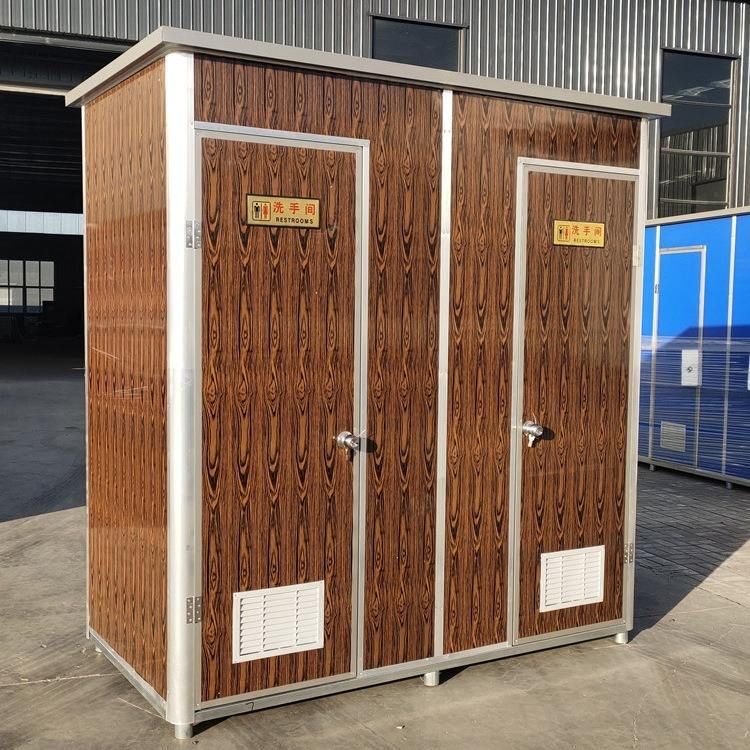
Core Functions and Technical Principles
The core design of a mobile waterless toilet is dry-packing technology, which combines a packing-type squat toilet with a feces storage tank. After use, feces are sealed in a biodegradable packing bag and stored in an independent tank. Regular cleaning maintains its usability. This process requires no flushing, eliminating the dependence on water sources and sewage pipelines that traditional toilets rely on. Some models are equipped with 220V voltage (for lighting or ventilation), but most basic models do not require electricity, further lowering the barrier to use.
Materials and Performance Characteristics
Its main structure typically uses corrosion-resistant materials, such as color-coated steel plates, metal embossed panels, or full 304 stainless steel, ensuring stable operation in extreme temperatures ranging from -35℃ to 100℃. The outer shell materials combine lightweight properties with high strength. For example, models made of color-coated steel plates can withstand long-term outdoor use, while those with metal embossed panels enhance weather resistance through surface texturing. In terms of specifications, sizes range from 110011002300mm to 1.51.82.3m, allowing for the selection of single or composite structures based on site requirements. The latter improves space utilization through modular assembly.
Application Scenarios and Mobility Methods
This facility is widely applicable in temporary or permanent settings, such as train stations, docks, tourist attractions, and large construction sites. Its advantages are particularly prominent in areas with difficult water and electricity supply or incomplete sewage systems, such as remote mountainous regions and post-disaster reconstruction areas. Mobility methods are flexible and diverse: hoisting-type models are transported as a whole using lifting equipment, suitable for long-term use at fixed locations; trailer-type models can be connected to vehicles for rapid relocation, meeting the needs of temporary events; portable-type models are adjusted using manual or small machinery, suitable for flexible deployment in small areas.
Customization and After-Sales Service
Some manufacturers support custom processing, allowing users to adjust dimensions, materials, or functional configurations (such as adding deodorization systems or solar power supplies) according to their needs. Pricing is influenced by order quantity, with unit prices around 1500 yuan for 1-49 sets and dropping to 1200 yuan for 50 or more sets. After-sales services include logistics delivery, installation guidance, and return/exchange negotiations. Some brands (such as Henan Hemai Industrial Co., Ltd.) have supplied a total of 6000 sets, demonstrating their ability to provide large-scale services.
Design Principles and Ecological Value
The design of mobile waterless toilets emphasizes lightweight durability, environmental protection, and efficient space utilization. Its waterless operation mode reduces sewage discharge and lowers environmental pollution; the use of biodegradable packing bags further reduces plastic waste. Additionally, its modular design facilitates quick assembly and disassembly, adapting to the dynamic needs of different scenarios and embodying the principles of resource conservation and sustainable development.



