
Mobile Toilet Without Sewerage System
A mobile toilet without a sewerage system, also known as a waterless ecological toilet, is an environmentally friendly toilet that can treat waste without traditional water flushing. It replaces the water-flushing function with physical, biological, or chemical technologies. In China, it is commonly referred to as an environmentally friendly toilet, ecological toilet, or mobile toilet, while its international generic name is a non-sewered sanitation system. It is standardized by GB/T18092-2000 'Waterless Sanitation Toilets'. Based on technological principles, waterless ecological toilets are mainly classified into the following types:
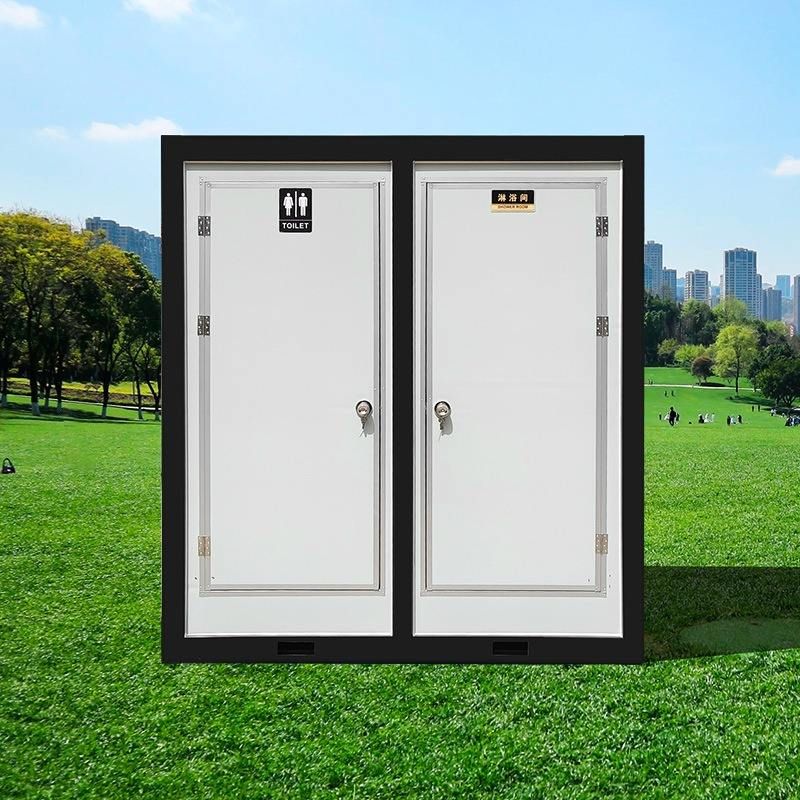
1. Waterless Flushing Types
- Waterless Packaging Type: It uses biodegradable film packaging bags, mechanical devices, and fecal storage buckets to automatically package and seal waste, preventing odor leakage without the need for a water source or plumbing. For example, Japan's 'Lappon Sunny Packaging Toilet' uses an AC power supply to automatically seal odor-proof bags, priced at approximately 121,000 yen (including tax).
- Waterless Biological Treatment for Fertilizer Production Type: It utilizes microbial fillers in biochemical reactors to degrade feces into humic organic fertilizer, while urine is treated and used as liquid fertilizer, achieving resource utilization.
- Waterless Flushable Type: It separates urine using a urine-feces separator, adds special agents to treat it into a light blue flushing liquid, and mixes feces with the flushing liquid to form an odorless pulp-like fluid, reducing odors and pollution.
2. Water-Saving Types
- Foam Sealing Type: It uses foam generated by foaming liquid instead of water for flushing, achieving a water-saving rate of over 90%, suitable for water-scarce areas.
- Vacuum Self-Priming Type: It uses air pressure differences to suck fecal sewage into storage devices, consuming only 0.5-1 liters of water per use, significantly reducing water consumption.
3. Recirculating Water Flushing Types
- Biological Treatment Type: It converts feces and urine into carbon dioxide and water through electrocatalytic reactions, with the clean water reused for toilet flushing or landscaping, relying on solar power for a closed-loop water cycle.
- Membrane Separation Type: It uses membrane technology to separate the supernatant from feces and urine, producing clean water for reuse, while fermenting feces to prepare organic fertilizer, enhancing resource utilization.
The core advantages of waterless ecological toilets include: no need for waste removal and transportation, with a degradation rate of 97%; complete water conservation without the need for water supply and drainage pipes; high automation for easy maintenance; no odors or risk of cross-infection; strong mobility suitable for any location; cost savings in construction investment and post-treatment expenses; non-polluting and easily utilizable feces; corrosion resistance and long lifespan. These features make them ideal choices for tourist attractions, temporary events, remote areas, and other scenarios.



