
Mobile Toilet with Wheels
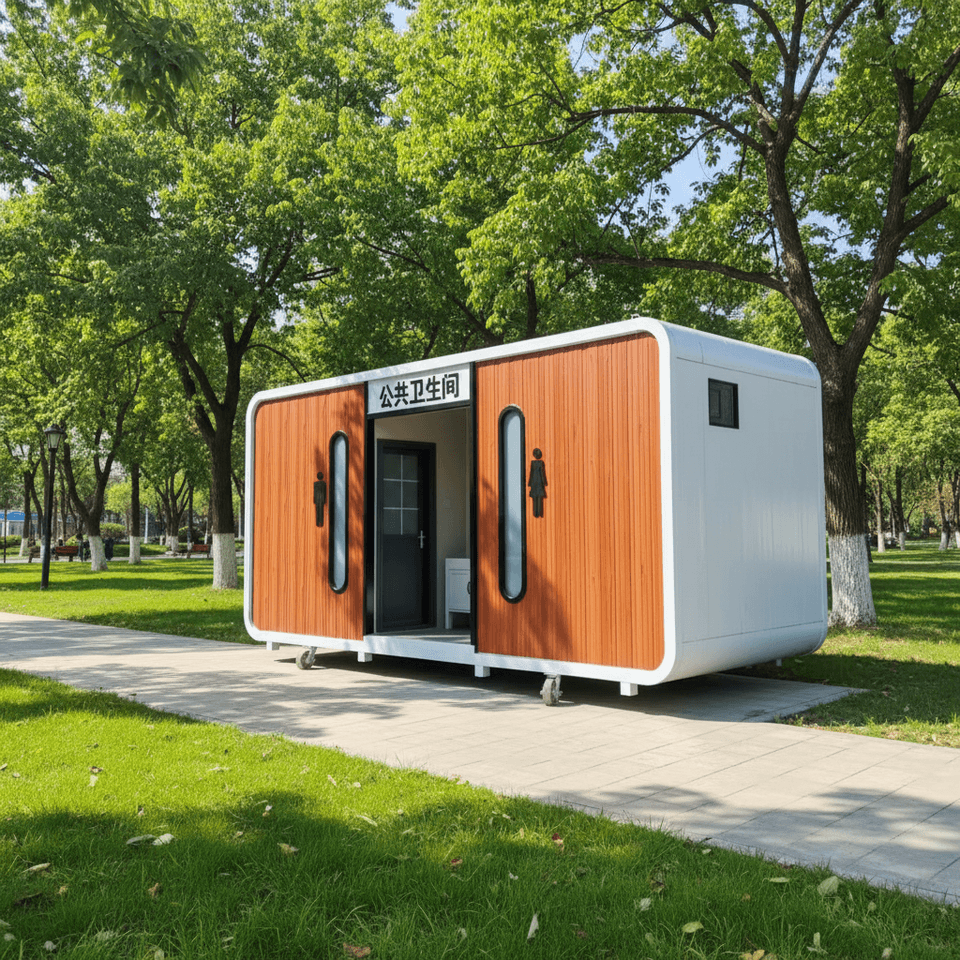
A mobile toilet with wheels is a sanitation facility that achieves flexible mobility through a wheeled chassis, suitable for temporary scenarios such as construction sites, outdoor events, and scenic spots, featuring convenient relocation and robust durability.
1. Design Features of the Wheeled Chassis
The wheeled chassis of mobile toilets typically employs heavy-duty caster wheels or fixed wheels, with wheel diameters ranging from 200 to 400 millimeters. The materials are primarily polyurethane or rubber, which combine shock absorption with high load-bearing capacity. A single wheel can support loads of 300 to 500 kilograms, ensuring stability during movement or use. For example, trailer-mounted mobile toilets are equipped with automobile tires, allowing for easy towing by a single person for short-distance relocation. Some high-end models also feature towing hooks, enabling mechanized towing via small forklifts, tractors, or pickup trucks, further enhancing efficiency.
2. Mobility Methods and Suitable Scenarios
The wheeled chassis supports manual or slight movement of mobile toilets on hardened surfaces, concrete floors, or flat grassy areas. Their flexibility makes them ideal for temporary scenarios:
- Construction sites: They can be repositioned according to construction progress, avoiding the costs associated with demolishing and rebuilding fixed toilets.
- Outdoor events: They can be quickly deployed in audience areas or athlete rest zones to meet peak demand.
- Scenic spots: Their layout can be dynamically adjusted based on tourist traffic, minimizing damage to the natural environment.
Additionally, trailer-mounted models, with their built-in tires, eliminate the need for additional foundation structures, further simplifying the deployment process.
3. Structural Advantages and Functional Expansions
The wheeled design of mobile toilets not only facilitates movement but also enhances practicality through modular construction. For instance, some models integrate the fecal storage tank, flushing system, and wheeled chassis into a single unit, simplifying maintenance and cleaning. High-end products are also equipped with brake devices to prevent accidental sliding during movement and anti-slip steps to enhance user safety. These design details ensure that, in addition to meeting basic sanitation needs, they also offer operational convenience and user comfort.
4. Materials and Durability
The material selection for the wheeled chassis directly impacts the equipment's lifespan. Polyurethane wheels are wear-resistant and corrosion-resistant, suitable for long-term outdoor use. Rubber wheels, with their elastic design, reduce vibrations and protect internal structures. Combined with a high-strength metal frame, mobile toilets can withstand frequent movement and harsh environmental conditions, typically requiring minimal maintenance after a single deployment, thereby reducing long-term usage costs.



