
Mobile Toilet with Switch
Mobile toilets indeed come equipped with switches, primarily used to control basic functions such as lighting, water, and electricity. Here is a detailed explanation:
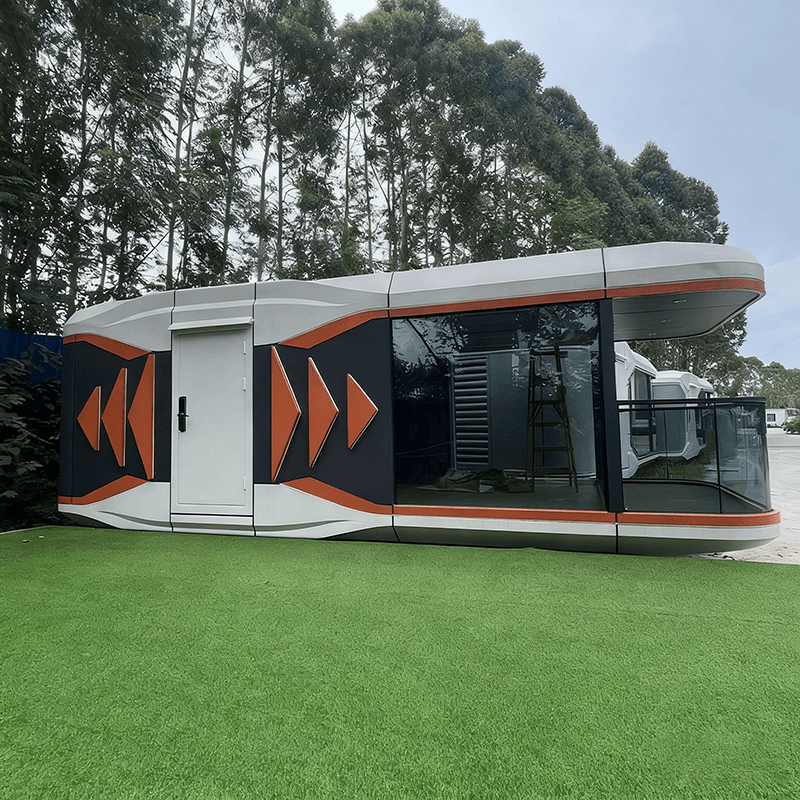
The switch configuration of mobile toilets is closely related to their functional requirements. Taking Quanzhou's environmentally friendly mobile public toilets as an example, their product features explicitly mention the inclusion of supporting facilities such as "switches, LED lights, barriers gates, and sinks". Among these, the switch serves as the core control component, directly linked to the operation of the lighting system. For instance, the switch for LED lights can independently control the internal lighting of the toilet, ensuring convenience during nighttime or when light is insufficient; some mobile toilets are also equipped with exhaust fans or ventilation systems, whose switches can regulate air circulation to maintain a fresh internal environment.
From the perspective of basic configuration, the interior of a mobile toilet typically includes facilities such as a lighting system, sockets, and a distribution box. The operation of these devices requires precise control through switches:
- Lighting system switches: These control the main lights, mirror lights, and other light sources within the toilet. Some designs incorporate sensor-based switches that turn on when a person enters and turn off when they leave, saving energy and enhancing the user experience.
- Water and electricity control switches: The distribution box integrates a main power switch that can cut off or restore the electricity supply to the entire toilet; although the faucet on the sink is not directly referred to as a "switch," it controls water flow through a valve, essentially functioning as a fluid switch.
- Additional function switches: High-end mobile toilets may be equipped with devices such as air conditioners or warm air blowers, whose switches can regulate temperature; some models also feature emergency lighting switches that automatically activate backup power in the event of a power outage.
The layout design of switches also reflects human-centered considerations. For example, the main switch is usually located at the entrance of the toilet or inside the distribution box for easy unified operation by management personnel; lighting switches are mostly installed beside the door or on the wall for convenient user control. Additionally, the materials of switches must meet waterproof and moisture-proof standards to adapt to the outdoor environments that mobile toilets may face, ensuring long-term safety in use.
In summary, the switches in mobile toilets are not only the control hubs for basic functions but also key components that enhance convenience and safety in use. Their configuration needs to be comprehensively designed based on the toilet's specifications, usage scenarios, and user needs to meet the actual demands of diverse scenarios.



