
Mobile Toilet Water Tank Capacity
The water tank capacity of mobile toilets varies depending on their type and design, with a common capacity range of 5 - 45 liters.
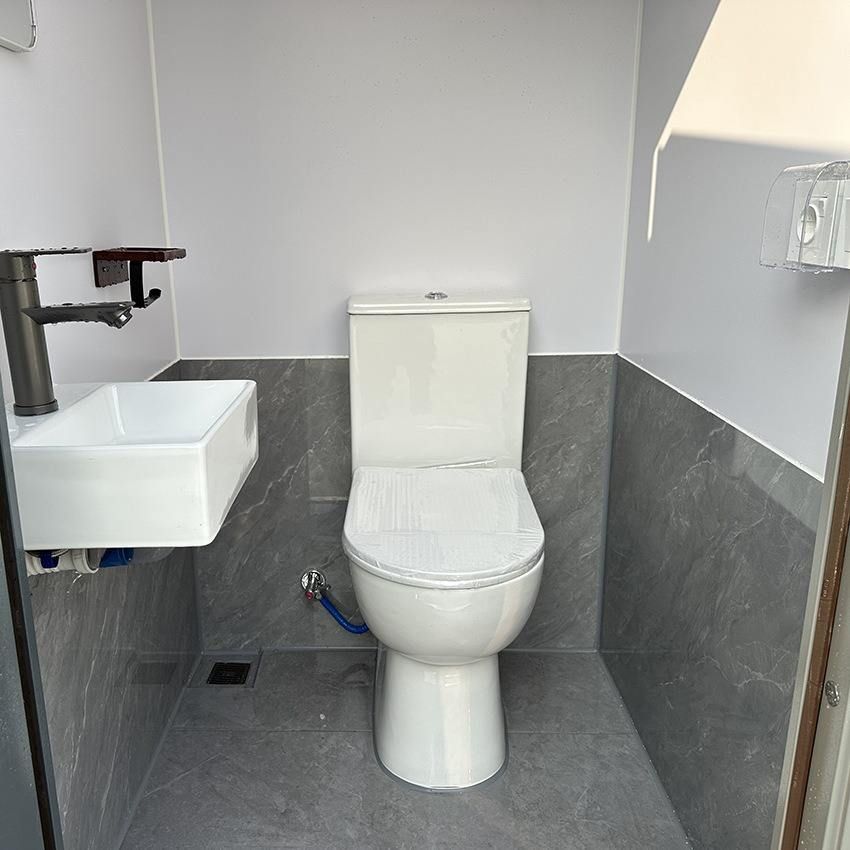
I. Water Tank Capacity of Ordinary Portable Toilets The water tank capacity of ordinary portable toilets (mobile toilets) is usually relatively small, generally around 5 - 10 liters. These mobile toilets are mostly used in temporary events, construction sites, and other scenarios. Their design emphasizes portability and basic functions, with the water tank capacity mainly meeting the demand for single or a small number of flushes. The small water tank capacity makes the overall weight of the mobile toilet lighter, facilitating easy handling and installation, while also reducing water consumption, which aligns with the characteristics of temporary use.
II. Water Tank Capacity of Common Portable Restrooms Common portable restrooms are equipped with small water storage tanks, with capacities typically ranging from 10 to 20 liters. Compared to ordinary portable toilets, portable restrooms may offer more diverse functions and be used in a wider range of scenarios, such as outdoor exhibitions and music festivals. The increase in water tank capacity can to some extent increase the number of uses and reduce the hassle of frequent water refilling, while still maintaining a relatively small size for easy movement and setup.
III. Water Tank Capacity of Special-Model Mobile Toilets Some mobile toilets have a fresh water tank capacity of up to 45 liters, such as the XC - 300 model from Shanghai Huazhijie Environmental Protection Equipment Co., Ltd. These mobile toilets usually have more comprehensive functions and higher usage frequency requirements, and may be used in long-term or high-traffic locations, such as large scenic spots and transportation hubs. The larger water tank capacity can support more flushes, reduce the frequency of water refilling, improve usage efficiency, and better meet hygiene requirements.
Overall, the selection of the water tank capacity for mobile toilets should be comprehensively considered based on specific usage scenarios, usage frequency, and functional requirements to ensure that water resources are reasonably utilized and the mobile toilets are conveniently managed while meeting usage needs.



