
Mobile Toilet Upgrade
The upgrade of mobile toilets is mainly reflected in three aspects: materials, interior design and services, and technology.
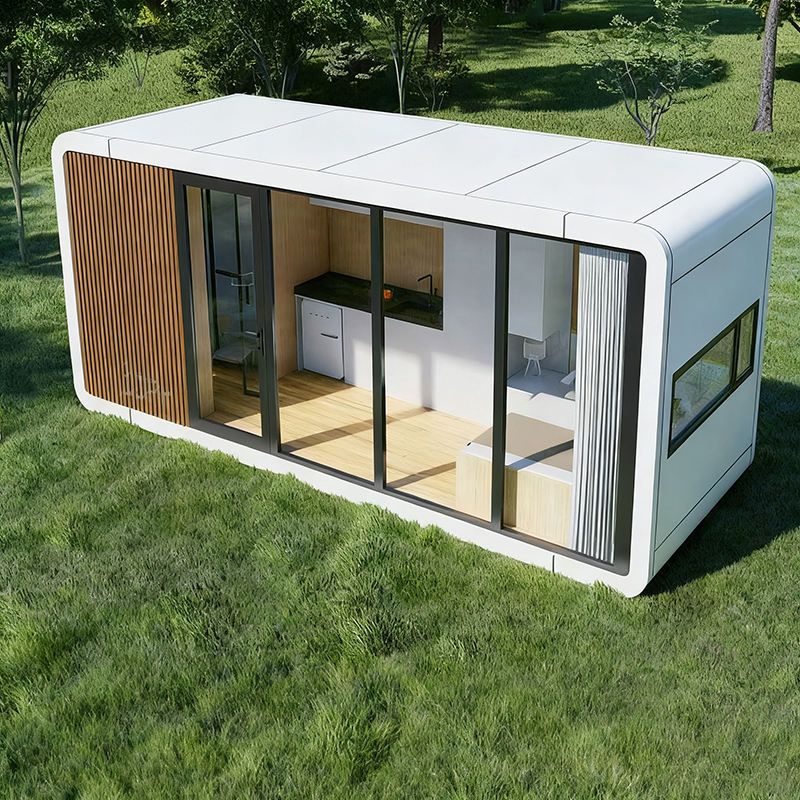
Materials: Mobile toilets generally adopt more robust and durable high-tech composite materials, such as metal carved panels. These materials can withstand various climatic challenges and have excellent weather resistance. At the same time, frame reinforcement technology enhances the product's wind and earthquake resistance levels, strengthening the overall stability of mobile toilets. The new panels can also integrate various natural appearances through exquisite carving techniques, enabling them to harmoniously blend into the surrounding environment, making them not only practical but also aesthetically pleasing.
Interior Design and Services: Emphasis is placed on human-centered design. Taking the mobile public toilets in Pudong New Area as an example, the overall design uses soft tones like light beige and light brown as the base, complemented by dark blue to outline the borders and accentuate certain areas. This not only facilitates public identification and location but also enhances the appeal of use. The interior facilities of ordinary toilet compartments are fully equipped, with simple and bright decor. Additionally, “age-friendly and child-friendly toilet compartments” have been created, with auxiliary handrails installed beside the toilets in the compartments for the convenience of the elderly; the children's toilet area adopts exclusive adaptive designs to meet the special needs of children. The electronic screens on the toilet compartment doors display the real-time usage status, making it convenient for people to understand the toilet compartment availability. Furthermore, a dedicated “Sanitation Workers' Rest Station” has been added for sanitation workers, equipped with facilities such as refrigerators, shower rooms, microwaves, and charging ports, providing them with a place to rest and convenience.
Technology: Various advanced technologies are applied to mobile toilets. Prefabricated public toilets using “waterless flushing and microbial degradation” technology can maintain stable degradation efficiency in extreme environments, achieving “odorless and pollution-free” conditions, and can remotely dynamically adjust microbial activity. Through an automatic ammonia concentration monitoring and bacterial strain dispensing system, “sterilization, odor elimination, and odorlessness” are achieved without the need for manual spraying of fragrances throughout the process. At the same time, equipped with ultra-high-definition large screens and apps, they can push scenic spot guides and community services, making “using the toilet” a “digital interaction” experience. There are also water-saving recycling types, equipped with advanced biochemical treatment devices that use microbial degradation technology for harmless decomposition of feces and deep purification of reclaimed water to meet flushing standards, forming a closed-loop water resource cycle; waterless ecological types that adopt dry separation packaging and microbial strain degradation methods to convert waste into organic substrates that can be used as fertilizers, without relying on sewer networks and external resources, achieving zero sewage discharge and a high degree of self-sufficiency; and fully automated and highly integrated types that create a clean and comfortable usage environment through precise odor treatment and ventilation and exhaust systems, combined with automated flushing and flow monitoring means.



