
Thermal Insulation of Mobile Toilets
The thermal insulation capability of mobile toilets primarily depends on the shell material, sandwich layer process, and structural airtightness. Conventional designs mainly rely on passive thermal insulation, with active equipment required for extreme weather conditions.
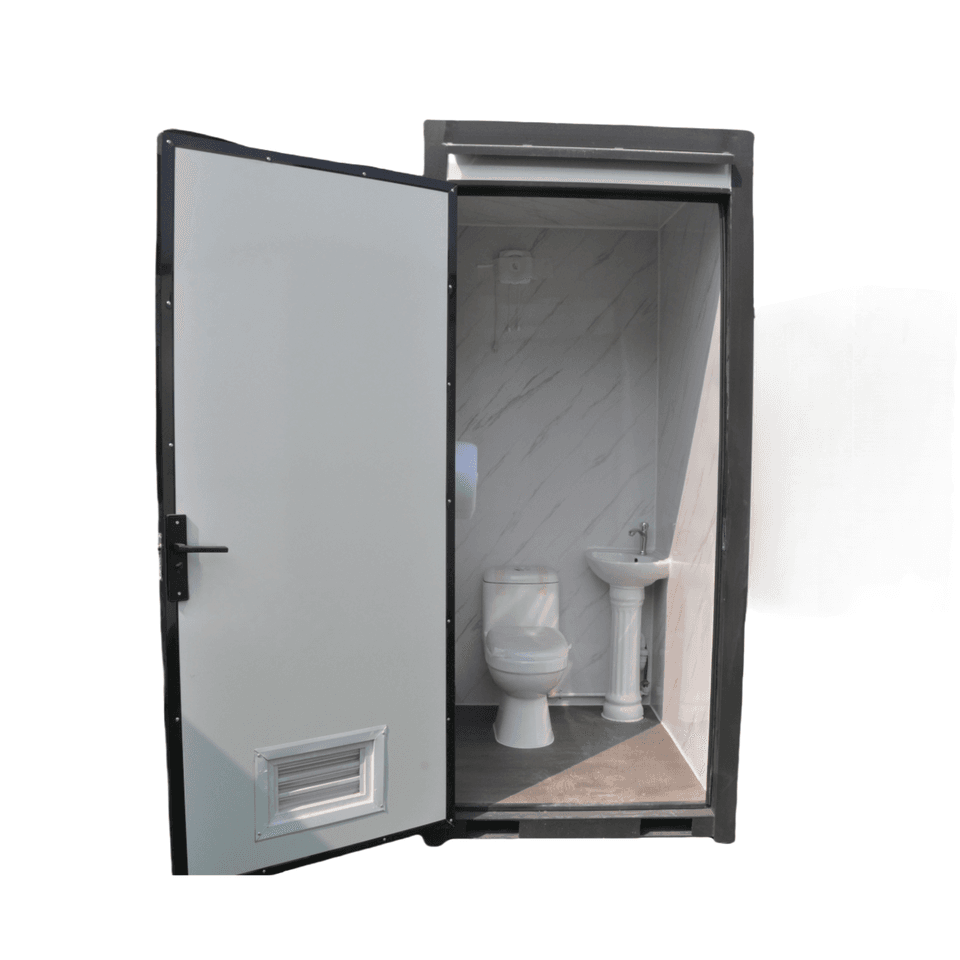
1. Core Materials and Structures Affecting Thermal Insulation Performance
The thermal insulation capability of mobile toilets is mainly determined by the “shell” material and the internal “sandwich layer” process. The common structure is a sandwich panel, with the outer layer typically featuring a metal surface (such as galvanized steel sheet or metal decorative panel) responsible for waterproofing, corrosion resistance, and structural support. The intermediate insulation core material is often selected from polyurethane foam or extruded polystyrene (XPS). Polyurethane foam effectively blocks the conduction of cold air from the outside while reducing the entry of summer heat radiation, whereas XPS, due to its dense closed-cell structure and low thermal conductivity, further reduces heat exchange efficiency. Some high-specification products adopt a “4+ standard” wall, achieving higher thermal insulation performance through the composite of multiple materials, such as deep wood-grain metal decorative panels combined with galvanized square steel frames, balancing corrosion resistance and structural stability.
2. Practical Effects and Limitations of Passive Thermal Insulation
The thermal insulation of conventional mobile toilets is passive, relying on the materials themselves to slow down the rate of heat exchange. In winter, a well-insulated toilet can maintain an internal temperature several degrees higher than the outside, primarily serving to “delay cooling” rather than actively raising the temperature. Therefore, many products reserve installation interfaces for electric heaters to cope with extreme cold. In summer, the insulation layer reduces the intense heat from direct sunlight, keeping the internal temperature 5-10 degrees Celsius lower than the outside. However, prolonged exposure to high temperatures makes it difficult to maintain a comfortable temperature solely through material insulation. Additionally, the airtightness of structural connections directly affects thermal insulation performance: aged sealing strips at seams, large gaps in hinges or door frames can lead to direct influx of cold air/heat waves, while high-quality products reduce heat loss through thicker panels and optimized sealing processes (such as installing thermal insulation dampers at exhaust fans).
3. Strategies for Extreme Weather Conditions
For prolonged use in northern cold regions or extreme weather conditions, passive thermal insulation alone is far from sufficient. Active heating equipment (such as electric heaters, floor heating) or cooling equipment (such as air conditioners) is required to maintain stable internal temperatures. For example, some mobile toilets adopt designs like thickened titanium-magnesium alloy doors and double-glazed windows to enhance airtightness, combined with active temperature control systems to ensure normal operation in extreme environments ranging from -30°C to 40°C.



