
Mobile Toilet Summer Cooling
Mobile toilets can achieve cooling in summer through various aspects such as equipment selection, site selection and shading, ventilation optimization, thermal insulation treatment, internal cooling, auxiliary facilities, and daily maintenance, thereby enhancing user comfort.
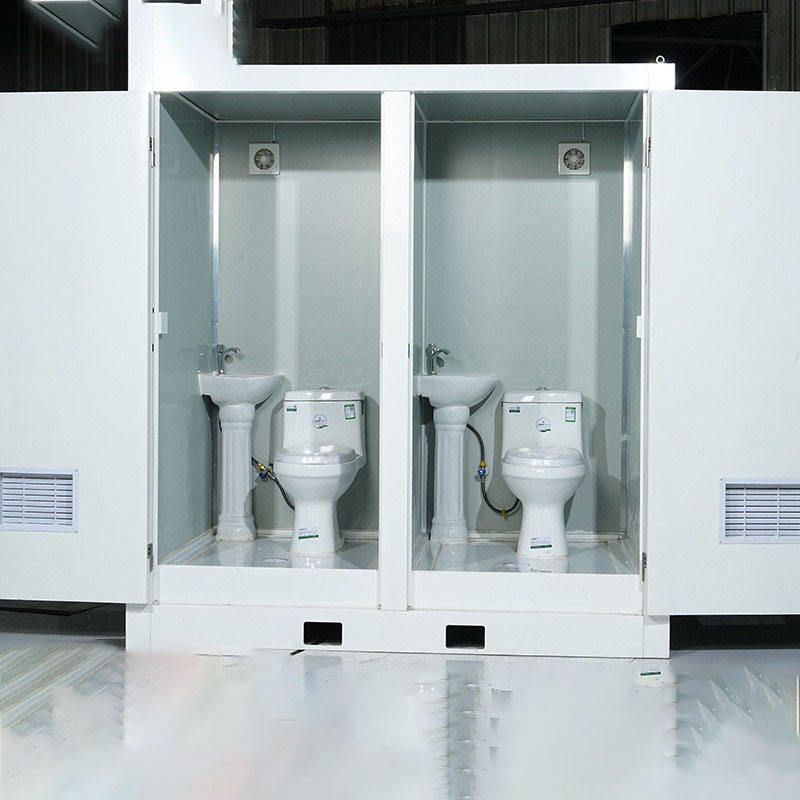
1. Equipment Selection and Configuration
Prioritize mobile toilets equipped with ventilation systems, such as roof vents or electric exhaust fans. Some high-end models come with built-in small refrigeration units. If the budget allows, additional small air conditioners or fans can be installed, and it should be confirmed whether the equipment supports a 'summer-specific refrigeration module' to enhance active cooling capabilities.
2. Site Selection and Shading
Place the mobile toilet in the shade of trees or buildings to reduce direct sunlight exposure. If space is limited, cover the top of the equipment with shade cloth, set up a canopy, or use a reflective thermal insulation film with a light transmittance of less than 30% to lower the surface temperature. Additionally, climbing plants (such as morning glories) can be planted around the toilet to form a natural 'green curtain' that blocks sunlight.
3. Ventilation Optimization
Set up ventilation openings on opposite sides of the mobile toilet (such as near the entrance and exit) to create air convection. When manually turning on the exhaust fan, a wet towel can be hung outside the toilet to accelerate cooling through water evaporation. In the early morning and evening, all ventilation openings can be opened to utilize natural air convection for ventilation and reduce the internal temperature.
4. Thermal Insulation Treatment
Adhere or spray thermal insulation materials (such as polyurethane foam boards) on the walls and roof of the mobile toilet to effectively block external heat transfer. For the outer shell material, it is recommended to choose a corrosion-resistant and rust-proof composite material with a thermal insulation coating to further reduce heat conduction.
5. Internal Cooling Measures
- Place ice packs, cold water bags, or cooling gel pads (with a temperature controlled between 25-28°C) to maintain coolness through physical heat absorption.
- Install sensor-activated flushing systems to reduce discomfort caused by manual contact.
- Place a small cooling ice bucket, pour in ice water, and add mint leaves to emit a refreshing feeling.
- Use thermal insulation curtains. Pull them up during the day when sunlight is strong to block heat, and open them at night for ventilation.
6. Auxiliary Facilities and Humanized Details
Set up sun umbrellas and rest seats in the waiting area, and provide summer-specific items such as cooling sprays and disposable seat pads. Set up clear shading prompt signs to guide users to choose shaded positions, and post a 'high-temperature warning' outside the toilet, suggesting that the toilet time be controlled within 5 minutes to reduce stuffy waiting.
7. Daily Maintenance and Management
During high-temperature periods, rinse the exterior walls with clean water every 2-3 hours to cool them down, and promptly clean the drainage pipes to prevent odor intensification. Check the water tank level daily, use a dedicated descaling agent to clean scale buildup in the water tank, and avoid heat generated by odor fermentation. Increase the frequency of equipment inspections to check whether circuits, fans, air conditioners, and other equipment are operating normally, and clean the drainage ports to prevent odor generation from sewage evaporation. Regularly replenish disinfectants to prevent bacterial growth in humid and high-temperature environments.



