
Mobile Toilet with Strong Stability
The strong stability of mobile toilets is mainly reflected in three aspects: structural design, material selection, and targeted optimization.
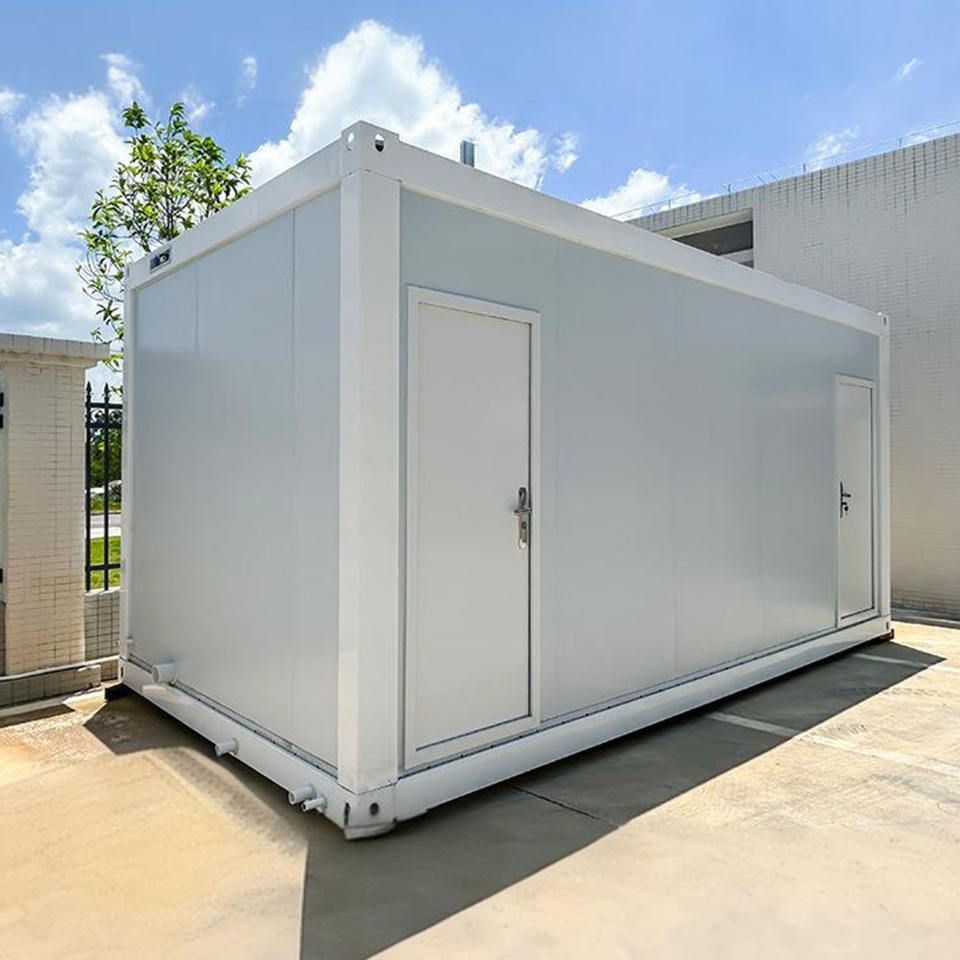
In terms of structural design, frame structure and center-of-gravity control are crucial. Mobile public toilets generally adopt a frame structure with a firmly fixed base and a low overall center-of-gravity design. This design can effectively reduce the possibility of being blown over by the wind and generally remains stable in winds of up to 8 levels. Some large connected public toilets are also fixed to the ground with anchor bolts, further enhancing their wind resistance. This dual-fixing method enables mobile toilets to maintain good stability when facing strong winds and are less likely to tip over or shift.
Regarding material selection, durability is the core. The frames of mobile public toilets are usually made of sturdy steel or reinforced aluminum alloy materials, which have high strength and corrosion resistance and can withstand significant external forces. The walls and roofs are also specially designed with reinforced structures to resist the pressure differences caused by wind forces and reduce the risk of damage due to these differences. This design not only improves the stability of mobile toilets but also extends their service life.
In terms of targeted optimization, regional adaptability is a highlight. Mobile toilets have also been optimized according to the characteristics of different regions. For example, the locally adapted temporary mobile toilets in Hohhot are made of high-density anti-corrosion panels with thickened insulation structures, featuring wind, frost, sun, and leak resistance, enabling them to cope with complex weather conditions. Additionally, mobile toilets in scenic spots and outdoor public restrooms on rural streets use metal carved panels with a service life of up to 20 years, also demonstrating their stability. These optimization measures enable mobile toilets to better adapt to environmental conditions in different regions, improving their stability and durability.



