
Mobile Toilet Steel Frame Base
The mobile toilet steel frame base typically uses a modularly designed steel structure frame as the main support, with its structural features, functional advantages, and installation points as follows:
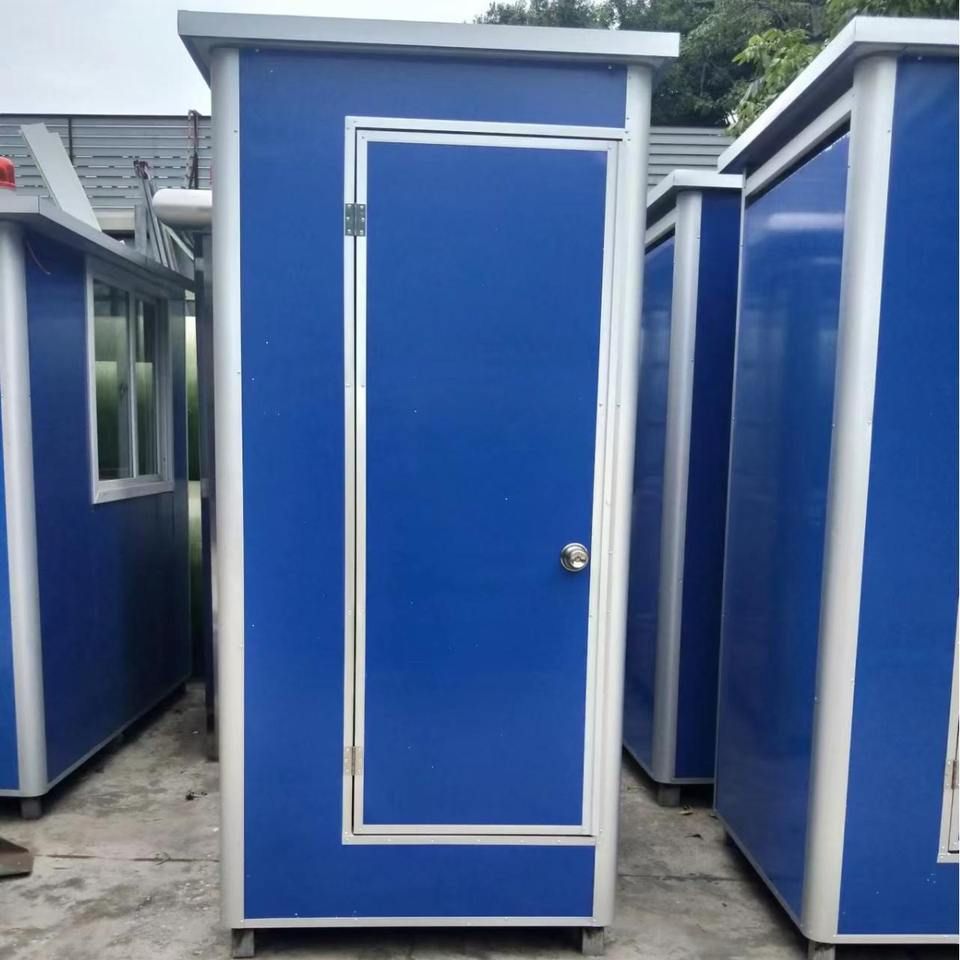
1. Structural Design and Material Selection
The mobile toilet steel frame base centers around a steel structure frame, with a common design being an angle iron frame base. For example, it adopts a structural form of L4×L4 angle iron frame with an intermediate夹板 (interlayer board): The angle iron serves as the main load-bearing component, utilizing its high-strength properties to support the overall weight; the intermediate夹板 (interlayer board) provides a flat installation surface for subsequent floor laying. This combination not only ensures structural strength but also reduces the overall weight by optimizing material distribution, facilitating transportation and installation. Additionally, the base surface is usually covered with floor adhesive, whose anti-slip and moisture-proof properties effectively enhance usage safety and durability.
2. Functional Advantages
- Strong ground adaptability: The modular design of the angle iron frame base allows for flexible adjustment of support points to accommodate uneven ground. For example, when used outdoors or in temporary venues, the overall equipment level can be ensured by adjusting the support height or locally leveling it.
- High load-bearing capacity: The steel structure frame can withstand significant loads by reasonably distributing stress, meeting the weight requirements of multiple people using it simultaneously or additional equipment functions (such as water tanks and sewage systems).
- High stability: The modular design reduces welding points, lowering the structural risk caused by welding defects. At the same time, it is fixed to the ground with expansion bolts, further enhancing its resistance to wind and displacement.
3. Installation Points
- Stable placement: Before installation, clear ground debris to ensure full contact between the base support and the ground, avoiding stress concentration caused by local suspension.
- Level adjustment: Use a level to check the height of the base's four corners and adjust the supports or shims to keep the equipment level, preventing sewage discharge issues or structural deformation caused by tilting.
- Secure fixation: Fix the base to the ground with expansion bolts. The bolt specifications should be selected based on the equipment weight and ground material (e.g., M10 or larger bolts are required for concrete floors). After fixation, check the bolt tightness to ensure no looseness.
4. Maintenance and Precautions
Regularly inspect the structural integrity of the base, focusing on the angle iron welding points, interlayer board connections, and expansion bolt conditions. Promptly address any rust or looseness found. When used in long-term humid environments, it is recommended to apply an anti-rust coating to the steel structure to extend its service life.



