
Mobile Toilet Samples
Typical samples of mobile toilets include three categories: technologically innovative, scenario-adaptive, and traditional structural types, with their design features and application scenarios as follows:
1. Technologically Innovative: Zhongyunhui 5G Smart Carbon-Neutral Public Toilet
This sample focuses on environmental protection and intelligence, utilizing microbial degradation technology to treat excreta without the need for water flushing, achieving odorless and pollution-free decomposition of excreta, with the degradation tank remaining active even in low-temperature nighttime environments. Its squat toilet is designed with gravity-sensing opening and closing, combined with an air circulation system to ensure a comfortable toilet environment. In terms of technical adaptability, the public toilet dynamically adjusts its temperature control strategy through LSTM neural networks, operating stably in scenarios such as the western Sichuan plateau (e.g., Ganzi Yuzixi, Jiuzhai Huanglong High-Speed Railway Station) and the Chengdu Research Base of Giant Panda Breeding. For additional functions, the exterior wall is equipped with an ultra-high-definition large screen displaying information about nearby homestays and transportation, while a touch small screen provides AI cultural tourism model route recommendations, forming a composite functional model of “toilet + information station” that significantly enhances the service value of public facilities.
2. Scenario-Adaptive: Mobile Toilet Allocation Case in Shanxi Jinci Scenic Area
This type of sample emphasizes flexibility and resource optimization. During the May Day holiday in 2026, the Jinci Scenic Area transformed buses into mobile men's toilets and temporarily converted fixed men's toilets into women's toilets, increasing the average daily reception capacity from about 3,000 to 5,000 people. This case demonstrates the emergency allocation capability of mobile toilets during peak tourist periods, quickly responding to changes in passenger flow through modular transformation and functional conversion, effectively alleviating the problem of insufficient capacity in traditional fixed toilets, and reflecting the practical wisdom of balancing space utilization and gender needs.
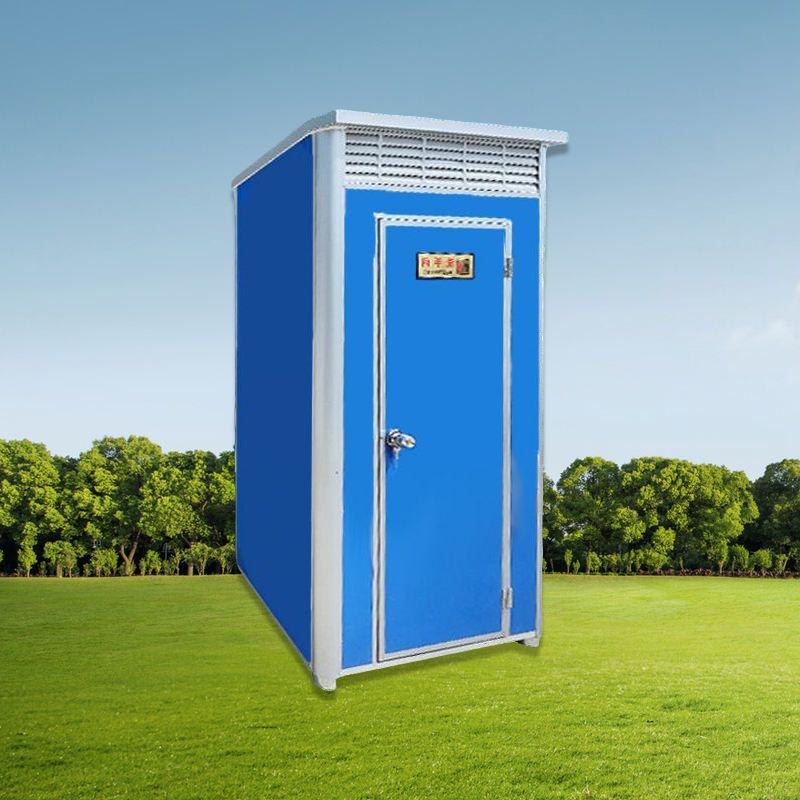
3. Traditional Structural: Standardized Mobile Toilet
Traditional mobile toilets are supported by steel-welded frames (bottom channel steel/I-beams, upright square steel), with wall materials including color-coated steel plates and fiberglass-reinforced plastics, equipped with fecal sewage storage tanks or disposal devices and sanitary ware. Their classification methods are diverse: by structure, they are divided into single-unit and composite structures; by mobility, they are divided into lifting/handling types and powered/trailer types; by sewage treatment, they are divided into water-flushing/non-water-flushing suction types, circulating water-flushing types, and dry-packing types. This design is oriented towards functional practicality, suitable for construction sites, temporary events, and other scenarios, reducing costs through standardized production and meeting basic sanitation needs.
**In summary, the development of mobile toilets shows trends towards technological environmental protection, scenario customization, and structural diversification, encompassing both cutting-edge technological applications and optimizations of traditional designs, providing flexible solutions for public health needs in different environments.



