
Safety Measures for Mobile Toilets
The safety measures for mobile toilets cover multiple aspects such as structure, facilities, environment, and management, as detailed below:
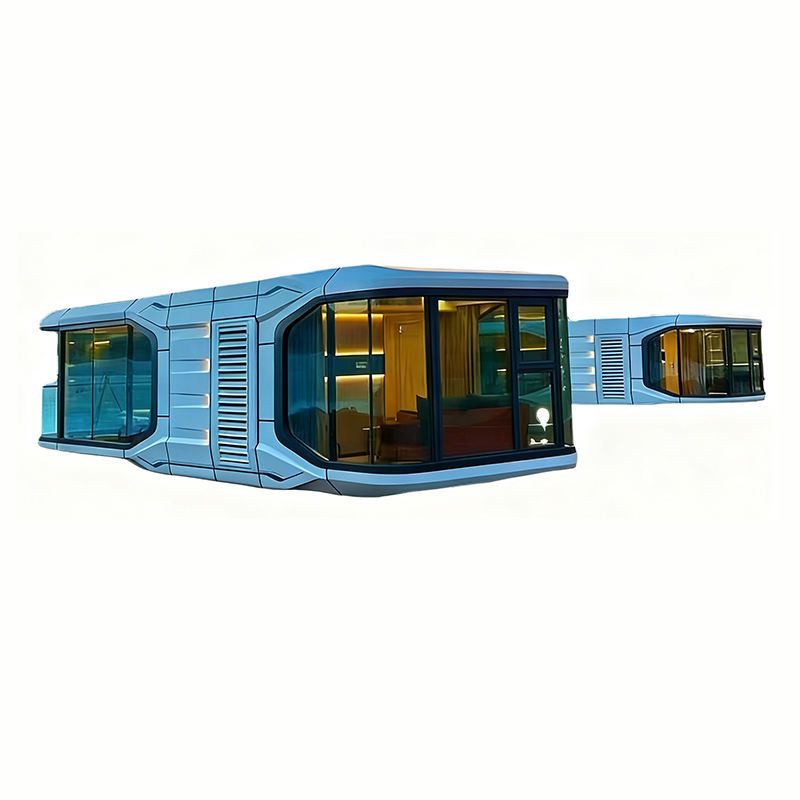
1. Structural Stability Assurance Mobile toilets are manufactured using high-strength materials (such as steel frames and engineering plastics) and standardized processes to ensure overall structural resistance to wind, pressure, and deformation. During installation, a flat and hard ground surface should be selected. If the site is soft, foundation reinforcement (such as laying a concrete bedding layer) is required, and the toilet should be fixed using ground anchors, expansion bolts, or support frames to prevent tilting or collapse due to external forces (such as strong winds or collisions).
2. Safety Facility Configuration The interior floor is laid with anti-slip materials (such as anti-slip tiles or rubber mats), with additional anti-slip warning signs installed in areas prone to water accumulation, such as toilets and sinks. Sturdy handrails (with heights conforming to ergonomic standards) are installed to assist individuals with mobility issues. Emergency alarm devices (such as one-touch call buttons) are equipped and connected to the management backend or security personnel. During infectious disease outbreaks, sensor-activated flushing and non-contact handwashing devices can be added to reduce the risk of cross-infection.
3. Ventilation and Hygiene Management Air circulation is maintained through exhaust fans, roof vents, or negative pressure ventilation systems to reduce odors and bacterial concentrations. Negative pressure design prevents aerosol dispersion and is suitable for medical or epidemic scenarios. Disinfectants are sprayed regularly, air filters are replaced, and a time-division cleaning mode is adopted to avoid service interruptions. The waste collection tank is sealed, and during transportation, it is handled in a fully enclosed manner by dedicated tanker trucks, with routes avoiding residential areas and water sources.
4. Water and Electricity Safety Protection The electrical system uses waterproof junction boxes and wire conduits for protection and is equipped with leakage protection switches. Water supply pipelines use food-grade materials to avoid contamination. Regular inspections are conducted for circuit aging and water pipe leakage issues, and anti-freezing measures are taken in winter. Backup power supplies and emergency water supply devices are added at large event sites to ensure normal functionality in emergencies.
5. Fire Protection and Emergency Design Fire-resistant panels or metal casings are selected to reduce the risk of fire spread. Each toilet is equipped with a dry powder fire extinguisher, and safety exit signs and emergency lighting are installed. Aisle widths meet evacuation requirements, and they are kept away from dining areas and flammable material storage areas. A fire escape route map is formulated, and users are guided through signs or voice prompts.
6. Special Scenario Adaptation For large events or public places, barrier-free units (with a proportion of no less than 5%) are set up, featuring spacious interiors and handrails and toilet heights suitable for wheelchair users. Children's toilets have lowered facility heights and are equipped with anti-pinch door locks. In high-altitude or cold regions, insulation materials are used, and heating equipment is provided. Toilets at temporary resettlement sites need to consider earthquake resistance and flood control requirements.
7. User Guidance and Training Through graphic signs, voice prompts, or volunteer guidance, the usage methods of facilities (such as the location of flush buttons and emergency alarm operations) are clarified. Safety warning signs (such as 'Slippery Floor' and 'No Smoking') are posted. Multilingual services are provided to facilitate use by foreigners. The management regularly organizes emergency drills to enhance the response capabilities of staff.



