
Mobile Toilet Renovation
Mobile toilet renovation requires comprehensive consideration of various aspects such as usage scenarios, structural forms, mobility methods, and sewage treatment methods.
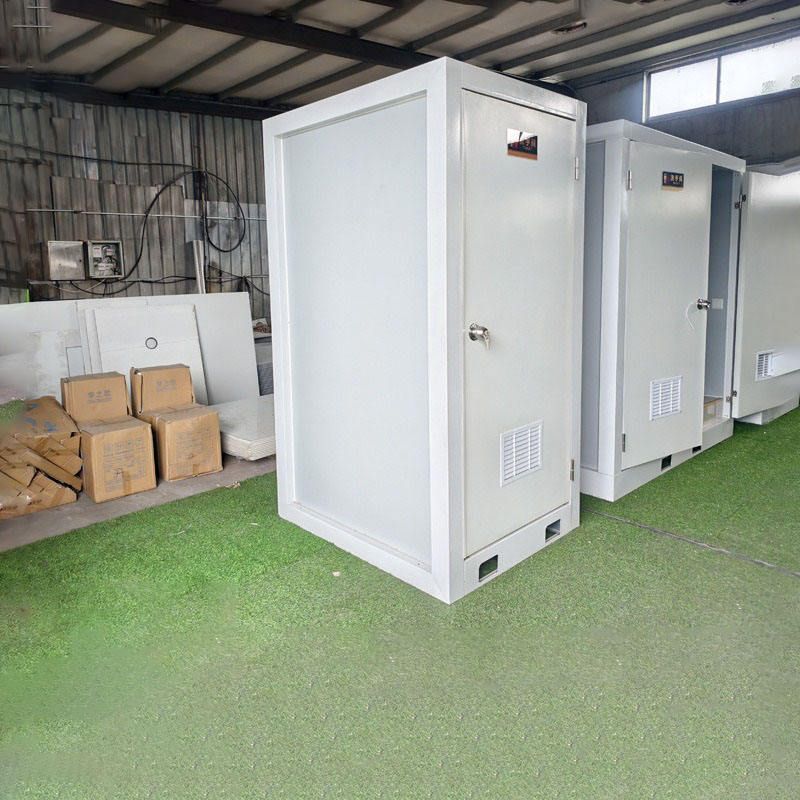
I. Renovation Based on Usage Scenarios
- Renovation of Mobile Restrooms in Scenic Areas: For outdoor public restrooms in scenic areas, standardized modules covering an area of 18 square meters (e.g., 3 meters in width and 6 meters in length) can be selected. The exterior walls can be made of metal insulated carved panels to enhance thermal insulation performance, and colored aluminum glass single doors can be installed to improve aesthetics and durability. The internal configuration should be adjusted according to tourist traffic. For example, in high-traffic areas, the number of squat toilets should be increased, while in low-traffic areas, a combination of squat and sit toilets can be provided, along with barrier-free facilities.
- Renovation of Mobile Toilets in Rural Areas: For rural households or small public places, a 1.2m × 1.5m wooden-grain toilet is recommended. It integrates a toilet bowl, a small sink, a paper basket, and louvered windows inside. It adopts an overall insulated and rainproof design, eliminating the need for traditional brick-and-mortar structures. It can be installed and used on the same day, reducing construction costs and time.
II. Renovation Based on Structure and Mobility Methods
- Structural Forms: Single-unit structures are suitable for space-constrained scenarios, such as streets or temporary event venues; composite structures (e.g., multi-module拼接) can expand functional areas and are suitable for scenic areas or large public places.
- Mobility Methods: Hoisting-type toilets are suitable for long-term use at fixed locations; portable-type toilets are convenient for short-distance relocation; and powered trailer-type toilets (e.g., Apple Pod mobile restrooms) can be quickly deployed to remote areas and used immediately upon connection to electricity, enhancing flexibility.
III. Renovation Based on Sewage Treatment Methods
- Water-flush Type: Requires配套 (matching) water tanks and sewage pipes, suitable for areas with a water source and complete sewage disposal conditions, such as city streets or the main entrances of scenic areas.
- Waterless Suction Type: Uses a vacuum pump to suction feces into a storage tank for regular removal, suitable for water-scarce areas or ecologically sensitive zones.
- Recirculating Water-flush Type: Utilizes biodegradation technology to treat sewage and recirculate it for use, reducing water consumption, suitable for arid areas or places with high environmental protection requirements.
- Dry Packaging Type: Uses biodegradable bags to collect feces without the need for flushing, suitable for rural areas or temporary event venues without sewage infrastructure.
IV. Design Principles Renovation should adhere to principles such as mobility convenience (lightweight structures and complete mobility devices), economic durability (low-cost materials and modular design), environmental protection and ecology (sewage treatment and resource recycling), and improved efficiency (reasonable layout and humanized facilities), ensuring a balance between toilet functionality and environmental adaptability.



