
Mobile Toilet Raw Materials
The raw materials for mobile toilets vary according to type and structure, mainly including the following four categories:
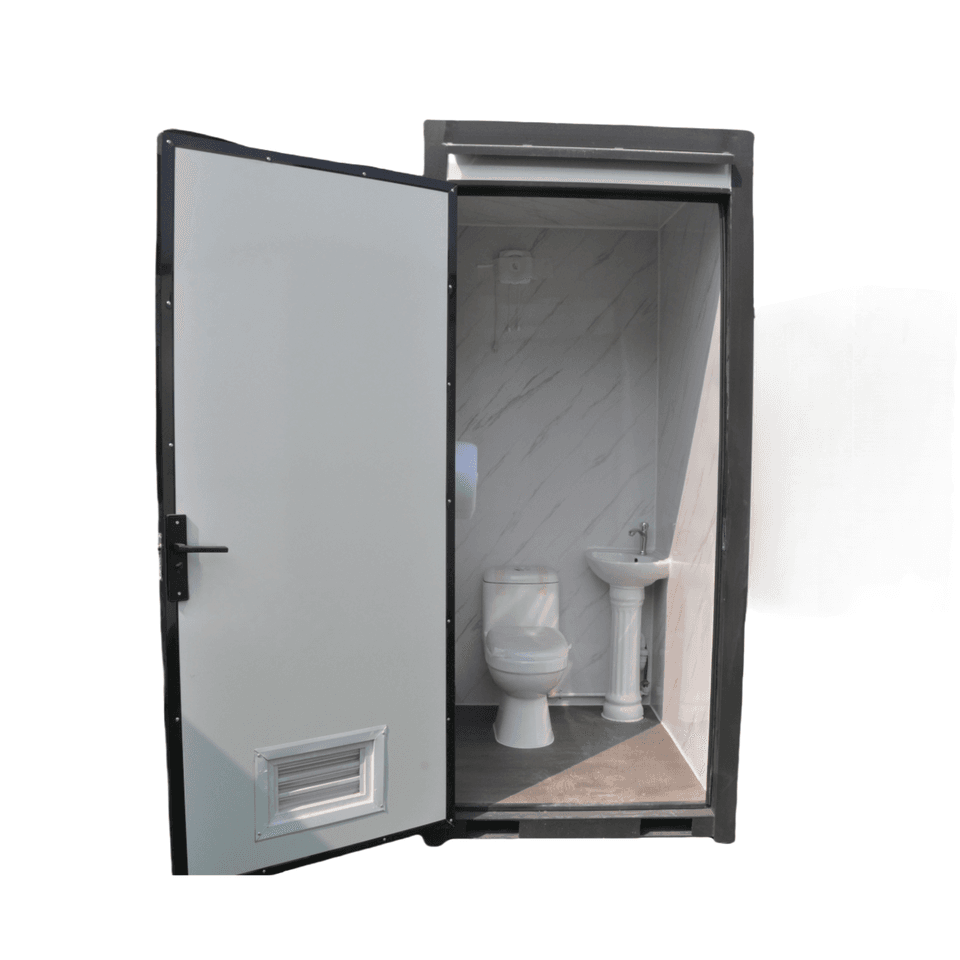
1. Main structural materials
The support frames of mobile toilets typically use galvanized steel pipes or lightweight steel structures, which are characterized by strong rust resistance and good load-bearing capacity, enabling them to adapt to long-term outdoor use. The mainstream choice for wall sections is sandwich panels (such as color-steel sandwich panels or composite panels), which consist of two layers of color-coated steel or aluminum sheets with polystyrene, rock wool, or polyurethane foam in between. This design ensures the lightness of the walls while achieving thermal insulation through the middle insulating layer, making it particularly suitable for environments with large temperature differences.
2. Manufacturing materials
Early mobile toilets used wood, but it was gradually phased out due to its susceptibility to decay. Modern mobile toilets are primarily made of fiberglass-reinforced plastic (FRP) and polyethylene. FRP is composed of epoxy resin and glass fibers, with the base typically molded in one piece using colored reinforced FRP molds. The wall panels have a smooth surface, are corrosion-resistant, and weather-resistant, significantly extending their service life. Polyethylene, with its strong plasticity and low cost, is used to manufacture the shells of some simple mobile toilets.
3. Internal facility materials
Interior wall materials need to balance durability and ease of cleaning, with common choices being high-density PVC panels or stainless steel panels, the former being lower in cost and the latter having superior corrosion resistance. Floors often use non-slip patterned aluminum panels or rubber flooring, with the former offering excellent slip resistance and the latter providing a comfortable feel underfoot and good sound insulation. Water tanks and sewage pipes generally use PE (polyethylene) material, which has strong chemical stability and can withstand various acid-base environments. Some smart eco-toilets have photocatalytic coatings applied to their inner walls to decompose odor molecules through photocatalysis. Hardware components (such as door panels, locks, and handrails) are mostly made of engineering plastics or stainless steel to balance cost and durability.
4. Other auxiliary materials
Some mobile toilets are equipped with fecal sewage storage tanks or disposal devices, requiring the use of lightweight and corrosion-resistant materials (such as high-density polyethylene) to reduce overall weight. Roof design focuses on light transmission and waterproofing, typically using high-transmittance waterproof materials (such as polycarbonate panels), with some structures adding FRP anti-corrosion layers to prevent rain erosion. Additionally, sealing strips, connectors, and other detail materials also need to have aging resistance to ensure long-term use without leakage.



