
Mobile Toilet Pipeline Discharge Methods
The pipeline discharge methods for mobile toilets mainly include four types: conventional flushing, direct discharge, vacuum sewage systems, and water-storage sewage systems. Details are as follows:
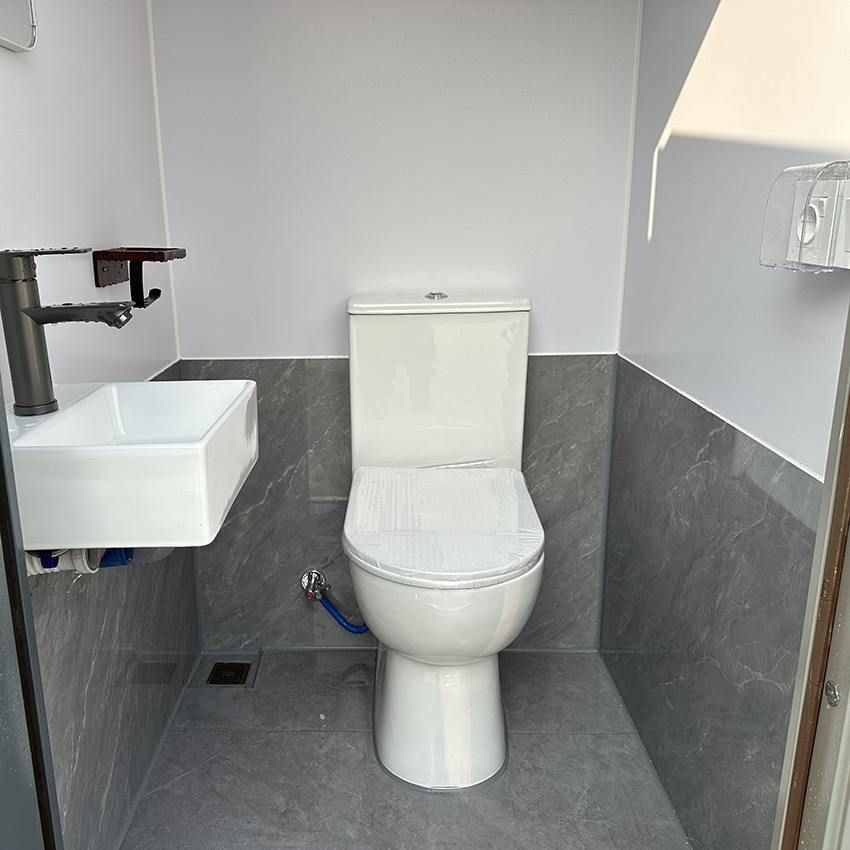
Conventional flushing requires connecting to a water supply and drainage system through pipelines, operating similarly to household bathrooms: triggering flushing via manual buttons or automatic sensors to wash feces and urine into sewer pipes, ultimately discharging into septic tanks or municipal sewage networks. This method relies on a stable water supply and well-developed drainage infrastructure, suitable for urban public areas, large event venues, and other locations with pipeline conditions. Its advantages include high discharge efficiency and good hygiene, but it requires regular pipeline maintenance to prevent blockages and consumes significant water resources.
The core of direct discharge pipeline systems is the direct discharge of feces into septic tanks or sewage networks through pipelines. Before implementation, the treatment capacity of the discharge location must be strictly evaluated: if discharging into a septic tank, its volume and decomposition efficiency must match usage frequency; if connecting to municipal networks, compliance with local sewage discharge standards is required. This method features a simple structure and low maintenance costs but is only suitable for fixed locations with professional treatment facilities, such as scenic area support service zones and temporary construction site facilities, as indiscriminate discharge may cause environmental pollution.
Vacuum sewage systems utilize negative pressure technology for efficient water conservation: a vacuum pump creates negative pressure within pipelines, using air pressure differences to rapidly suck sewage and waste into sealed collection containers. This system features small pipeline diameters and flexible installation, requiring only 0.5-1 liters of water per flush—saving over 80% compared to traditional methods. Its collection containers require regular removal by specialized vehicles for treatment, making it suitable for water-scarce regions, high-rise buildings, or scenarios with high mobility requirements, such as high-speed trains and remote scenic area toilets.
Water-storage sewage systems discharge waste into independent storage tanks via water flushing, requiring manual cleaning or replacement once full. Although this method requires pipeline connections to a water source, its discharge process does not rely on external networks, making it suitable for locations with sufficient water but limited sewage conditions, such as temporary construction sites and field research stations. Maintenance focuses on regular disinfection of storage tanks to prevent odors and bacterial growth, along with planning reasonable cleaning cycles to avoid overflow.



