
Performance Characteristics of Mobile Toilets
The performance characteristics of mobile toilets are mainly reflected in their mobility, versatility, environmental adaptability, structural design and deployment efficiency, environmental protection and energy conservation, durability and maintenance, as well as material properties.
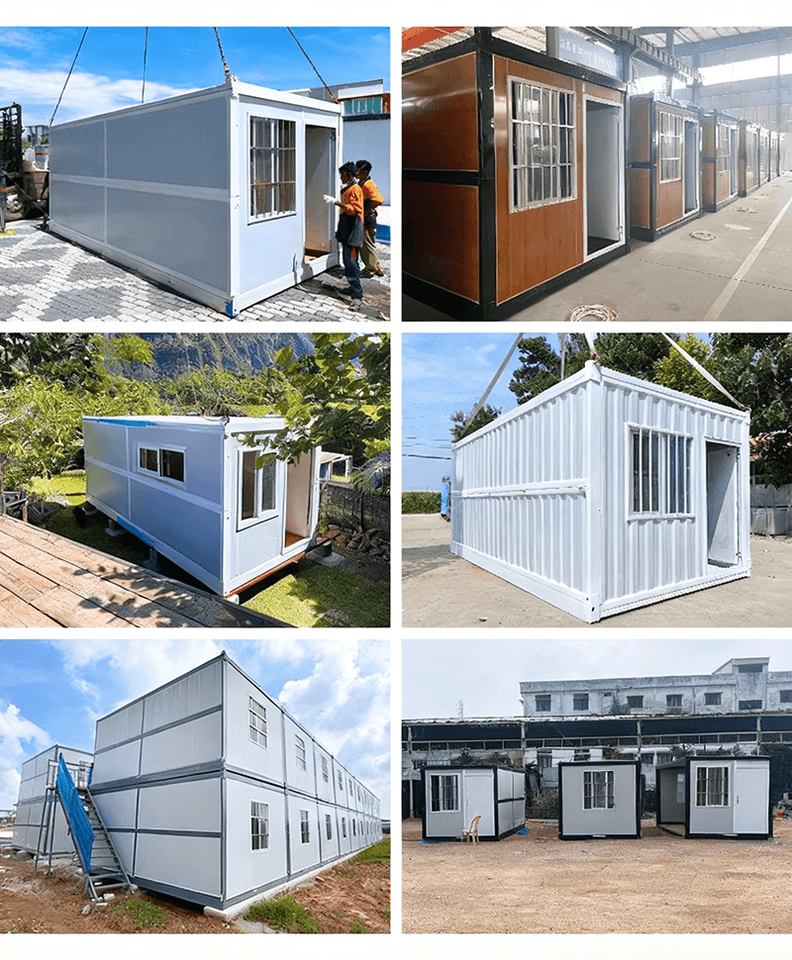
1. High mobility
Mobile toilets break through the geographical limitations of traditional fixed toilets and do not rely on underground sewage pipes or fixed infrastructure. Their design supports rapid relocation. For example, after large-scale events, they can be transported as a whole to other venues for reuse, and after the completion of construction site projects, they can be transferred to new sites for continued service. This flexibility makes them an ideal choice for temporary or mobile scenarios.
2. Multi-functional integrated design
The internal configuration can be flexibly adjusted according to user needs, including basic sanitary facilities such as toilets, sinks, and hand dryers. For specific scenarios, additional functions can be added: tourist attractions can be equipped with lockers and charging ports; medical emergency scenarios can integrate disinfection equipment; some high-end models even support intelligent monitoring systems to monitor usage status in real time.
3. Adaptability to complex scenarios
They are suitable for areas without fixed sewage systems, such as remote mountainous areas, deserts, and temporary disaster areas. Through technologies such as septic tanks and microbial degradation, they achieve self-treatment of sewage and reduce dependence on the environment. For example, microbial degradation technology can convert feces into harmless fertilizer, enabling resource recycling and avoiding soil and water pollution.
4. Lightweight and modular design
The main body is made of lightweight materials such as high-strength plastics and aluminum alloys, reducing the weight by more than 50% compared to traditional toilets, facilitating lifting and transportation. The modular design supports single or multiple combinations, allowing flexible adjustment of scale according to the number of people, meeting the different needs from small-scale events to large-scale gatherings.
5. Rapid deployment and transportation efficiency
Installation does not require complex construction. Only a flat ground is needed for assembly, and the installation time for a single unit can be shortened to within 1 hour. During transportation, they can be transported as a whole using trucks, containers, and other tools, reducing logistics costs, especially suitable for emergency rescue or temporary demand scenarios.
6. Environmental protection and energy-saving technologies
Some models adopt solar power supply systems to reduce dependence on the power grid; sewage is discharged after meeting standards through biological degradation or chemical treatment. For example, the top of fiberglass mobile toilets uses translucent materials and is waterproof, allowing the use of natural light during the day and further reducing energy consumption.
7. Durability and easy maintenance
The outer shell is made of anti-corrosion and anti-ultraviolet materials, with a service life of more than 10 years; the internal sanitary ware is made of easy-to-clean materials, reducing bacterial growth. Maintenance only requires regular cleaning of the septic tank or replacement of filter elements, with a single maintenance time of no more than 30 minutes, significantly reducing long-term operating costs.
8. Special advantages of fiberglass mobile toilets
Their main material is epoxy resin and glass fiber, with a smooth surface and a sturdy structure, featuring corrosion resistance; the base is molded from colored reinforced fiberglass, and the wall panels are easy to clean; the internal facility design helps reduce odor emission, with a relatively large space and a translucent top, allowing the use of natural light during the day, easy cleaning of stains, and relatively convenient movement.



