
How Mobile Toilets Move
Mobile toilets mainly achieve movement by installing universal wheels at the bottom. Their movement methods vary depending on the specific design, but the core principle revolves around enhancing structural flexibility and operability. Here are the specific explanations:
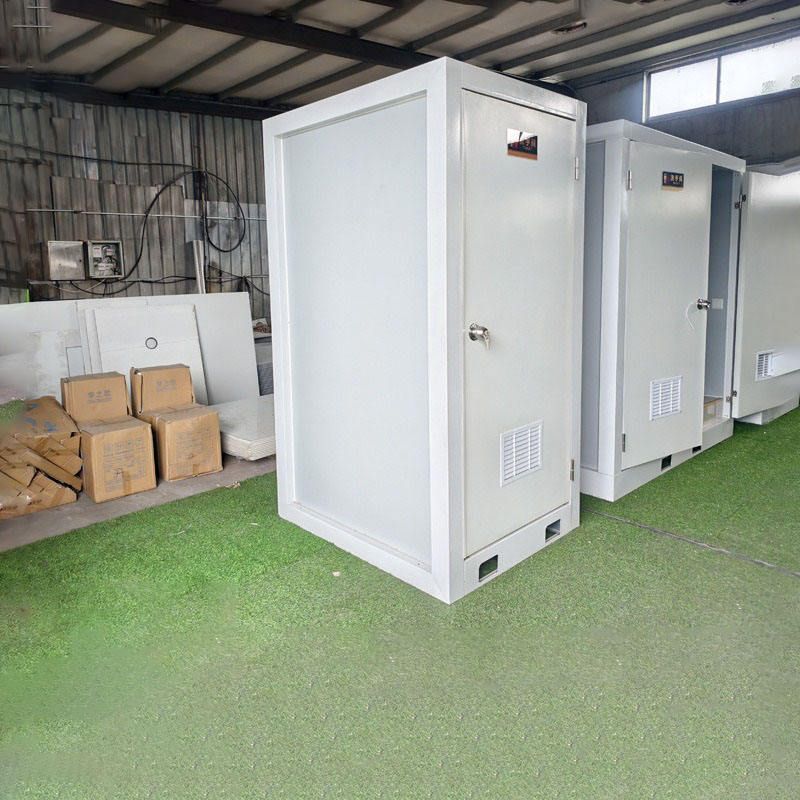
1. Design with universal wheels fixed at the bottom of the拖板 (drag plate)
Some mobile toilets use a drag plate structure as the bottom support frame, with universal wheels fixed at each of the four corners of the drag plate. This design utilizes wheel bodies made of metal or high-strength plastic, combined with a steering structure that can rotate 360 degrees, enabling the entire toilet to easily change its direction of movement. The universal wheels are usually equipped with brake devices. After moving into position, the wheel bodies can be locked to prevent sliding, ensuring stability during use. This type of design is commonly seen in small to medium-sized mobile toilets and is suitable for scenarios that require frequent position adjustments, such as temporary events and construction sites.
2. Design with universal wheels fixed at the bottom of the wooden board
Another common design involves directly installing the main structure of the mobile toilet on a wooden base, with universal wheels also installed at the four corners of the wooden board. As a load-bearing platform, the wooden board needs to be made of anti-corrosion and moisture-proof engineering wood to adapt to outdoor environments. The specifications of the universal wheels are selected according to the weight of the toilet. For example, heavy-duty wheels with a load-bearing capacity of over 200 kilograms are chosen to ensure safety during movement. The advantage of this design lies in its simple structure and low cost. Moreover, the wooden board can provide a certain buffering effect, reducing vibrations during movement. This design is commonly found in public places such as scenic spots and parks that require regular maintenance or layout adjustments.
Commonalities in Design and Applicable Scenarios
The core commonality of these two designs is achieving flexible movement through universal wheels, but their applicable scenarios differ slightly. The drag plate structure is more suitable for temporary scenarios that require rapid deployment, while the wooden board structure emphasizes cost-effectiveness and durability. In addition, some high-end mobile toilets incorporate towing devices and can be towed over long distances by vehicles. However, universal wheels remain the key component for short-distance position adjustments. Regardless of the design, the material, size, and fixing method of the universal wheels must strictly match the weight of the toilet to ensure movement efficiency and use safety.



