
Modular Design of Mobile Toilets
The modular design of mobile toilets is a core feature, primarily reflected in structural decomposition, flexibility, rapid deployment, material durability, functional configuration, and ease of installation and maintenance.
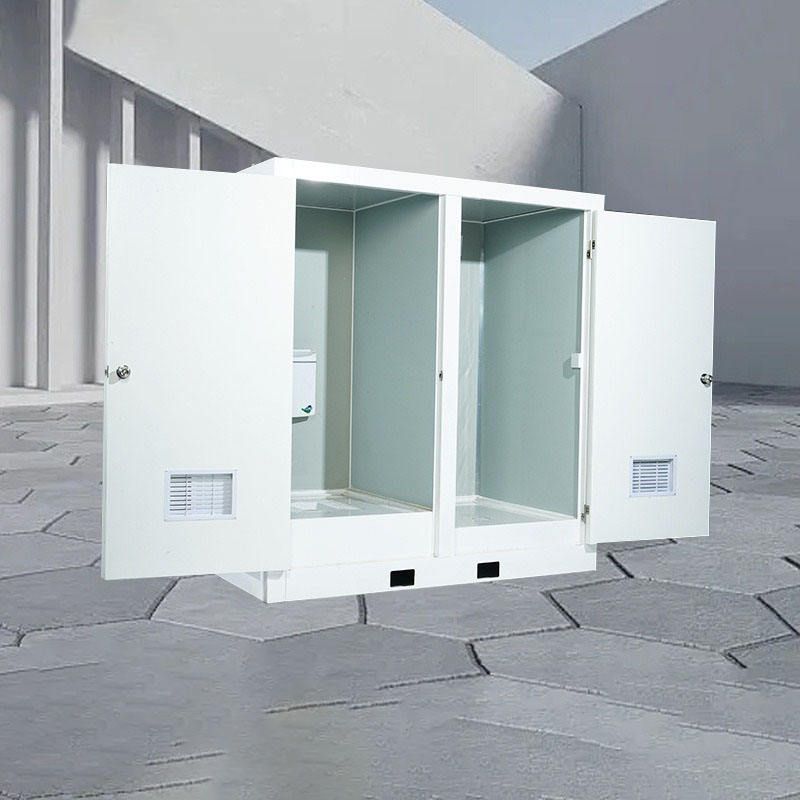
Structural Decomposition and Standardized Interfaces: Mobile toilets are decomposed into independent units such as walls, roofs, sewage systems, and door lock components. Each unit adopts a standardized interface design, allowing for rapid assembly through bolts or clips, akin to building with blocks. This design shortens production cycles, reduces transportation costs, and enables individual modules to be stacked for transport, with a single truck capable of carrying dozens of toilet units.
Flexibility and Scalability: Modular design supports adjustments to module combinations based on usage scenarios. For example, scenic areas can add storage space modules, construction sites can enhance wind and earthquake resistance modules, and emergency scenarios can integrate medical waste disposal modules. Some manufacturers have also developed scalable structures, allowing single toilet stalls to be expanded into multi-stall or shower combinations by adding or removing modules.
Rapid Deployment and Adaptability to Different Environments: Modular design enables flexible deployment and rapid installation of mobile toilets, particularly suitable for areas lacking fixed infrastructure, such as outdoor events, temporary projects, or rural renovation projects. Their top and bottom sections feature a separated design, facilitating delivery in parts via small vehicles to remote areas. Simple tools are sufficient for on-site assembly.
Material Selection and Durability: The main frame is mostly constructed from metal materials (such as iron sheet 02 profiles, channel steel/square steel) to provide structural support, with external edges covered in color-coated steel plates for strength, rust resistance, and ease of cleaning. The internal sandwich layer is filled with 5mm thick foam material for thermal insulation, making it suitable for outdoor environments with significant temperature variations.
Modular Functional Configuration: The functional facilities of mobile toilets also adopt a modular design, including sanitary units (toilet types, flushing systems), cleaning and grooming areas (sinks, sensor faucets), and ventilation and lighting systems, all of which can be customized and expanded according to needs.
Ease of Installation and Maintenance: Modular design simplifies the installation and maintenance of mobile toilets. Before assembly, check that all parts are complete. During installation, follow the instructions to assemble the frame in sequence, ensuring smooth opening and closing of doors and windows before securing the external panels. For long-term storage, it is recommended to disassemble and store in a dry, ventilated area to extend the equipment's lifespan.



