
Mobile Toilet Introduction Description
A mobile toilet is a facility that can be moved as a whole and set up in fixed or temporary locations to provide restroom services to the public. It employs environmentally friendly technologies and has a structure that facilitates easy movement and installation, making it suitable for various settings.
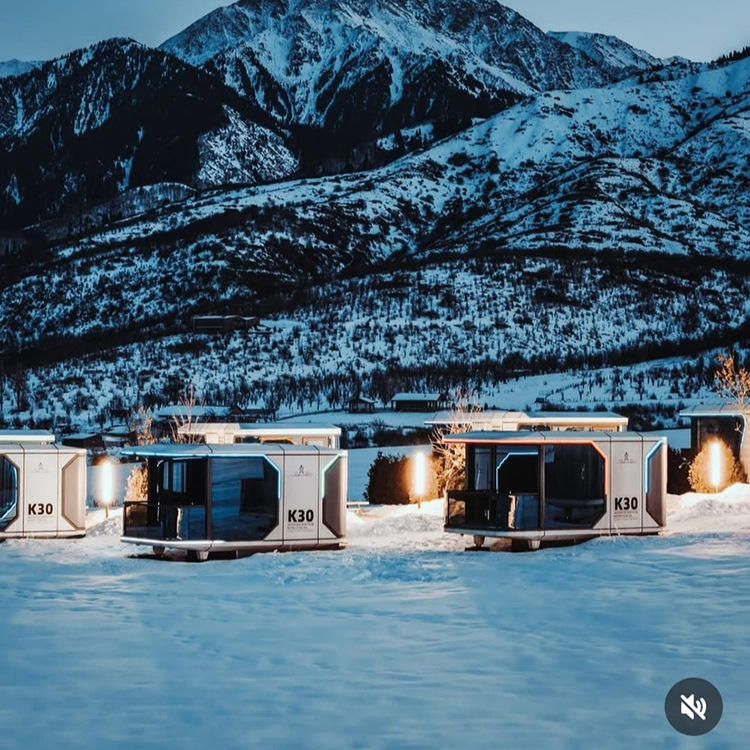
I. Definition and Types
A mobile toilet (Portable toilet) refers to a toilet facility that can be moved in its entirety and placed at locations with fixed or temporary needs to provide restroom services to the public and clients. Its types cover environmentally friendly technological solutions such as waterless flushing, foam sealing, and water flushing. The product line includes temporary toilets for construction sites, toilets for scenic spots and gardens, vehicle-mounted toilets, and other niche scenarios, meeting different environmental requirements.
II. Structure and Materials
Mobile toilets adopt a steel-welded frame structure. The bottom is usually welded with channel steel or I-beams, and the columns use square steel to ensure structural stability. Wall materials include color-coated steel plates, metal carved plates, aluminum-plastic plates, and anti-corrosion wood, meeting both durability requirements and aesthetic and environmental considerations. The frame design supports lifting needs, facilitating rapid movement and installation, and adapting to the flexible deployment of temporary locations.
III. Dimensions and Configuration Standards
The recommended ratio of male to female squat (sit) positions is 1:1 or 3:2. Each squat position for defecation should measure between 1.00 and 1.20 meters in length and between 0.85 and 1.20 meters in width. The dimensions for urination stands (including urinals) should be 0.70 meters in depth and 0.65 meters in width, with a spacing of 0.80 meters between individual urinals. The width of the aisle should be designed according to the arrangement of single or double rows of squat positions. For aisles with outward-opening doors, the widths should be 1.30 meters and 1.50 meters, respectively, while for aisles without doors, the width should range from 1.20 to 1.50 meters. Public restrooms should have at least one washbasin each for men and women, with additional basins added as needed when the number of squat (sit) positions exceeds 10. Each squat position should be equipped with a sturdy, corrosion-resistant hook for hanging items, and clear Chinese signs must be placed at the entrances and exits.
IV. Application Scenarios
Mobile toilets are suitable for fixed locations such as stations, docks, tourist attractions, villa areas, newly built residential areas, large construction sites, squares, densely populated public places, and bustling commercial streets. They are also widely used in temporary events such as entertainment performances, sports events, opening ceremonies, conferences and exhibitions, and mass gatherings, as well as outdoor environments like gardens, tourist attractions, parks, campsites, construction and decoration sites, and temporary factories.
V. Intelligent Configuration
Some high-end products are equipped with intelligent systems, including a bottom-layer PLC data acquisition system, 40-inch LED stall monitors, and 4G remote monitoring modules, supporting remote control of lighting and flushing systems via a mobile app, enhancing management efficiency and user experience.



