
Volver al blog
Artículo
How to Handle Defecation in Mobile Toilets
Admin 27 de septiembre de 2026
There are various ways to handle defecation in mobile toilets, including water-flush and non-water-flush suction types, circulating water-flush types, dry packing types, foam sealing types, microbial types, chemical treatment types, anaerobic digestion types, compression and storage types, multi-functional sewage outlets, and mechanical treatment types.
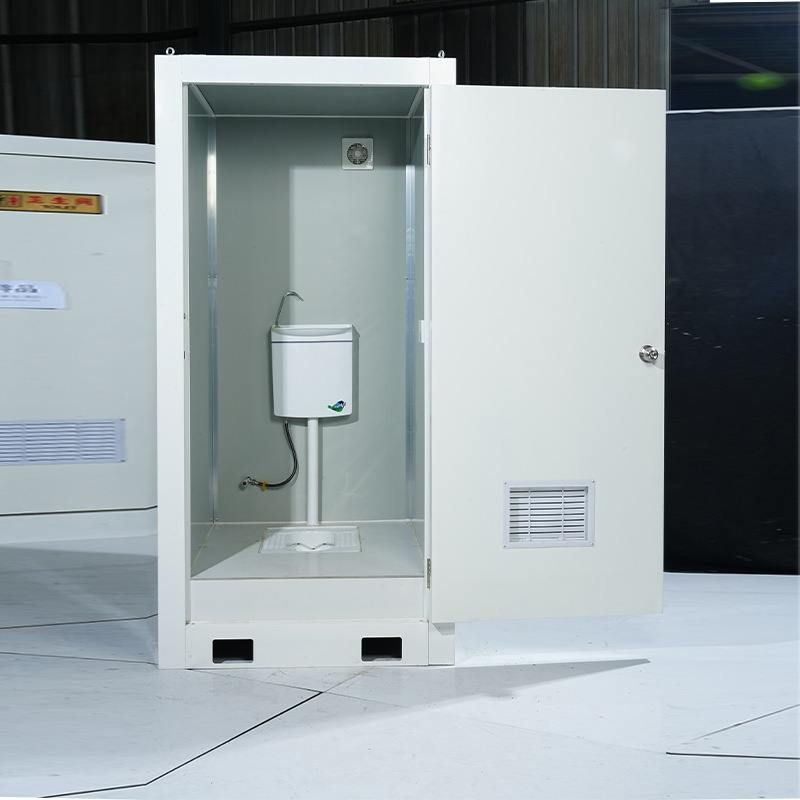
- Water-flush and Non-water-flush Suction Types: Water-flush mobile toilets are equipped with a water-flush device, with a water tank placed on top and a sewage tank at the bottom; non-water-flush types have no flushing device, and the sewage tank at the bottom directly receives excrement. For both types, the sewage tank has a relatively small capacity and needs to be suctioned promptly when the specified number of users is reached.
- Circulating Water-flush Type: Equipped with intermittent aerobic and anaerobic treatment devices for fecal sewage, biological strains are added, and biological membrane technology is used to accelerate fermentation and decomposition. The treated fecal sewage is then recycled through a filtration device for flushing toilet fixtures.
- Dry Packing Type: Without a water-flush device, excrement is received by a biodegradable plastic bag at the bottom of the fixture. A new plastic bag is automatically replaced after each use, and after use, it is collected and transported to a treatment plant for disposal.
- Foam Sealing Type: Foam generated by a foaming liquid mixture is used instead of water for flushing. The foam covers the inside of the toilet bowl, eliminating odors. This system can meet its foaming water needs solely by collecting hand-washing water, saving water resources.
- Microbial Type: Excrement enters a solid-liquid separation device through an automatically opening toilet bowl. Feces enter a fermentation tank and are decomposed into CO2 and H2O by microbial bacteria; urine is filtered and enters a comprehensive urine treatment system, where it is treated into reclaimed water for flushing the urinal, forming a cycle.
- Chemical Treatment Type: Chemical agents are used to decompose and eliminate excrement. Agents are added to control odors and promote decomposition. The treated excrement is further processed through specialized equipment or flows into the sewage system.
- Anaerobic Digestion Type: An anaerobic digestion system is used to treat excrement. Microorganisms decompose and digest the excrement, producing biogas (usable as an energy source) and fertilizer (usable in agriculture or horticulture).
- Compression and Storage Type: The volume of excrement is reduced through compression and storage, delaying the need for treatment. This is suitable for situations where it is necessary to be away from treatment facilities for an extended period.
- Multi-functional Sewage Outlet: Equipped with manual cleaning functions, such as a fecal storage tank or a pre-buried septic tank, which require manual cleaning to store feces for centralized treatment.
- Mechanical Treatment Type: Specialized equipment is used for solid-liquid separation, decomposition, and disinfection of feces, reducing the impact on the environment and ensuring hygiene and safety.
Relacionados



