
Mobile Toilet Foundation Construction Contract
The mobile toilet foundation construction contract should be drafted with reference to the following framework, taking into account the project type (construction or leasing). Core clauses should be adjusted according to actual needs and reviewed by legal professionals.:
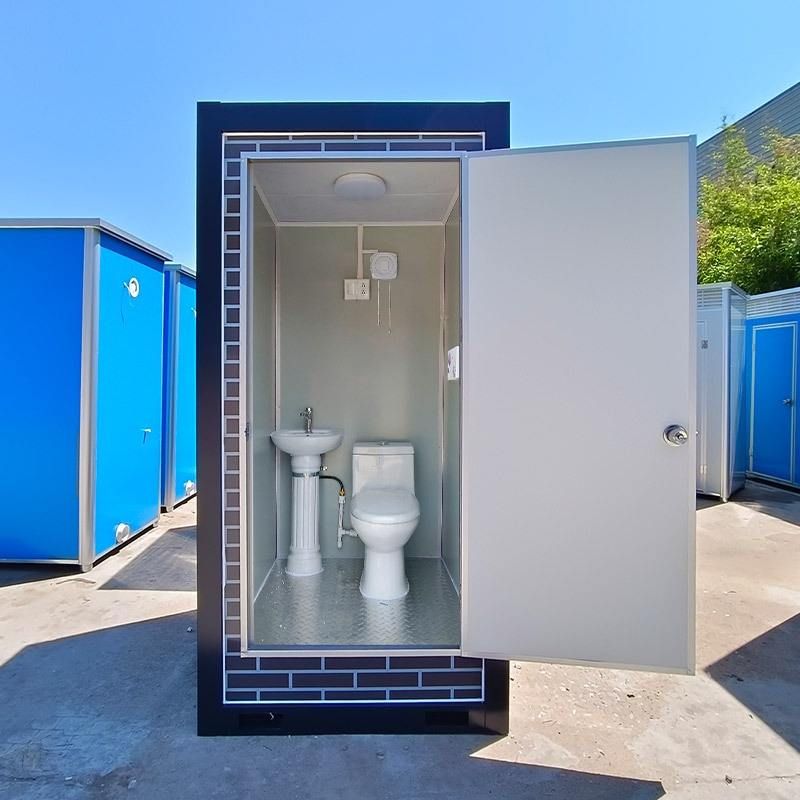
I. Contract Subject Clauses
Clarifying the information of both parties (Party A and Party B) is fundamental to the validity of the contract. Party A (the employer) must provide its name, address, contact information, and unified social credit code to ensure legal subject status; Party B (the contractor) must provide its name, address, contact information, and construction qualification certificate number (e.g., Grade III or above in General Contracting for Building Construction Engineering). If mobile toilet leasing is involved, additional information on equipment production or business licenses is required.
II. Scope of Work Clauses
For construction contracts, detailed foundation engineering work should be specified, including toilet foundation excavation, concrete foundation pouring, main steel structure installation, floor anti-slip treatment, and roof waterproofing. For leasing contracts, it should be clarified whether supporting services such as mobile toilet transportation (self-pickup or delivery), installation and commissioning, water and sewage pipeline connection, and power supply access are included, along with an attached Equipment List specifying specifications and models.
III. Construction Period and Delivery Clauses
Construction contracts should specify the commencement date (e.g., "within 3 days from the date of Party A's written notice"), completion date (e.g., "30 calendar days from the commencement date"), and total construction period. Leasing contracts should define the leasing period (e.g., "minimum 1 day, maximum 180 days") and delivery method (e.g., "Party B is responsible for transportation to Party A's designated location and installation and commissioning").
IV. Price and Payment Clauses
For construction contracts, a fixed total price model is recommended, clearly stating the total contract price (e.g., "RMB 245,000") and payment method (e.g., "30% advance payment upon contract signing, 50% upon foundation completion, and 20% upon final acceptance"). For leasing contracts, daily rental rates (e.g., "RMB 500/day"), lifting and transportation fees (e.g., "RMB 2,000/time"), and security deposits (e.g., "10% of the total contract price") should be agreed upon, along with conditions for deposit refund.
V. Quality and Acceptance Clauses
Construction should comply with standards such as the Code for Acceptance of Construction Quality of Building Foundation (GB50202-2018), and building materials should be accompanied by quality certificates. For leased equipment, the acceptance process should be clarified (e.g., "both parties shall inspect the equipment for integrity according to the Leased Toilet Equipment List upon delivery"), and liability for damage should be agreed upon (e.g., "if equipment is damaged due to Party A's reasons during use, compensation shall be made at 80% of the market price").
VI. Liability for Breach of Contract Clauses
Construction contracts should specify liability for construction delays (e.g., "a penalty of 0.1% of the total contract price per day of delay") and liability for quality repairs. Leasing contracts should define equipment damage compensation standards (e.g., "compensation shall be made according to the price stated in the Leased Toilet Equipment List") and penalties for early lease termination (e.g., "20% of the remaining lease period's rent").
VII. Dispute Resolution Clauses
Construction contracts may stipulate "filing a lawsuit with the people's court at the project location." Leasing contracts may choose arbitration (e.g., "applying for arbitration with the XX Arbitration Commission") or litigation, subject to mutual agreement between the parties.
VIII. Other Clauses
Construction contracts should clarify Party A's obligations (e.g., "providing the construction site, underground pipeline drawings, and technical disclosures"). Leasing contracts should specify ownership (e.g., "the equipment is owned by Party B") and usage restrictions (e.g., "no modification or relocation without Party B's written consent").
Reference Cases: The mobile public toilet procurement project in Hanyin County in 2026 (winning bid amount: RMB 245,000, including foundation construction) and the mobile resource utilization public toilet project in Dalu Town, Jungar Banner (winning bid amount: RMB 2,320,642.05, construction period: 60 calendar days) can serve as references for setting price and construction period.



