
Mobile Toilet Folding Board
Currently, no detailed standard product information directly targeting 'mobile toilet folding boards' has been found, but the design of folding boards in related barrier-free facilities can serve as a reference. Their core features include customizability, lightweight and slip-resistant properties, safety protection, and portability.
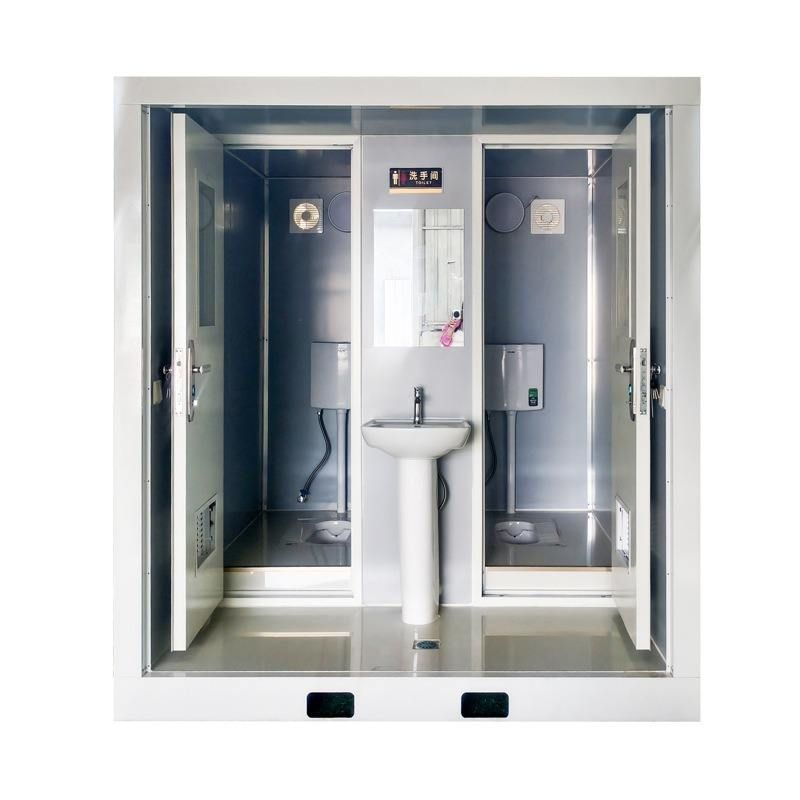
1. Customizable Design
Some folding boards in barrier-free facilities support custom sizing according to specific needs. For example, the subway-specific barrier-free transition boards produced by Changyu Composite Materials in Zhengzhou, Henan, can be adjusted in specifications based on factors such as step height and spatial layout. This flexibility allows them to adapt to different scenarios, such as the entrance steps and internal space divisions of mobile toilets, meeting personalized usage requirements.
2. Lightweight and Slip-Resistant Performance
In terms of material selection, folding boards often utilize integrated composite materials or thickened steel plates, balancing strength and lightweight properties. For instance, subway transition boards are lightweight and easy for a single person to carry; step ramp boards ensure usage safety through slip-resistant designs (such as surface textures and rubber pads), avoiding the risk of slipping due to moisture or inclination, which is particularly crucial for the humid environment of mobile toilets.
3. Safety Protection Structure
To meet the needs of special populations, folding boards are often equipped with protective devices. For example, folding nursing tables in母婴室 (nursing rooms) use five-point safety harnesses to prevent children from falling; barrier-free ramp boards enhance stability through reinforced legs and slip-resistant foot pads. If mobile toilets require folding boards (such as for assisting in toilet seat elevation or internal space conversion), such designs can be borrowed, adding details like anti-pinch features and rounded edges to improve safety.
4. Portability and Folding Function
Folding design is a core advantage. For example, portable disabled ramp boards can be quickly unfolded or folded, saving storage space and facilitating transportation and temporary deployment. If mobile toilets need to switch functions within limited space (such as converting between a toilet seat and a squat toilet), folding boards can achieve rapid opening and closing through hinge structures while maintaining structural stability, avoiding shaking or abnormal noises.
5. Extended Application Scenarios
Although direct product information is lacking, the design logic of barrier-free folding boards can be transferred to mobile toilet scenarios. For example, in temporary events or post-disaster relief efforts, mobile toilets need to be quickly set up and adapt to different terrains. Folding boards can serve as entrance ramps, internal partitions, or auxiliary facilities, enhancing adaptability through modular design.



