
How Mobile Toilets Collect Feces
There are various methods for mobile toilets to collect feces, including water-flush and non-water-flush suction types, dry-packing types, foam-sealing types, biodegradable types, and direct-discharge and fecal-tank collection types.
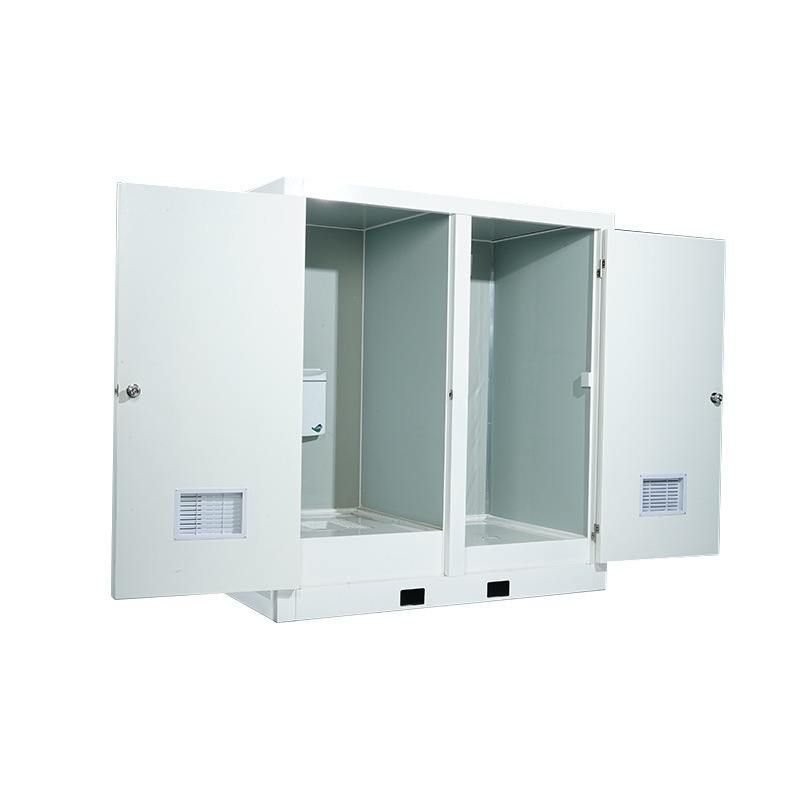
Water-flush and non-water-flush suction types are two relatively common methods. Water-flush mobile toilets are equipped with a water-flush device inside. After the user finishes excretion, pressing the flush button allows water to wash the waste into an integrated fecal tank at the bottom. The advantage of this method is its high cleanliness, which can better maintain the hygiene inside the toilet. Non-water-flush mobile toilets, on the other hand, do not have a flushing device. They rely on a sewage tank located at the bottom of the toilet to directly receive the excreta of users, making them suitable for places with scarce water resources or strict water usage restrictions.
Dry-packing mobile toilets use biodegradable plastic bags to collect excreta. After each use, the system automatically replaces a new plastic bag to pack the excreta. Subsequently, these packed excreta are collected and transported to a specialized treatment plant for further processing. This method is simple to operate, and the plastic bags are biodegradable, making it relatively environmentally friendly.
Foam-sealing mobile toilets cover the inside of the toilet bowl with foam generated by a foaming solution through compressed air, replacing the function of water flushing. Urine is filtered and treated, while waste is collected in a biochemical treatment tank or fecal tank. This method not only saves water but also effectively prevents odor emission.
Biodegradable mobile toilets are equipped with professional biodegradable bacteria inside. These bacteria can directly decompose feces into carbon dioxide and water. Throughout the process, there is no leakage, and the waste undergoes preliminary decomposition inside the tank, reducing the difficulty and cost of subsequent treatment.
In the direct-discharge and fecal-tank collection methods, some mobile toilets can be directly connected to sewer pipes to discharge feces into a designated sewage treatment system for processing. Others use fecal tanks to collect feces. When the fecal tank is full, specialized transport vehicles take it away for centralized treatment.



