
Mobile Toilet Environmental Protection Technology
The environmental protection technologies for mobile toilets mainly include five categories: waterless flushing, foam sealing, water flushing, recirculating water flushing, and microbial-based technologies. Some products also incorporate intelligent control systems to enhance efficiency.
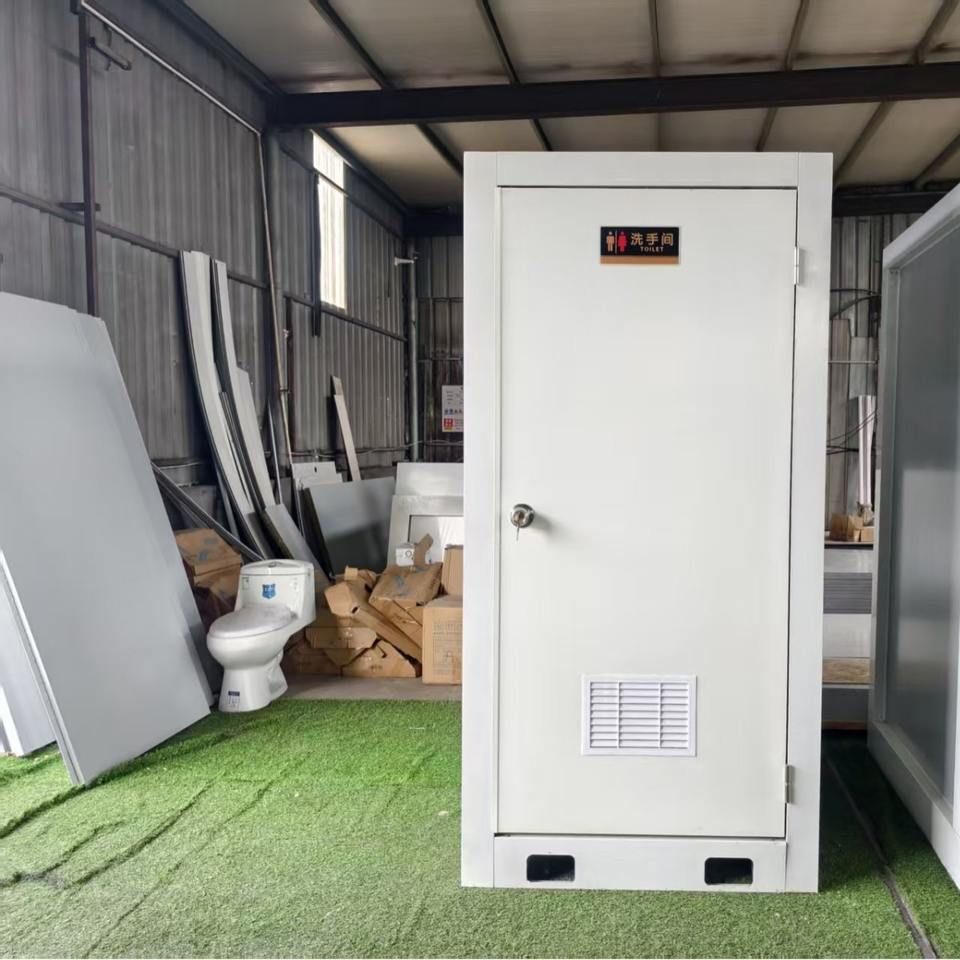
Waterless flushing technology does not require connection to water supply or drainage pipes. It uses biodegradable plastic bags or dry packing technology to collect waste, automatically replacing the bag after use and collecting it for centralized treatment. This technology completely eliminates dependence on water resources, making it suitable for water-scarce areas or temporary event settings. Additionally, the biodegradable plastic bags reduce environmental pollution.
Foam sealing technology utilizes a foaming device to generate foam that covers the surface of waste, forming a sealed layer to suppress odor diffusion while reducing the amount of flushing water required. The lubricating effect of the foam reduces friction between waste and the toilet bowl's inner walls, allowing for effective flushing with only a small amount of water. This results in significant water savings, and the surfactants in the foam assist in cleaning.
Water flushing technology requires connection to water supply and drainage pipes but achieves water conservation through technologies such as rainwater collection and filtration systems, as well as secondary flushing with hand-washing water. Some products employ intelligent water-saving systems that automatically collect hand-washing water and add specialized agents, enabling each flush to use only 0.46 liters of water—far less than traditional water-flushing toilets.
Recirculating water flushing technology is equipped with intermittent aerobic and anaerobic treatment units, adding biological strains and utilizing biofilm technology to accelerate the decomposition of fecal sewage. The treated water can be recirculated for flushing, achieving closed-loop water resource utilization. This technology is suitable for long-term fixed-use scenarios, such as tourist attractions or construction sites.
Microbial-based technology utilizes specific microorganisms to decompose organic matter in waste, converting it into harmless substances (such as carbon dioxide and water), achieving self-purification of pollutants and resource recycling. This technology does not require external water sources or sewage pipes, and the microorganisms can survive long-term with low maintenance costs, making it suitable for remote areas or ecologically sensitive regions.
In addition, some mobile toilets integrate intelligent control systems, including a bottom-layer PLC data acquisition system, 40-inch LED stall monitors, and 4G remote monitoring modules, supporting remote operation of lighting and flushing systems via a mobile app. This system can monitor stall usage, water consumption, and equipment status in real-time, optimizing resource allocation and reducing energy consumption to further enhance environmental protection efficiency.



