
Illustration of the Development History of Mobile Toilets
The development history of mobile toilets can be illustrated through the following key stages:
Initial Stage: In the last century, mobile toilets at construction sites and other locations were mostly simple wooden sheds or assembled from iron sheets, relying on manual removal of waste. These toilets lacked a complete sewage and cleaning system, had unstable sanitary conditions, posed environmental pollution risks, and could only meet basic usage needs.
Material Revolution: With technological advancements, metal alloys and polymer composite materials gradually replaced traditional materials. For example, polyethylene integrated toilets are significantly lighter in weight but possess excellent cold resistance, capable of withstanding temperatures as low as minus 30 degrees Celsius. Modern mobile toilets have formed a complete material spectrum, with construction sites commonly using automotive-grade painted color steel models, scenic spots often adopting imitation wood grain fiberglass models, and polyethylene all-plastic models sharing the same origin as spacecraft, meeting the needs of different scenarios.
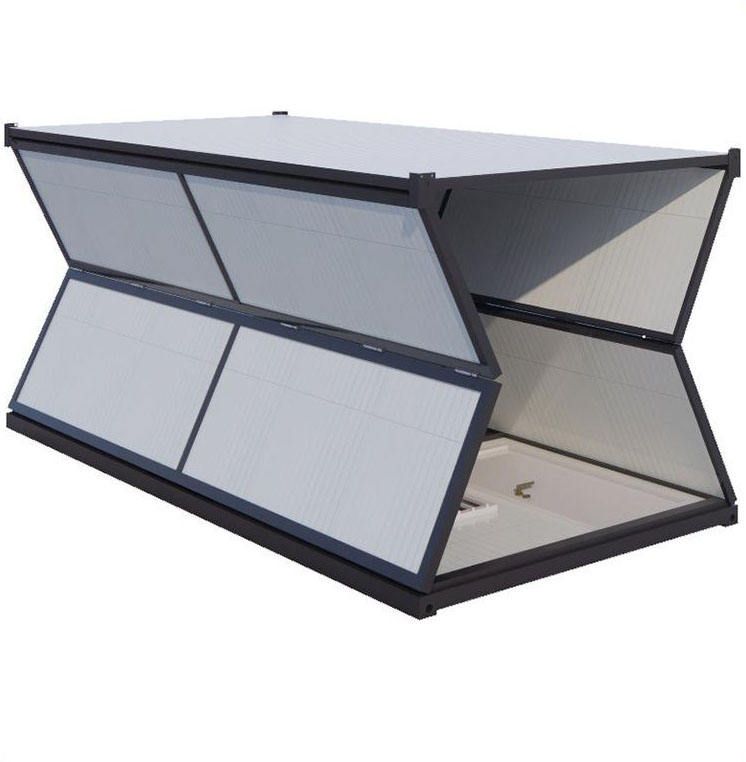
Modular Design: The use of prefabricated components enables rapid assembly and disassembly, greatly enhancing the flexibility of mobile toilets. Take the foldable toilets in Beijing's hutongs as an example; they occupy only 2 square meters of space during the day and can be expanded into six independent compartments at night. Container-type restrooms can be quickly assembled into a 20-stall matrix through modular combinations, adapting to the relocation needs of construction sites.
Water Recycling and Biodegradation Technology: Miniaturized water treatment devices allow for limited reuse of flushing water, reducing dependence on external water sources. Microbial degradation chambers can convert waste into horticultural fertilizer, reducing solid residue and being more environmentally friendly.
Intelligent Management: Sensors can monitor filling status, water consumption, and equipment failures, with data transmitted wirelessly to a management platform. Solar power systems enable the equipment to operate normally in areas without a power grid. For example, the mobile restrooms at Guangzhou Tower scenic spot are equipped with facial recognition paper dispensers, achieving precise scheduling of cleaning through big data.
Green Intelligence and Multi-functional Integration: Equipped with vacuum suction systems, water consumption is only one-eighth that of ordinary toilets. Additional features such as changing areas, handwashing and disinfection devices, and barrier-free access have been added. The internal space design incorporates ergonomic research, enhancing the user experience.
Enhanced Environmental Adaptability: Optimizations have been made for different environments, with added insulation layers and anti-freezing drainage designs in cold regions, strengthened ventilation and anti-mold treatments in hot and humid areas, and reinforced foundations and balance adjustment devices used at construction sites with special geological conditions.
Future Development Directions: Efforts are focused on building self-sustaining systems, such as air water extraction technology and complete biodegradation technology, enabling mobile toilets to become truly independent ecosystems detached from external support.



