
Mobile Toilet Construction Conditions
The construction conditions for mobile toilets are mainly reflected in two aspects: the construction process and applicable scenarios, as detailed below:
Construction Process
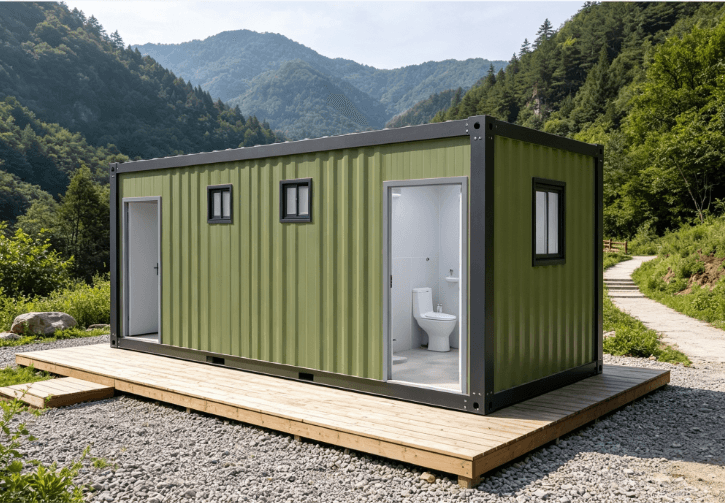
Mobile toilets are typically produced as factory-prefabricated finished products, a characteristic that significantly differentiates their construction conditions from those of traditional toilets. During the factory prefabrication stage, standardized production of the toilet's main structure, internal facilities (such as toilets, sinks, ventilation systems, etc.), and decorative components must be completed according to design requirements. Strict control over material quality is essential during production, with the selection of waterproof, corrosion-resistant, and easy-to-clean eco-friendly materials ensuring the toilet's durability and hygiene. Additionally, factory prefabrication must adhere to modular design principles, breaking down the toilet into multiple detachable and easily transportable modules for subsequent on-site assembly.
The on-site installation phase is a critical step in the construction of mobile toilets. Since the main body of the toilet has already been prefabricated in the factory, on-site work involves only module assembly, pipeline connection, and commissioning, eliminating the need for complex processes such as site selection, foundation treatment, material procurement, and construction associated with traditional toilets. This feature significantly shortens the construction period of mobile toilets, allowing them to be installed and put into use within a few hours. Furthermore, on-site installation requires lower investments in manpower, materials, and funds, needing only a small number of professionals and basic tools, thereby further reducing construction costs.
Applicable Scenarios
Mobile toilets are highly versatile and can be deployed in a wide range of environments, making them ideal for various settings due to their lack of restrictions on working conditions. From an urban infrastructure perspective, mobile toilets can be placed in public areas such as streets, parks, and squares to meet the temporary toilet needs of citizens and tourists. In transportation hubs like stations and docks, where foot traffic is heavy, the flexible deployment capability of mobile toilets can effectively alleviate toilet pressure. For tourist attractions and villa areas, which have high requirements for environmental aesthetics, mobile toilets can be designed with reasonable external structures and color schemes to harmoniously blend with the surrounding environment and enhance the overall landscape.
Moreover, mobile toilets are also suitable for temporary locations such as newly built residential areas and large construction sites. During the development phase of newly built residential areas, where traditional toilets have not yet been constructed, mobile toilets can provide temporary toilet solutions. In large construction sites, the mobility of mobile toilets allows them to be flexibly adjusted according to construction progress to meet workers' needs. Additionally, densely populated public places and bustling commercial streets can also improve public service levels and enhance urban image by deploying mobile toilets.



