
Mobile Toilet Construction
Mobile toilet construction features the advantages of no need for complex civil engineering and convenient installation, with the specific process as follows:
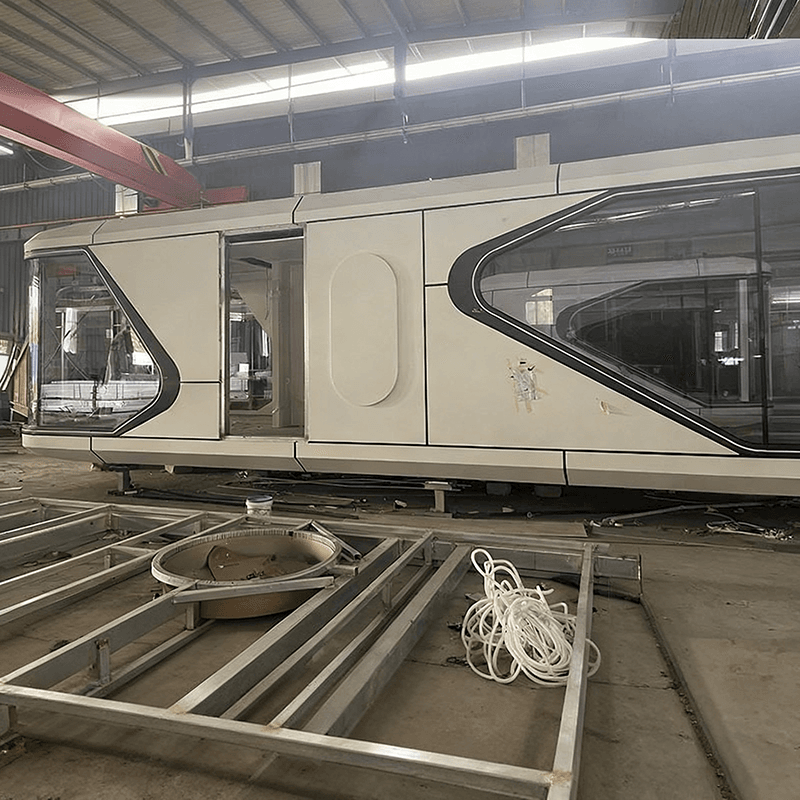
Mobile toilets can be moved as a whole and can be placed at locations with fixed or temporary needs. During new construction, there is usually no need to dig a septic tank or carry out complex civil engineering projects. The installation process is like building with building blocks, which can be completed by erecting columns and splicing and fixing them, with each buckle tightly connected. Taking prefabricated public toilets as an example, in areas without a pipeline network such as scenic spots, they can be installed simply by hardening the ground. The construction period is shortened from the traditional three months to one week. A crane can complete the main body hoisting in half a day, greatly reducing land and infrastructure costs.
When constructing a new mobile toilet, first, determine the toilet's style based on the on-site environment to make it blend in with the surrounding environment and enhance the overall aesthetics. For example, in natural environments such as parks and scenic spots, a style that coordinates with the natural landscape can be chosen; in places like city streets, a simple and modern style can be selected.
Secondly, determine the number of stalls based on the passenger flow. Places with a large passenger flow, such as large shopping malls and stations, need to set up more stalls to meet usage demands; while places with a small passenger flow, such as small parks and communities, can appropriately reduce the number of stalls to avoid resource waste.
In addition, the design of mobile toilets should follow the principles of mobility, cost-effectiveness, durability, environmental protection, ecological friendliness, efficiency improvement, and humanitarian promotion. The overall structure should be lightweight, and lightweight and durable materials such as aluminum alloy and stainless steel should be used as much as possible to ensure structural solidity and facilitate mobility. At the same time, the height and width of the toilet should be controlled, and the mobile device should be fully considered for completeness and rationality to ensure safety and stability during the moving process.



