
Mobile Toilet Concrete Structure
Mobile toilets do have concrete structures, but they are not the mainstream form. They often appear as a combination of steel structures and concrete mobile houses. The following is an explanation from three aspects: structural characteristics, application scenarios, advantages, and limitations.
1. Structural Characteristics
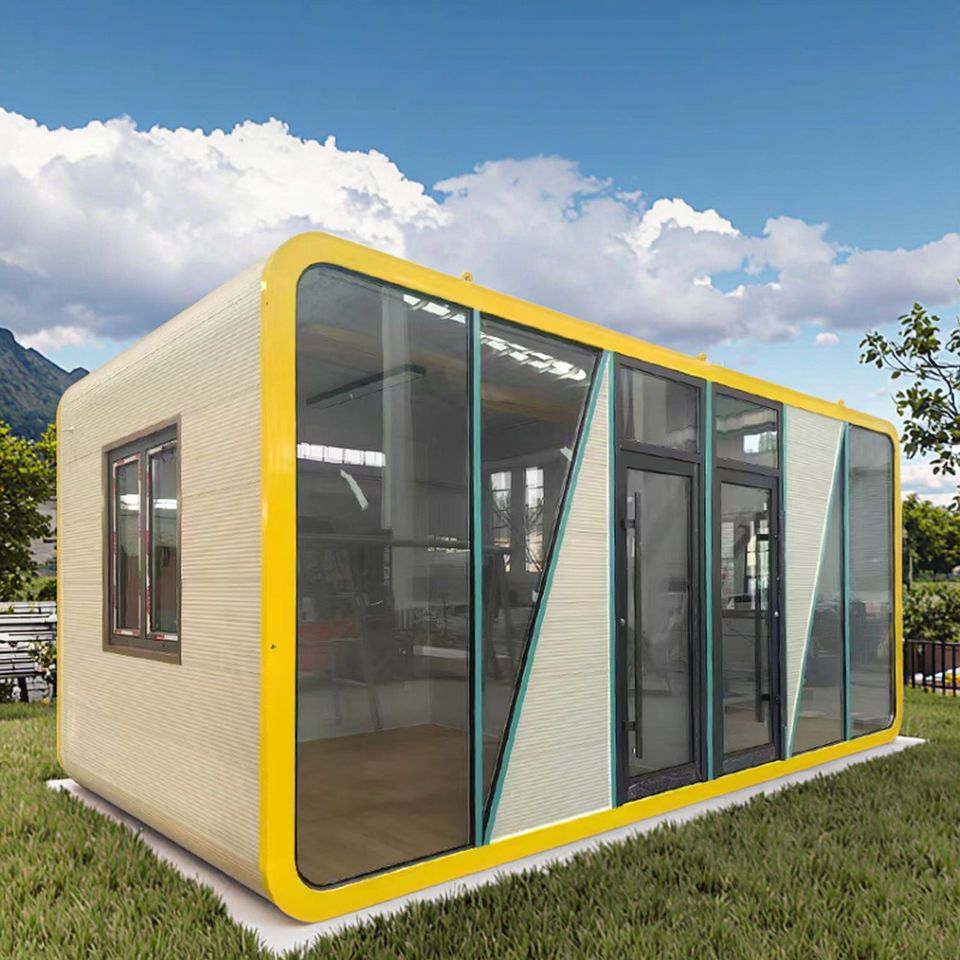
Traditional mobile toilets are mainly made of light steel structures, adopting a modular design. The components are connected by bolts, facilitating quick assembly and disassembly. Their exterior wall materials are mostly lightweight synthetic materials such as aluminum-plastic panels, metal carved panels, or anti-corrosion wood to reduce the overall weight. In contrast, mobile toilets with concrete structures usually use steel structures as the framework and embed concrete mobile house modules inside or outside. For example, the new rural mobile toilet in Maoming, Guangdong, has a steel structure as its main framework and uses prefabricated concrete panels for the walls. This design retains the flexibility of mobile toilets while enhancing structural stability and durability through the use of concrete. This design combines the portability of steel structures with the sturdiness of concrete, making it suitable for scenarios with high requirements for load-bearing or wind resistance.
2. Application Scenarios
Concrete-structured mobile toilets are mostly used in long-term fixed or semi-fixed locations. For instance, in rural areas or tourist attractions, if there is a need to provide public sanitation facilities for a long time and there are high requirements for wind and corrosion resistance, concrete structures can effectively resist natural environmental erosion and extend the service life. In addition, in earthquake-prone or typhoon-prone areas, the modular design of concrete mobile houses can enhance the overall earthquake and wind resistance by reinforcing the steel structure framework, meeting safety needs. In contrast, pure light steel structure mobile toilets are more suitable for short-term use scenarios such as temporary events and construction sites, where their portability facilitates frequent relocation.
3. Advantages and Limitations
Advantages: The load-bearing capacity of concrete-structured mobile toilets is significantly better than that of light steel structures, allowing for the installation of heavier sanitation equipment or water storage systems. Concrete materials are corrosion-resistant and fire-resistant, making them suitable for humid or rainy environments. The long-term use cost is relatively low, and the maintenance frequency is lower than that of synthetic material exterior walls.
Limitations: Concrete modules are relatively heavy, requiring special transportation vehicles (such as heavy trucks) and lifting equipment, which increases the difficulty and cost of relocation. The assembly time is longer than that of pure light steel structures and requires professional team operation. Concrete has high thermal conductivity, so additional insulation measures are needed in winter, and it is prone to heat accumulation in summer, requiring ventilation design to improve comfort.
In conclusion, concrete-structured mobile toilets are a combination of light steel structures and prefabricated concrete technology, suitable for long-term use scenarios with high requirements for stability and durability, but the transportation and assembly costs need to be weighed.



