
Mobile Toilet Completion Acceptance Form
The mobile toilet completion acceptance form should include basic information, acceptance details, and key usage node inspection content. Details are as follows:
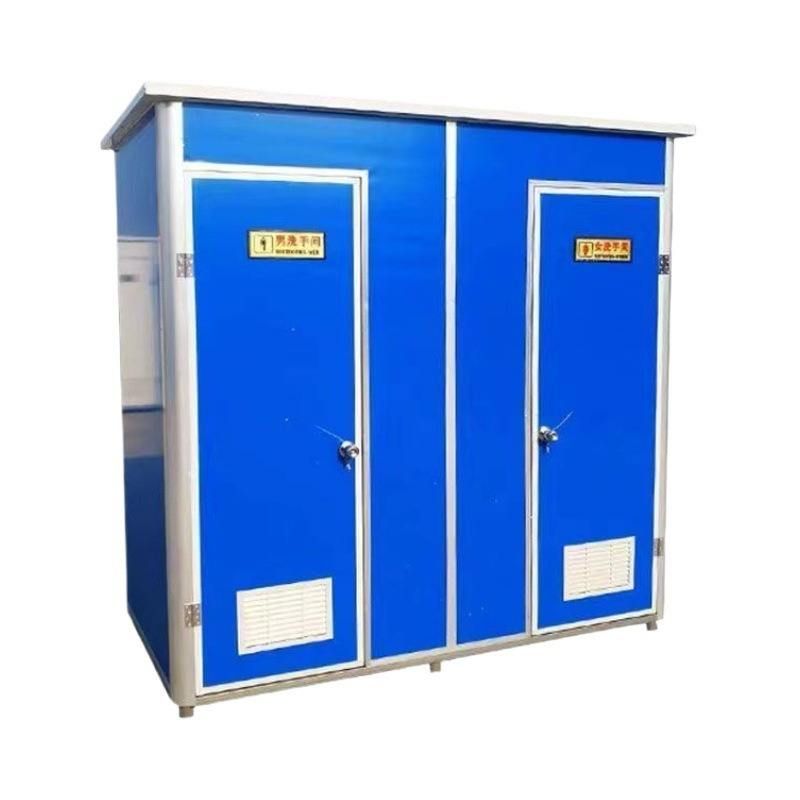
I. Basic Information
The acceptance form should clearly specify core information such as the purchaser, supplier, project name, and project number. For example, in one case, the purchaser was the Xixia County Urban Sanitation and Environmental Center, the supplier was Henan Xujia Environmental Protection Technology Co., Ltd., the project name was 'Mobile Environmental Toilet', and the project number was 2023-46. Additionally, procurement details should be recorded, including the number of toilets, specifications and models (e.g., 2 squatting positions + 1 management room + 1 third restroom), dimensions (e.g., 650022003000 mm), and contract amount (e.g., 405,000 yuan).
II. Acceptance Details
Acceptance should be conducted according to the standards specified in the contract, with a focus on verifying the following:
- Quantity and Specifications: Confirm that the actual delivered number of toilets, models, and dimensions match those specified in the contract, with no damage or missing items. For example, one project's acceptance conclusion clearly stated, 'The quantity and specifications of the goods match those specified in the contract, with no damage or missing items.'
- Appearance and Performance: Check that the product's appearance is intact and aesthetically pleasing, and that its functions are excellent and free of quality issues. The acceptance standard can be expressed as 'The goods' appearance is intact, and their performance meets design requirements.'
- Signature Confirmation: The acceptance leader should sign to confirm the results, as in one case where Li Wei and Jin Xinyu jointly signed.
III. Key Usage Node Inspection
Acceptance should cover the entire lifecycle usage scenarios of the mobile toilet, including:
- Entry Phase: Record the number, dimensions, door and window sealing, fixture installation firmness, floor slip resistance, and signage clarity for each toilet. Check that accompanying items (e.g., tools, manuals) are complete.
- Usage Phase: Verify on-site that the water supply and drainage systems are unobstructed, ventilation is adequate, lighting brightness is sufficient, and door locks operate smoothly, ensuring all functions work normally.
- Cleaning Phase: Inspect the spatial layout from the cleaning and maintenance route to ensure it is reasonable, check that interfaces (e.g., sewage pipes) are sealed, and assess the ease of operation to evaluate daily cleaning feasibility.
- Supply Phase: Confirm that service locations, expected number of users, interface conditions (e.g., water and electricity access), removal methods (e.g., fecal waste treatment), and management responsibilities are clearly defined to avoid later operational disputes.
- Maintenance Phase: If abnormalities are found, preserve the original state and record the problem location to avoid the inability to review the first scene due to continuous troubleshooting, which could affect fault location.
- Relocation Phase: If rectification or relocation is required, re-verify functions according to the original actions, and hand over keys, spare parts, operating instructions, and daily inspection forms to ensure traceable subsequent management.
Through systematic acceptance, it can be ensured that the mobile toilet meets design requirements, providing a guarantee for its long-term stable use in the future.



