
Volver al blog
Artículo
Mobile Toilet Color Spraying Tutorial
Admin 11 de octubre de 2026
The color spraying process for mobile toilets should be selected based on the material. Here are the tutorials and precautions for common materials:
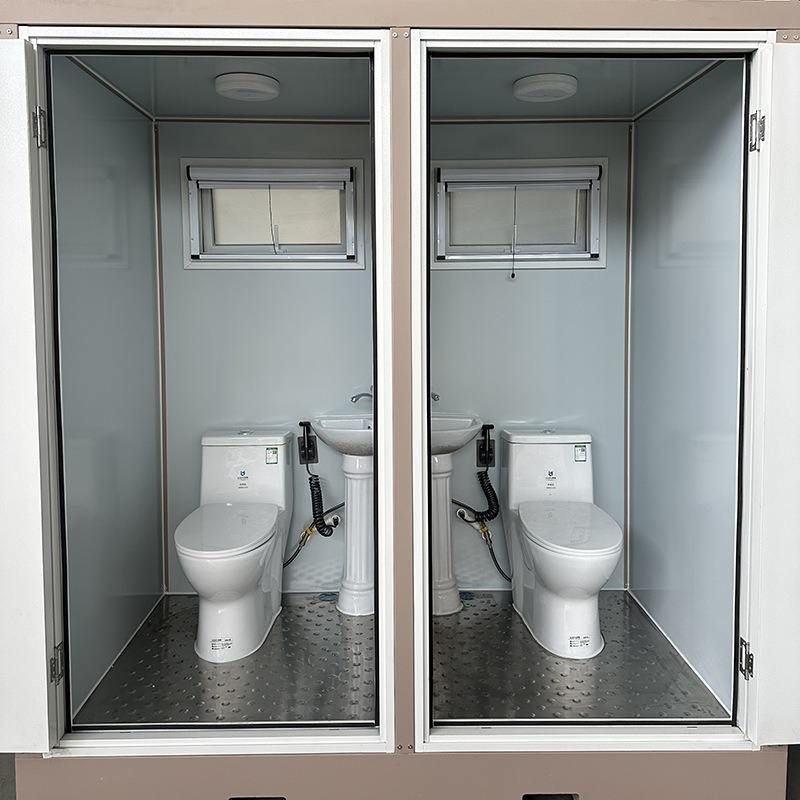
I. Fiberglass Mobile Toilets (Recommended: Gel Coat Coloring Process)
- Color Customization
Achieved by mixing color paste into the gel coat layer, with uniform color distribution within a surface thickness of 0.4-0.6mm, ensuring optimal durability. It is essential to select a high weather-resistant color paste compatible with the gel coat matrix (such as the BASF brand from Germany) to ensure color stability. - Fade Resistance Treatment
- Color Paste and Matrix Selection: Use an isophthalic gel coat matrix paired with a high weather-resistant color paste to enhance UV resistance.
- UV Protection: Add a UV absorber (such as UV-531) and apply a clear coat as an additional barrier to reduce the impact of light aging.
- Dark Color Treatment: For dark colors, double the amount of UV absorber or adopt a double-layer structure (light-colored base gel coat + dark-colored topcoat) to avoid direct exposure to strong light.
- Process Validation
Third-party QUV artificial accelerated aging tests show that after 3000 hours, the color difference Δe ≤ 3.0, equivalent to 5-8 years of outdoor use, validating the long-term stability of the process.
II. Ceramic/Squat Toilet Mobile Toilets (Spray Painting Process)
- Cleaning and Sanding
- Surface Cleaning: Thoroughly clean the surface using a neutral detergent and sponge, focusing on stains in crevices and corners.
- Sanding Treatment: Use fine sandpaper or emery to remove old paint layers and stubborn stains, ensuring paint adhesion.
- Spray Painting Operation
- Paint Selection: Choose a ceramic-specific environmentally friendly paint (such as epoxy resin paint), which has strong adhesion in humid environments and meets environmental standards.
- Layered Spraying: Apply evenly in 2-3 layers, allowing each layer to dry before applying the next to avoid runs or bubbles.
- Environmental Protection: Cover surrounding areas with plastic sheeting or newspaper during spray painting to prevent paint mist from contaminating other items.
- Drying and Maintenance
- Natural Drying: Allow at least 24 hours for complete drying after spraying, avoiding direct sunlight or high-temperature environments to prevent paint cracking.
- Regular Maintenance: Regularly inspect the paint surface and repair scratches or peeling promptly to extend service life.
III. General Precautions
- Material Adaptation: Prioritize gel coat coloring for fiberglass and spray painting for ceramic/metal types to avoid poor results due to mismatched processes.
- Environmental Requirements: Choose harmless and odorless paints and detergents, and wear masks and gloves during construction to reduce health risks.
- Professional Assistance: If unfamiliar with the operation, it is recommended to hire professionals for construction to ensure process compliance and lasting results.
IV. Alternative Solution (Quick Color Change)
For temporary color changes, toilet seat covers or outdoor removable vehicle stickers can be used, but their durability is poor (1-2 years), suitable for short-term events or emergency scenarios.
Relacionados



