
Mobile Toilet Clean Water Flushing Device
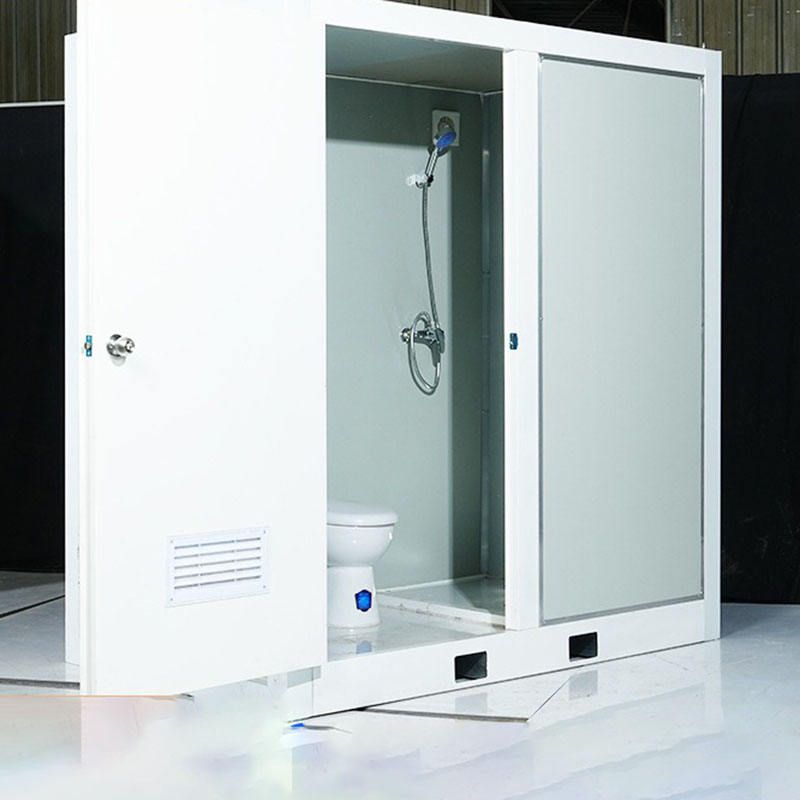
The circulating water-flushing mobile toilet produced by Cangzhou Hengtai Sanitation Equipment Co., Ltd. is equipped with a clean water flushing device. Its core is an intermittent aerobic and anaerobic treatment unit for fecal sewage, which achieves water resource recycling through biotechnology.
The working principle of this device is based on the synergistic effect of biodegradation and physical filtration. Fecal sewage first enters the intermittent aerobic and anaerobic treatment unit, where alternating aerobic (oxygen-requiring) and anaerobic (oxygen-free) environments activate the added biological strains. These strains utilize biofilm technology to attach to the carrier surface, forming efficient microbial communities that accelerate the decomposition of organic matter in feces. The aerobic stage mainly decomposes carbohydrates and proteins, producing carbon dioxide and water; the anaerobic stage further decomposes refractory substances, generating gases such as methane while reducing odors.
The treated sewage needs to pass through a multi-stage filtration device, including steps such as coarse filtration, fine filtration, and activated carbon adsorption, to remove suspended solids, microorganisms, and residual organic matter, ensuring that the water quality meets flushing standards. The filtered clean water is then re-delivered to the toilet's water storage system for flushing fixtures, forming a closed-loop cycle. This process not only reduces the consumption of fresh water resources but also minimizes the environmental impact of sewage discharge.
The advantages of this device lie in its environmental friendliness and cost-effectiveness. By using biodegradation technology, it avoids the use of chemical agents and reduces secondary pollution; the recycling mode reduces water consumption per use by more than 80% compared to traditional toilets, making it suitable for scenarios with scarce water resources or temporary use. In addition, the system operates stably with low maintenance costs, requiring only regular replenishment of biological strains and inspection of filtration components.
It has a wide range of applicable scenarios, including temporary or mobile locations such as large-scale events, construction sites, and tourist attractions. Its modular design facilitates quick installation and disassembly, and the treatment scale can be adjusted according to needs to meet usage requirements under different pedestrian traffic volumes.



