
Mobile Smart Toilet Construction
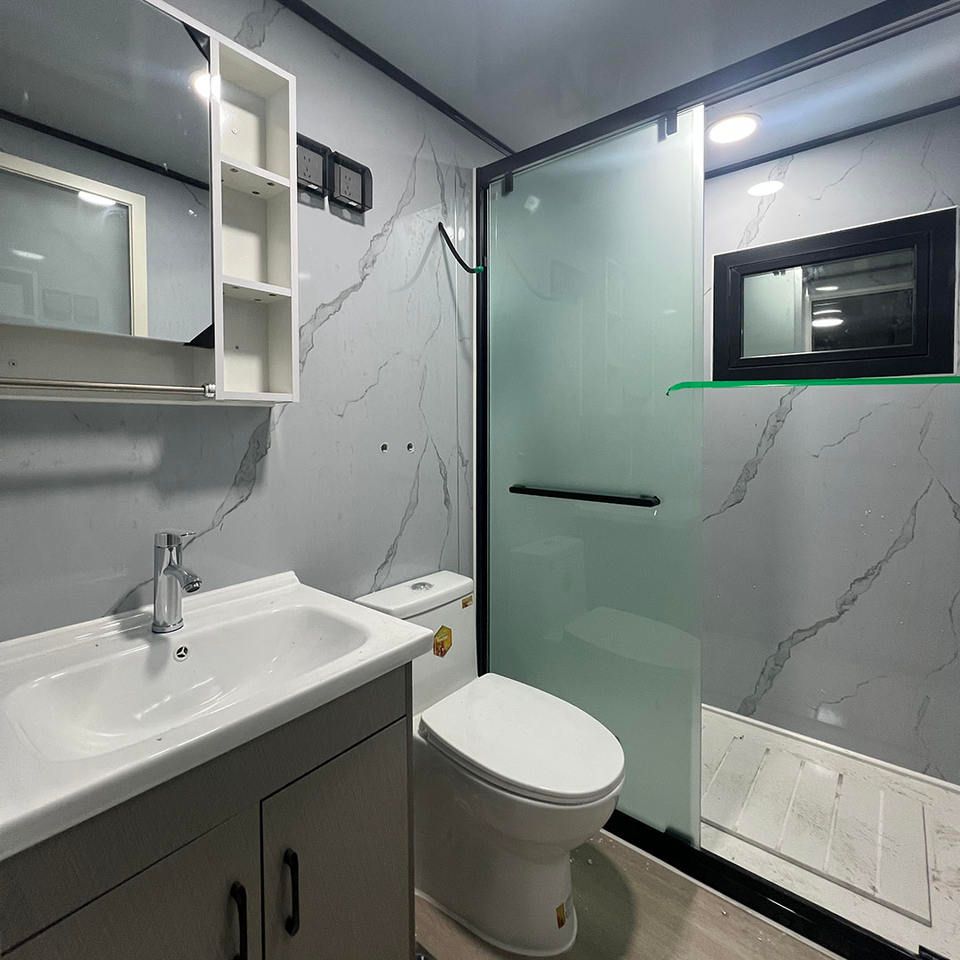
Mobile smart toilet construction relies on a variety of advanced technologies to upgrade and transform traditional public toilets, featuring significant characteristics in terms of development stages, materials, environmental protection technologies, and functional implementations.
Development Stages
There have been three stages. The initial intelligent stage (2015 - 2018) mainly involved adding single intelligent devices to achieve basic functions such as automatic flushing, with devices operating independently without data linkage. The digital upgrade stage (2019 - 2022) saw the widespread adoption of IoT sensing technologies, with public toilets equipped with various monitoring devices, accompanied by visual data dashboards and management backends, enabling digital operation and maintenance capabilities. The full-scenario intelligent stage (from 2023 to the present) has witnessed the deep implementation of technologies such as edge computing, forming a complete architecture that achieves multiple functions such as device linkage and automatic control, adapting to multi-scenario needs and integrating into smart city management systems.
Material Applications
Nowadays, high-tech composite materials are commonly used, such as metal carved panels, which can withstand various climatic challenges. Frame reinforcement technology has improved the product's wind and earthquake resistance ratings. New panels, through carving processes, blend natural appearances and can harmoniously integrate into different environments, even becoming small-scale public art carriers.
Environmental Protection Technologies
- Water-saving and recycling type: Equipped with biochemical treatment devices, it utilizes microbial degradation technology to harmlessly decompose feces. The treated water is deeply purified and reused for flushing, forming a closed-loop water resource cycle with extremely low water consumption.
- Waterless ecological type: It adopts dry separation and packaging, microbial strain degradation, and other methods to convert waste into organic substrates, without relying on sewer networks and external resources, achieving zero sewage discharge and high self-sufficiency.
- Fully automated and highly integrated type: Through precise odor treatment and ventilation exhaust systems, combined with automated flushing, flow monitoring, and other means, it creates a clean and comfortable usage environment.
Functional Implementations
Management is more precise, with various functions loaded to achieve comprehensive intelligent control. Service is more considerate, with intelligent entrance screens displaying dynamic data and induction devices in toilet stalls indicating status. The environment is more comfortable, with devices automatically monitoring and purifying harmful gases and environmental indicators, and special spaces equipped with emergency assistance buttons. Convenience is more detailed, with intelligent people flow counting devices at toilet entrances and exits, allowing citizens to check information about nearby public toilets and navigate via mini-programs.



