
Mobile Sewage-Free Pipe Toilet
A mobile sewage-free pipe toilet is a mobile sanitation facility that can handle or collect excrement without the need for traditional sewage pipe networks. It is widely used in scenarios such as outdoor activities, temporary gatherings, and construction sites.
Technical Principles
- Packaging Technology: Excrement is sealed in biodegradable plastic bags through mechanical devices and then collected and disposed of uniformly. This method is simple to operate and suitable for short-term or temporary use scenarios, but the packaging bags need to be replaced regularly.
- Biodegradation: Microbial strains are used to decompose excrement into water and carbon dioxide under specific conditions (such as temperature and humidity control), achieving reduction and harmlessness. For example, the Yuanting Smart Environmental Protection Public Toilet Station adopts the whole-machine water-containing microbial fecal storage and degradation technology, and the mobile toilets in the factory areas of Hangzhou Jiagu Sanitation Facilities Co., Ltd. also use similar technologies.
- Circulating Filtration and Chemical Treatment: The liquid part is purified through physical or chemical methods and then used for toilet flushing circulation, while the solid part is separated and stored. This method can reduce water consumption but requires regular maintenance of the filtration system.
Structure and Functions
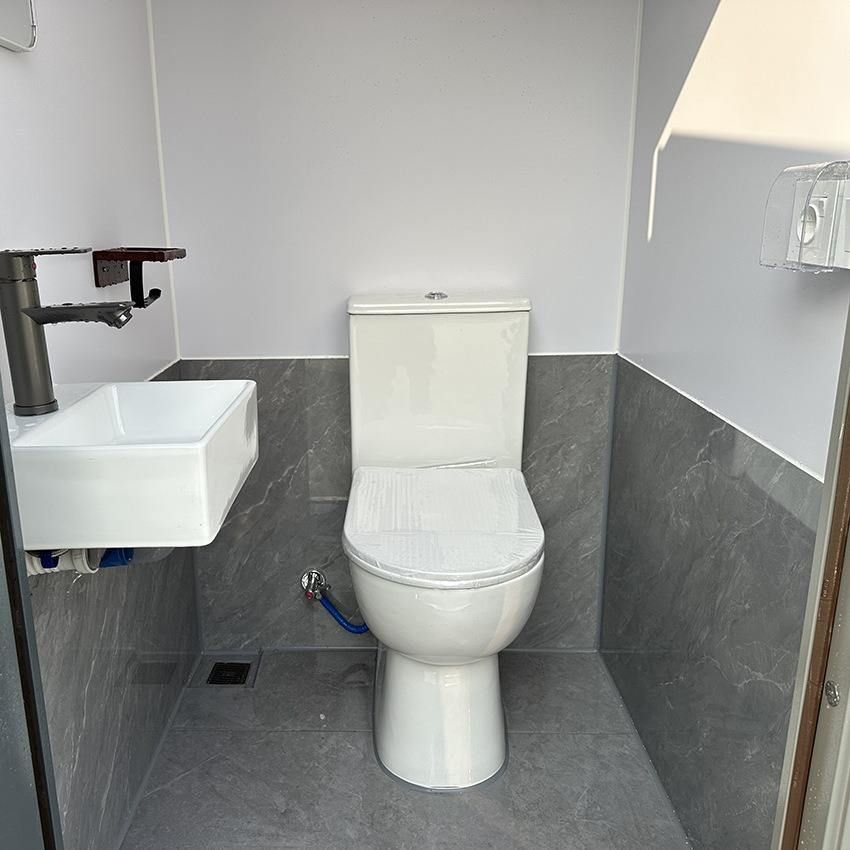
Mobile sewage-free pipe toilets usually adopt a steel frame as the main body, covered with anti-corrosion panels on the outside, and equipped with basic functions such as a sewage storage tank, ventilation system, toilet flushing alternative device (such as a foot pedal or electric packaging device), and lighting inside. Factories can customize the capacity, exterior color, and additional equipment according to needs, such as adding a handwashing sink, storage rack, or solar power supply system to adapt to different scenarios.
Maintenance and Precautions
Daily maintenance includes cleaning the sewage storage tank, replacing biological agents or packaging bags, and checking the ventilation and deodorization system. Users need to perform these tasks regularly according to the operation manual to avoid blockages or odor diffusion. In low-temperature areas, anti-freezing measures need to be taken, such as adding insulation layers or heating devices.
Advantages and Development
Mobile sewage-free pipe toilets have strong environmental adaptability and do not require the laying of water pipes and sewage pipes, significantly reducing deployment time and costs. With technological progress, products have evolved from simple dry toilets to modern facilities equipped with intelligent sensors, overflow alarms, remote monitoring, and other functions. Some factories are also exploring technical paths to convert excrement into organic fertilizers or energy, forming a resource recycling closed loop.



