
Mobile Room-Style Toilet
A mobile room-style toilet combines the characteristics of mobile bathroom units and mobile toilets, offering overall mobility, diverse functions, and the ability to meet sanitation and related needs in various locations.
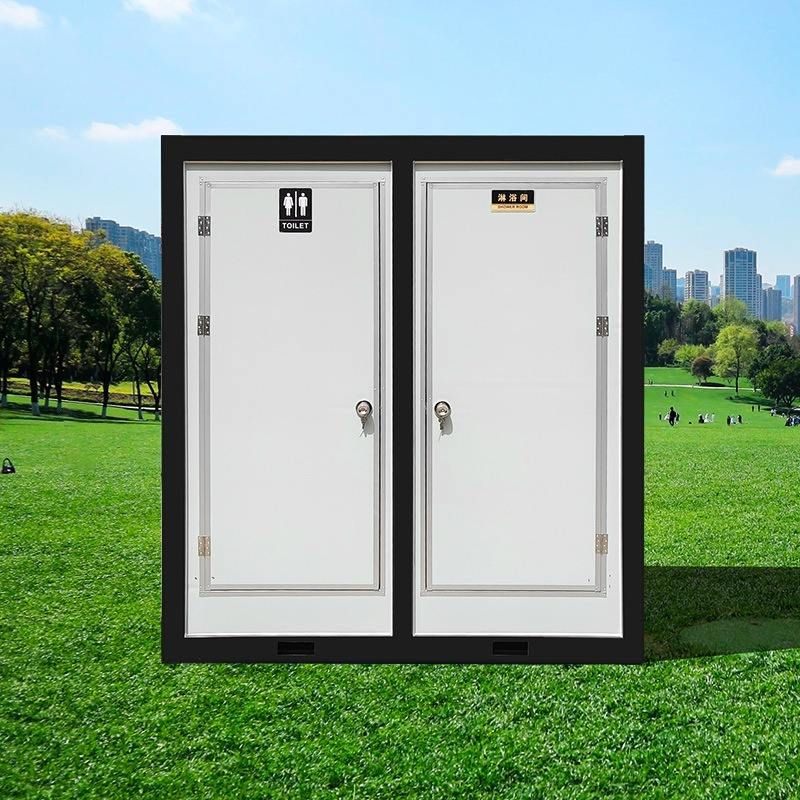
I. Functional Features Mobile room-style toilets have a rich array of functions. Some types that resemble mobile bathroom units not only fulfill the basic toilet functions but also include shower rooms and spaces for placing washing machines, achieving dry-wet separation. For example, some models are 2 meters wide and 3.5 meters long, using two-tone metal insulated decorative panels and equipped with aluminum alloy glass single doors. Others are 2 meters wide and 3 meters long, with a pure white exterior and the same type of door. The indoor washbasin and makeup mirror are placed outside, allowing users to wash up, use the toilet, and shower without interference. Some customized mobile toilets also have separate male and female areas to meet the needs of different groups.
II. Structural Composition It generally consists of multiple parts. Similar to ordinary mobile toilets, it includes a fecal sewage storage tank (or fecal sewage treatment device) for collecting and treating excreta; a floor for providing a stable standing and moving surface; sanitary ware such as toilets; walls for enclosing and separating spaces; washing equipment including washbasins; a water tank for storing cleaning water; a roof for sheltering from wind and rain; and a mobile device for facilitating overall movement. Customized mobile toilets are welded with an overall steel structure frame, making them sturdy and durable. They use gray and white metal decorative panels with insulation, heat resistance, and corrosion resistance. They feature light and ventilation sliding windows in the front and gray aluminum alloy exterior doors, enhancing comfort and convenience.
III. Application Scenarios Mobile room-style toilets are suitable for various locations. Due to their mobility, they can be placed at locations with fixed or temporary needs, such as transportation hubs like train stations and docks, to meet the sanitation needs of a large number of floating populations. At tourist attractions, they can be flexibly adjusted according to changes in tourist volume. At temporary event sites, such as large exhibitions and concerts, they can be quickly set up and put into use to provide sanitation services for the public and customers.



