
Mobile Restroom Toilet Configuration
The toilet configurations of mobile restrooms vary depending on the type and requirements, mainly including structural forms, mobility methods, sewage treatment methods, and specific facility configurations.
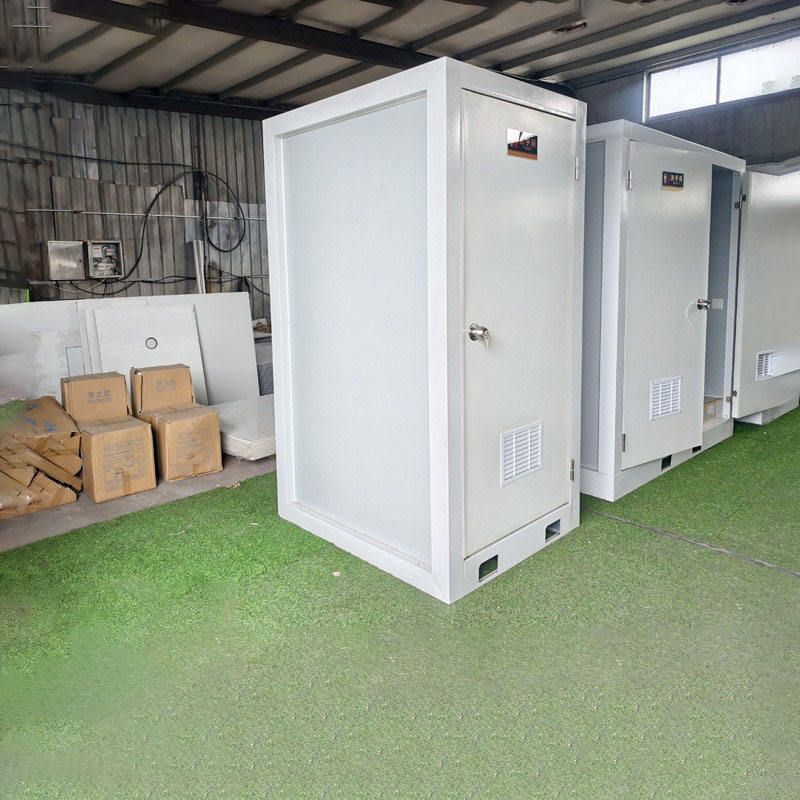
In terms of structural forms, there are single-unit and composite structures. Single-unit mobile restrooms are relatively independent and have a simpler structure; composite structures are composed of multiple parts and may offer richer functions. Based on mobility methods, they can be classified as lifting/handling types and powered/trailer types. Lifting/handling mobile restrooms require lifting equipment or manual handling for movement; powered/trailer types can be towed by vehicle power, making movement more convenient.
Regarding sewage treatment methods, there are water-flush, non-water-flush suction, and recirculating water-flush types. Water-flush types are similar to traditional toilets, using water to flush away waste; non-water-flush suction types collect waste through suction equipment; recirculating water-flush types recycle and reuse flushing water, making them more water-saving and environmentally friendly.
Taking container restrooms (a type of mobile restroom) as an example, their internal facility configurations are rich. For core sanitary fixtures, the mainstream toilet systems are direct-discharge or vacuum toilet systems, with high-end configurations including ceramic squat toilets or sit toilets equipped with automatic flush sensors; washbasins are typically equipped with stainless steel or ceramic basins and hot/cold water mixing faucets; men's restrooms or large restrooms may have additional sensor-flush urinals. For auxiliary functions and facilities, LED moisture-proof lighting and powerful exhaust fans are commonly used; anti-fog mirrors, as well as stainless steel hooks, shelves, and toilet paper holders, are provided; the floor is made of slip-resistant and waterproof PVC flooring or epoxy flooring, and the walls are made of integral fiberglass or high-strength metal panels; in cold regions, thermal insulation layers and electric heaters or warm air blowers are standard. Extended configurations can be customized as needed, such as barrier-free facilities including widened doors, barrier-free handrails, low-position washbasins, and specialized toilets; smart systems including automatic soap dispensers, hand dryers, smart toilet seats, and remote monitoring systems; when there are no sewage discharge conditions, the bottom of the container is integrated with a sewage collection tank equipped with a liquid level alarm. Specific mobile restrooms such as those with an apple-warehouse design or conventional mobile restrooms also have their unique configurations.



