
Internal Structure of Mobile Portable Toilets
The internal structure of mobile portable toilets varies depending on the manufacturing method, but typically includes core systems such as drainage, sanitary ware, and water supply, with some also equipped with water storage or fecal treatment devices.
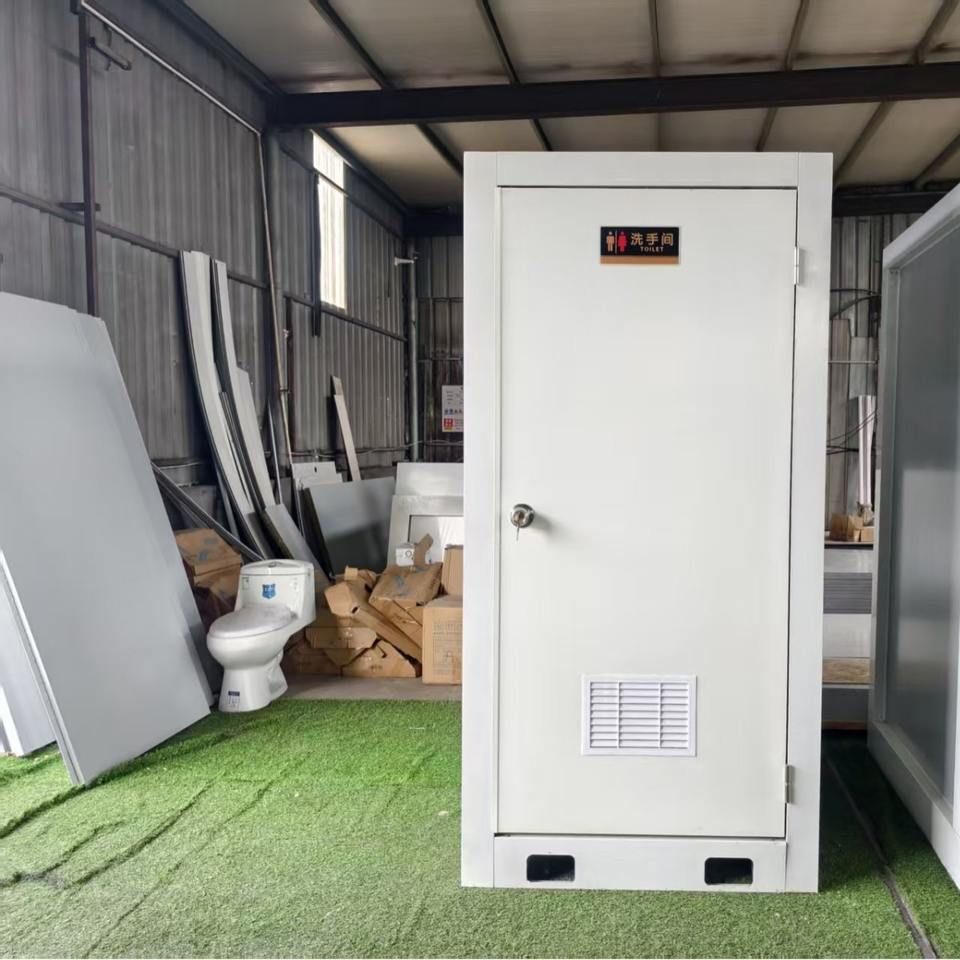
Drainage System Construction
One common method involves drilling a hole in the floor of the water storage tank, inserting an elbow, and connecting a water pipe as a drainage outlet. The toilet is then aligned and fixed over the drainage outlet to ensure smooth discharge of waste. Another method involves drilling a hole at the bottom of the bucket to install a drainage pipe, forming a floor drain. Holes are also drilled on the sides to connect direct fittings, and additional direct fittings are installed at the bottom of the bucket. The drainage pipe is then connected to a sewage bucket for waste collection and discharge.
Sanitary Ware Installation
The toilet is the core sanitary ware and must be securely placed over the drainage outlet or drainage pipe hole, with the water tank properly installed. In some cases, glass glue is used to fix the toilet for added stability. A toilet seat is also provided to enhance user comfort. If a shower function is required, a spray-type showerhead is made using a water pipe, connected to a shower hose, and a shower bracket is installed to meet basic bathing needs.
Water Supply System Layout
Water pipes are fixed on wall clips, and a faucet is installed. A pipe cap is secured with screws below the faucet, which is then connected to a water pipe serving as the drainage outlet. A hole is drilled in the pipe cap, coated with glass glue, and a stainless steel basin is fixed as a handwashing sink, forming a handwashing water supply and drainage loop. An inlet pipe is connected to the toilet water tank to ensure flushing water. Another method involves installing a three-way fitting below the inlet pipe and connecting it to a showerhead. A horizontal water pipe is connected to the outlet pipe three-way fitting and extended to the doorway as the inlet pipe for the handwashing sink, with one end connected to the inlet pipe and the other end to a hose, enabling multi-way water supply.
Other Components
Mobile toilets may also include fecal sewage storage tanks (or fecal sewage treatment devices) for collecting and treating waste; flooring provides a stable standing and moving space; walls are used to separate spaces and protect privacy; grooming equipment, in addition to handwashing sinks, may include mirrors, etc.; water tanks store flushing water; the roof provides shelter from wind and rain; and mobile devices facilitate the overall transportation and movement of the toilet.



