
Volver al blog
Artículo
Mobile Office Container House
Admin 17 de septiembre de 2026
Mobile office container houses are office building forms that use containers as basic structural modules and are transformed for office use. They have various types and characteristics and are widely used in different scenarios.
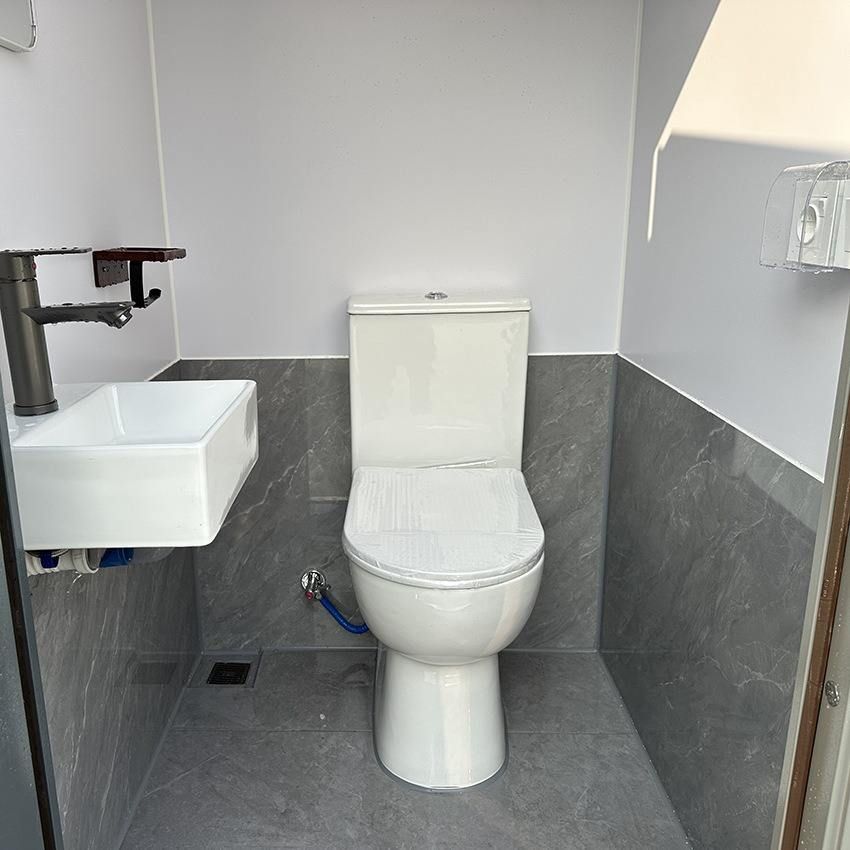
I. Types and Structural Characteristics
- Standard Transformed Type: For example, a 24.5-square-meter container office is 3.5 meters wide and 7 meters long. Its frame and columns are made of 10×10, 1.5-millimeter-thick hot-dip galvanized square tubes, providing a stable and corrosion-resistant structure. The windows are usually 1.5 meters by 1.5 meters casement windows equipped with double-layer coated tempered insulating glass, offering both lighting and heat insulation properties.
- Quick-Assembled Container House: Mainly designed with a modular approach, for instance, with a specification of 3 meters wide, 6 meters long, and 2.8 meters high, the frame cost can be as low as 1800 yuan per set. Its core advantages lie in its mobility and detachability. The installation process is simple and quick, without the need for complex construction equipment, making it suitable for short-term or frequently changing office needs.
- Shipping Container Transformed Type: This type directly utilizes retired shipping containers for internal transformation while retaining the original container structure, providing earthquake and wind resistance. Such offices are easy to move and can be transported as a whole like cargo, making them especially suitable for projects with tight schedules.
II. Core Advantages
- Flexibility and Economy: The modular design supports rapid assembly and disassembly, reducing time costs. The materials can be recycled, minimizing construction waste. For example, the low frame cost of quick-assembled container houses makes them suitable for projects with limited budgets.
- Strong Adaptability: Shipping container transformed offices can withstand harsh weather conditions and are suitable for areas with complex geological conditions or variable climates. Standard transformed types can meet different lighting and space requirements by adjusting windows and partitions.
- Emergency Response Capability: In emergency situations, such as the Zhangbei Wind Power Project which required 30 dormitories, container offices can be transported to the site and put into use in a short time, effectively alleviating the pressure of temporary accommodation and office space.
III. Typical Application Scenarios
- Construction Sites: As temporary offices or dormitories, they meet the office and rest needs of construction workers while avoiding the waste of resources after the demolition of traditional buildings.
- Emergency Projects: In scenarios such as natural disaster relief and temporary medical stations, container offices can be quickly deployed to provide a stable working environment.
- Creative Office Spaces: Some enterprises transform containers into personalized office spaces, utilizing their industrial style and modular characteristics to create low-cost, highly flexible creative parks or co-working spaces.
Relacionados



