
Mobile House Restroom and Toilet
Mobile house restrooms and toilets generally refer to toilet facilities that can be moved as a whole and set up at fixed or temporary locations, mainly including mobile bathroom units and mobile toilets.
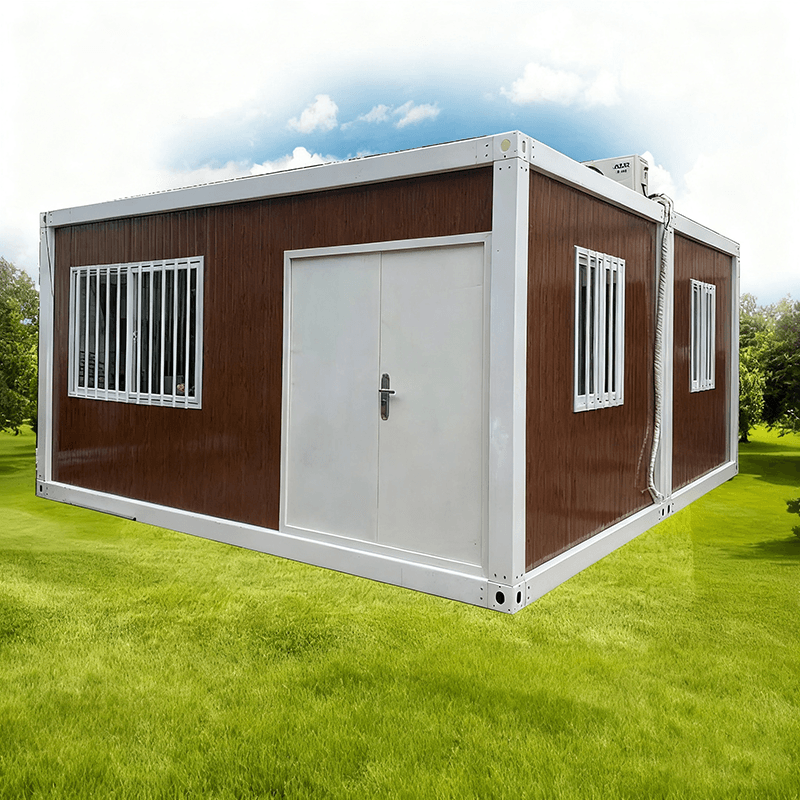
Mobile bathroom units offer diverse functions. Some models not only meet the need for using the toilet but can also be used for bathing and even accommodate washing machines, achieving "three functions in one unit." Their size designs are flexible, with common specifications such as a width of 2 meters and lengths of 3 meters or 3.5 meters, adapting to different spatial requirements. Externally, they often feature dual-tone or pure white metal insulated decorative panels paired with aluminum alloy glass single doors, combining aesthetics with practicality. The interior layout emphasizes functionality, often incorporating a wet-dry separation design, with sinks and makeup mirrors typically placed outside to prevent water vapor from affecting other areas during bathing, enhancing the user experience.
Mobile toilets, on the other hand, focus more on meeting public restroom needs, usually divided into male and female sections. They are constructed with a sturdy steel frame, ensuring durability. Externally, they predominantly feature gray and white metal decorative panels, offering thermal insulation and corrosion resistance, suitable for long-term outdoor use. They are equipped with daylighting and ventilation sliding windows at the front and gray aluminum alloy exterior doors, ensuring both ventilation and safety. Internally, they are complex, including fecal sewage storage tanks (or fecal sewage treatment devices), flooring, sanitary fixtures, walls, washing equipment, water tanks, roofs, and mobility devices. Based on structural form, they can be categorized into single-unit and composite structures; by mobility method, into lifting, handling, and powered or towed types; and by sewage treatment method, into water-flush and waterless suction, recirculating water-flush, and dry-packing types.
Mobile toilets offer significant advantages, such as mobility, modularity, and ease of transportation, enabling rapid deployment where needed. They have a wide range of applications, including stations, docks, tourist attractions, villa areas, new residential communities, large construction sites, squares, densely populated public places, and bustling commercial streets, effectively addressing toilet needs in both temporary and fixed locations.



