
Volver al blog
Artículo
Mobile House Container House
Admin 15 de septiembre de 2026
Mobile house container houses are independent office or living units transformed from standard containers, featuring robust structures, convenient transportation, and modular expandability, suitable for construction sites, emergency response, temporary commercial settings, and more. The following analysis covers types, structural advantages, application scenarios, and selection considerations:
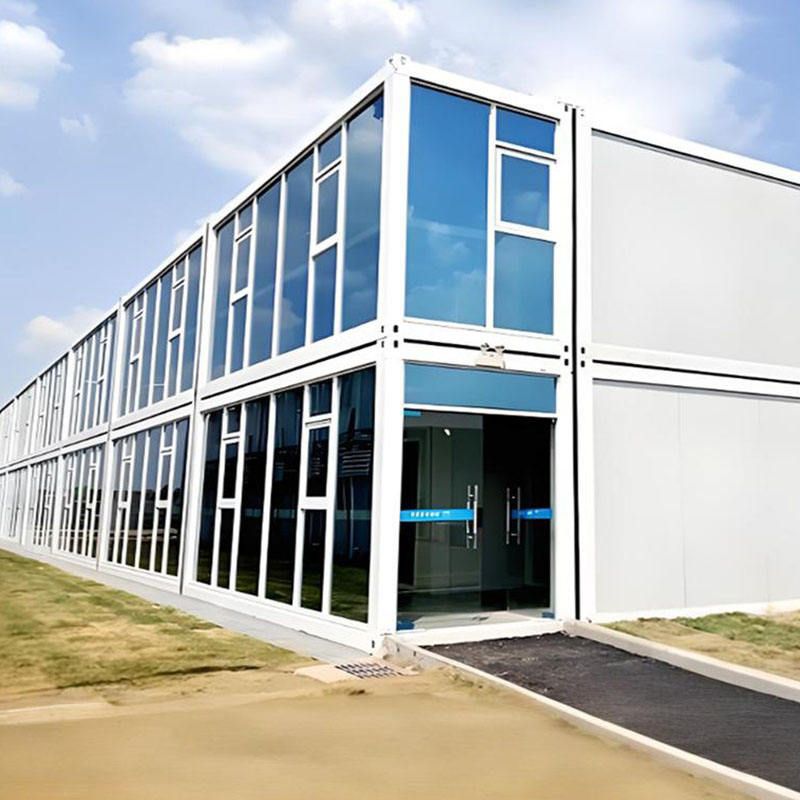
Types and Structural Advantages
Container houses can be categorized into four types based on structure and purpose:
- Container-style: Built on 20-foot or 40-foot standard containers, these units are structurally robust and easy to transport. They can be used independently or combined, making them ideal for construction site command centers.
- Foldable: Designed to fold, these containers reduce their volume to 1/4 to 1/5 of their expanded state during transportation. A single truck can carry 15-20 units, reducing storage space requirements by 60%-80%. They are suitable for emergency response scenarios requiring rapid deployment.
- Modular: Constructed from light steel frames and color-coated steel panels, these units are assembled on-site in a modular fashion. They can be flexibly expanded based on occupancy and functional zoning, commonly used for temporary offices in industrial parks.
- Expandable: These containers feature additional side or end expansion modules, increasing usable area by 30%-50% when expanded. They are suitable for long-term on-site office use.
Application Scenarios and Performance Adaptation
Different structures cater to varying needs:
- Emergency Support Scenarios: Foldable containers offer significant transportation cost advantages. For example, Suzhou Zhongnan's products have 15%-25% lower transportation costs per unit compared to other brands, with long-term storage space costs reduced by over 40%.
- Reusable Turnaround Scenarios: The deployment speed of foldable containers directly impacts project startup time. Hydraulic automatic expansion structures (like those from Suzhou Zhongnan) can be operated by a single person in 5 minutes, while manually assembled products take 10 minutes.
- High Comfort Demand Scenarios: Expandable containers enhance space utilization through additional expansion modules, suitable for long-term on-site scenarios requiring high living or office comfort.
Selection Considerations
Consult professional manufacturers based on specific needs, focusing on the following parameters:
- Transportation and Storage Costs: The folded volume ratio and single-truck load capacity directly affect bulk deployment efficiency.
- Deployment Speed: Hydraulic automatic structures outperform manual assembly, shortening project startup times.
- Structural Stability: Laser cutting and automated welding processes (like those from Fujian Yuecong) ensure robust container joint integrity.
- Thermal Performance: A three-layer construction (galvanized steel + rock wool insulation + PVC-coated steel panels) reduces indoor temperature fluctuations by 40%, but attention should be paid to door and window sealing.
Relacionados



