
Mobile Flush Toilet Storage Tank
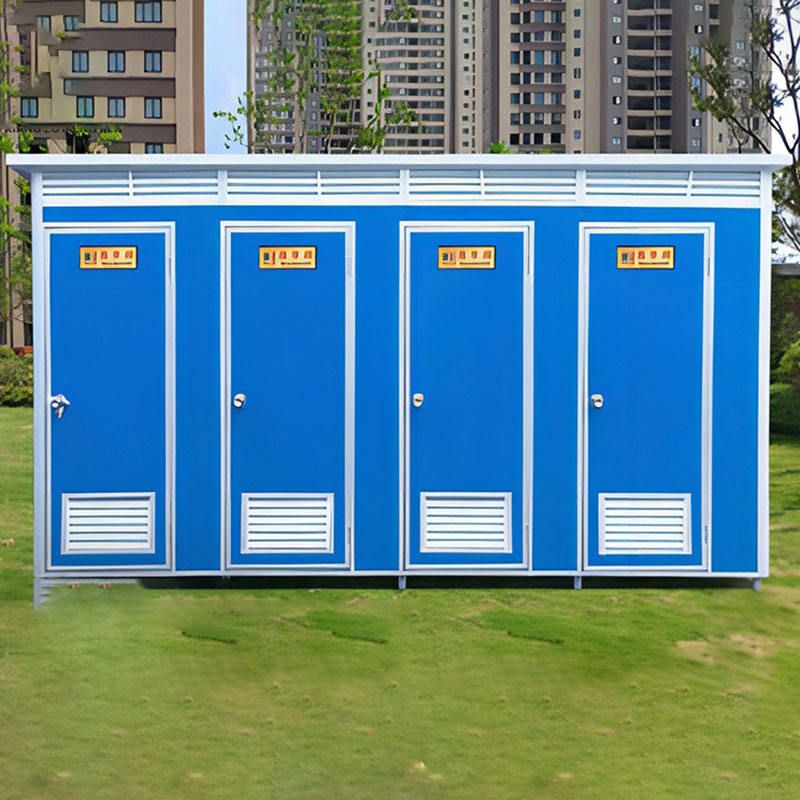
The mobile flush toilet storage tank is a key component in mobile toilets for storing fecal wastewater. It typically forms a complete mobile toilet system together with fecal wastewater treatment devices, sanitary ware, etc.. Here is a popular science introduction from aspects such as structure, function, material, and specifications:
1. Structure and Function
The core function of the storage tank is to temporarily store the fecal wastewater generated by flush toilets, preventing direct discharge from causing environmental pollution. Its structure is usually a sealed design, with an inlet at the top (connected to the flushing system) and an exhaust port (to prevent odor accumulation). The bottom may be equipped with a sewage outlet or a sewage suction port for regular cleaning. Some high-end models integrate a septic tank function, reducing the volume and odor of the wastewater through layered sedimentation or biological degradation and extending the cleaning cycle.
2. Material and Durability
The material of the storage tank directly affects its service life and environmental performance. Common materials include:
- High-density polyethylene (HDPE): Corrosion-resistant and impact-resistant, suitable for long-term outdoor use, and lightweight for easy movement;
- Stainless steel: High strength and easy to clean, but with a higher cost, mostly used in high-end or fixed mobile toilets;
- Fiberglass-reinforced plastic (FRP): Lightweight and chemically resistant, but relatively brittle and requiring protection from external impacts.
Material selection should comprehensively consider the usage scenario, budget, and maintenance cost.
3. Specifications and Capacity
The capacity of the storage tank is usually designed according to the number of users and the cleaning frequency, with common specifications ranging from 200 liters to 2000 liters. For example:
- Small single-toilet mobile toilets: With a capacity of about 200-500 liters, suitable for temporary events or low-frequency usage scenarios;
- Large multi-toilet mobile toilets: With a capacity of over 1000 liters, requiring a sewage suction truck for regular cleaning.
A too-small capacity will lead to frequent cleaning, while a too-large capacity may increase the difficulty of movement. It is necessary to balance according to actual needs.
4. Environmental Protection and Maintenance
The storage tank needs to be cleaned regularly to prevent blockage and odor diffusion. Cleaning methods include:
- Manual sewage suction: Using a sewage suction pump to pump the wastewater into a septic tank or municipal sewer network;
- Biological degradation: Adding microbial agents to accelerate the decomposition of organic matter and reduce the cleaning frequency;
- Recycling: Some systems use the treated reclaimed water for flushing to save water resources.
In addition, the storage tank should be equipped with an anti-leakage design to prevent wastewater leakage from polluting the soil or groundwater.
5. Compatibility and Expandability
The storage tank needs to be compatible with other components of the mobile toilet (such as the flushing system and sewage pipes). Some models support modular expansion, for example, by increasing the number of storage tanks to increase the total capacity or connecting solar panels to achieve energy-saving flushing, adapting to different scenarios.



