
Mobile Emergency Shelter Toilet
Mobile emergency shelter toilets feature rapid deployment, durable materials, independent waste treatment, and adaptability to complex scenarios, playing a crucial role in emergency situations.
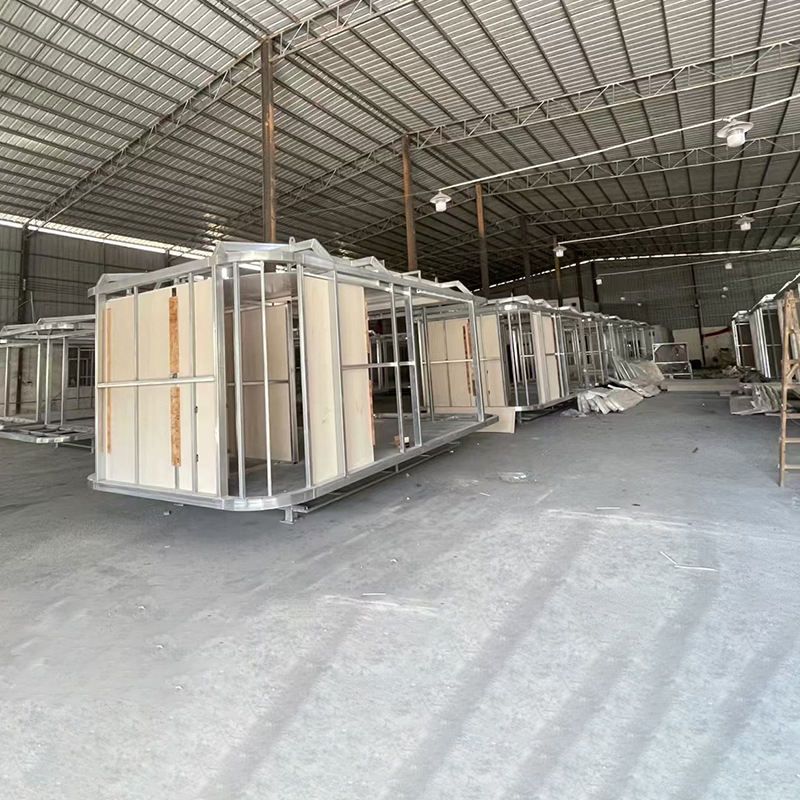
Rapid Deployment and Modular Design
Mobile emergency shelter toilets are constructed without fixed foundations, enabling quick deployment on various terrains (such as muddy, sandy, or sloped ground) without complex construction. Their modular assembly further shortens the time from transportation to operational use, with individual modules installable within hours, significantly enhancing emergency response efficiency. This design is particularly vital in the early stages of natural disasters (e.g., after earthquakes or floods), providing essential sanitation facilities to affected populations promptly and preventing environmental pollution and disease transmission risks caused by prolonged lack of toilets.
Durable Materials and Hygiene Assurance
The toilet enclosures are typically made of high-performance composite materials, offering high structural strength to withstand repeated handling and harsh environments (such as high temperatures, humidity, and strong winds). The dense, smooth material surface facilitates easy cleaning and disinfection, effectively inhibiting the growth of bacteria, viruses, and other microorganisms, reducing cross-infection risks. Some models are also equipped with antibacterial coatings, further enhancing hygiene safety, making them suitable for use in epidemic or biological disaster scenarios.
Independent Waste Treatment System
The integrated waste treatment system achieves on-site preliminary control of pollutants through chemical decomposition, biodegradation, or physical containment. For example, chemical decomposition toilets use disinfectants to break down excreta, while biodegradation models rely on composite microbial communities (e.g., waterless flush toilets can operate stably at 40°C) to convert organic matter into harmless substances. Some high-end models also feature waste packaging or high-temperature treatment functions, temporarily containing biosafety risks to buy time for subsequent centralized treatment, particularly suitable for temporary shelters lacking municipal sewage networks.
Adaptability to Complex Emergency Scenarios
When natural disasters disrupt water supplies or damage sewage pipelines, mobile toilets can operate independently of municipal networks. Their waterless flush designs (e.g., waterless flush toilets, 304 stainless steel air-defense dry toilets) eliminate water dependency, making them suitable for scenarios where conventional public toilets cannot be installed. Additionally, 304 stainless steel dry toilet seats offer rust resistance, impact resistance, and easy cleaning, suitable for long-term repeated use, further expanding the applicability of emergency toilets.



