
Innovation Story of Mobile Dry Toilets
The innovation story of mobile dry toilets is primarily reflected in material innovation, treatment technology upgrades, design concept optimization, intelligent management, and user experience enhancement.
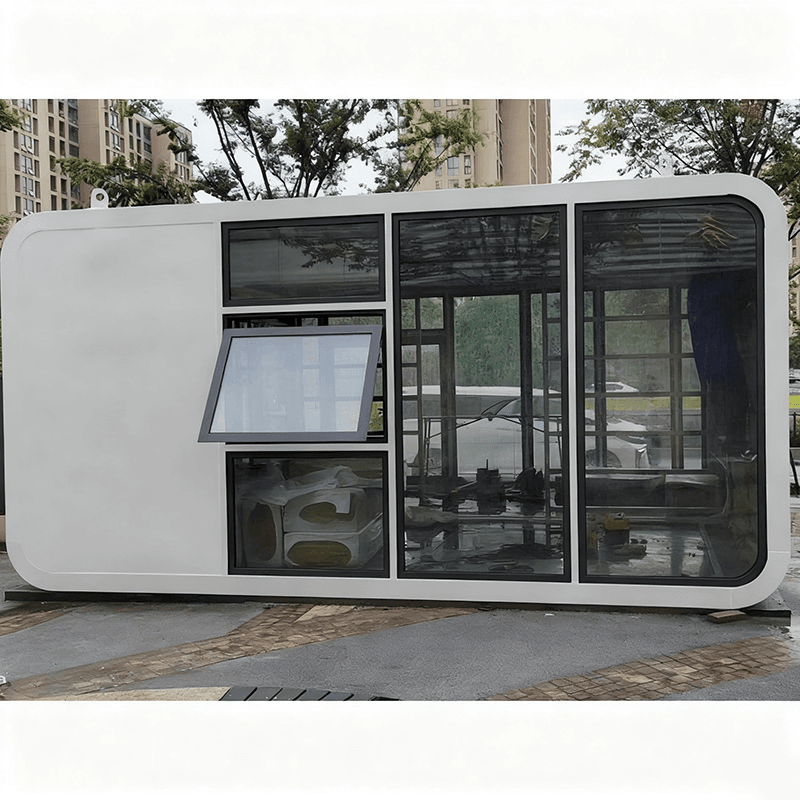
Material Innovation: Traditional dry toilets often use wood, which is prone to absorbing odors and has poor durability. Modern mobile dry toilets employ high-strength, corrosion-resistant, and airtight materials such as fiberglass, polyethylene, and metal carved panels. These materials combine lightness and sturdiness, making transportation and installation more convenient while effectively isolating odors and improving user comfort.
Treatment Technology Upgrades: Breaking through the limitations of 'pollution transfer', a diversified treatment system has been formed. Traditional flush toilets, water-saving models, and recirculating flush toilets meet different scenario requirements. Among them, the water-saving ecological technology separates toilet flushing water from handwashing water, mixes it with a special agent for treatment, and then recirculates it, achieving a water consumption of only 0.46 liters per person while balancing water conservation and cost-effectiveness. Waterless treatment technology is suitable for areas without a pipeline network, achieving on-site treatment of pollutants through biodegradation or physical separation.
Design Concept Optimization: An integrated design approach is adopted, integrating functional systems such as water and electricity, sewage disposal, and building structures into prefabricated modules. These modules are standardized in factory production and then quickly assembled on-site. This model replaces the traditional method of on-site construction piece by piece, shortening the construction period by more than 50% while improving space utilization and adapting to emergency scenarios such as temporary events and disaster relief.
Intelligent Management: Real-time monitoring of equipment operation data is achieved through IoT technology. Occupancy sensors display toilet stall status, environmental sensors automatically regulate the ventilation system, and equipment operation sensors track water and electricity consumption as well as sewage treatment progress. After the data is uploaded to the management platform, maintenance personnel can remotely monitor multiple devices, provide early warnings of faults or material shortages, and implement preventive maintenance, reducing operation and maintenance costs by more than 30%.
User Experience Enhancement: Based on ergonomic design, barrier-free access, wheelchair turning space, baby care stations, child safety seats, and emergency call buttons are added to meet the needs of special groups such as disabled individuals and families with young children. The internal space layout is optimized to ensure that users can efficiently complete hygiene behaviors in a limited space, reflecting the humanistic care of public facilities.



