
Mobile Container House with Wheels
A mobile container house with wheels is a temporary or permanent building form that combines container structure with a mobile wheel system, facilitating easy transportation and flexible layout. The following is a popular science introduction covering its structural features, application scenarios, advantages, and examples:
Structural Features
Mobile container houses with wheels typically use standard containers as the base, achieving mobility by adding wheeled chassis or detachable casters. The wheel system often employs heavy-duty polyurethane wheel cores with thickened cast iron wheel frames, offering wear resistance, compression resistance, and quiet operation, adaptable to various ground surfaces such as cement floors and epoxy floors. Some designs are equipped with universal steering and brake locking mechanisms, supporting原地转向 (in-place steering), precise positioning, and stable parking, addressing mobility challenges in confined spaces. Additionally, the main body of the house retains the steel structure frame of the container, ensuring strength and safety, while enhancing living comfort through materials like color-steel sandwich panels and soundproof and thermal insulation fillers.
Application Scenarios
These houses are widely used in scenarios requiring temporary or mobile solutions:
- Construction Sites: Serving as offices, dormitories, or warehouses, they can be quickly relocated with the progress of the project.
- Commercial Rentals: Such as mobile shops, coffee bars, and pop-up stores, supporting short-term operations and flexible site changes.
- Emergency Rescue: For post-disaster temporary shelter, medical clinics, etc., enabling rapid deployment and reusability.
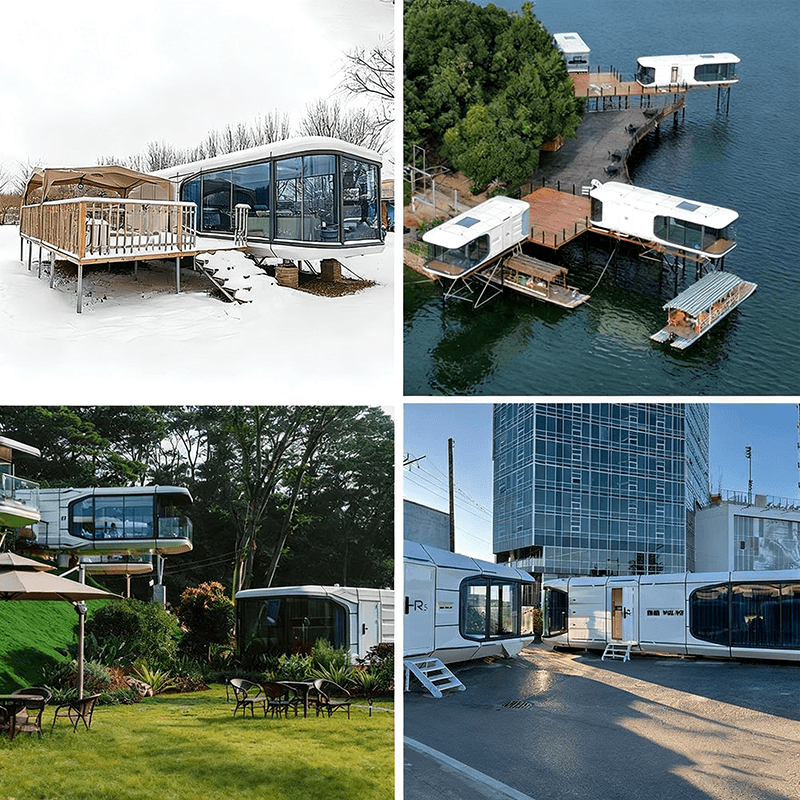
- Tourism and Residence: Vacation homes, mini apartments, space capsules, etc., meeting personalized living needs.
Core Advantages
- Mobility Convenience: The wheeled design breaks free from the fixed nature of traditional containers, allowing short-distance movement without the need for large lifting equipment, reducing transportation and deployment costs.
- Structural Reliability: Inheriting the welded steel structure frame of containers, it offers impact resistance, corrosion resistance, and a service life of 15-20 years.
- Functional Diversity: Internally configurable with air conditioning, beds, lighting, and other facilities, supporting personalized designs such as window and door position adjustments and partition settings.
- Environmental and Economic Efficiency: Materials are recyclable, reducing construction waste, and the overall usage cost is lower than that of traditional buildings.
Typical Examples
- Factory Empty Container Movement: By installing dedicated casters, containers can be efficiently repositioned within production workshops and storage yards, addressing the pain point of large machinery being unable to enter confined spaces.
- Rental Market Products: Such as 20-foot mobile container houses equipped with bathrooms and kitchens, supporting rentals for temporary residence or commercial use.
- High-end Custom Designs: Such as expandable mobile container houses, meeting different spatial needs through modular combinations, suitable for luxury villas or small apartment scenarios.



