
Mobile Container House Foundation
The foundation requirements for mobile container houses vary depending on the type, with some types having relatively low foundation requirements and only needing a flat ground for use. Here is a detailed analysis:
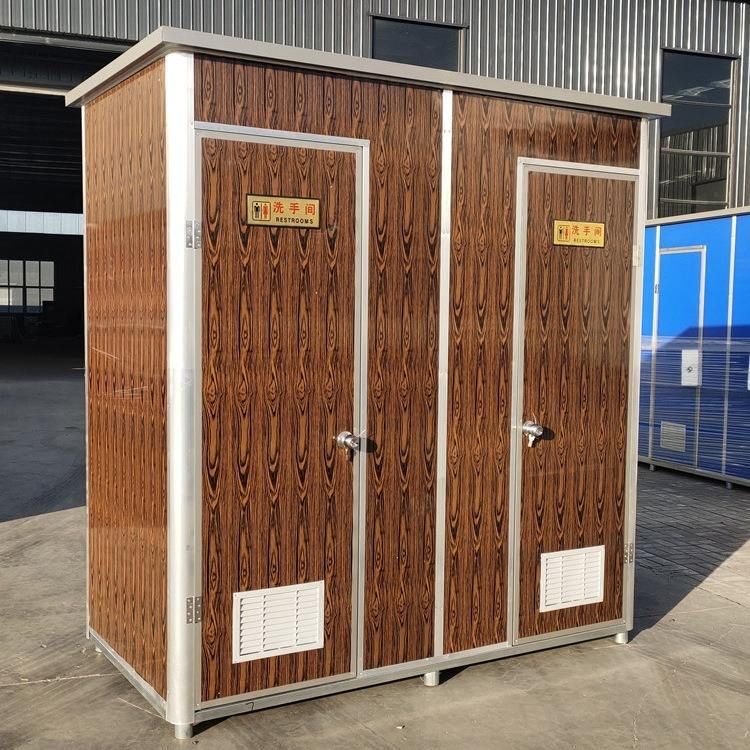
I. Types of container houses with low foundation requirements
Foldable container houses and fixed residential container houses
These types of houses have the lowest foundation requirements. They can be directly placed for use after simply leveling the ground. If conditions permit, pouring a cement floor and setting up drainage ditches can enhance living comfort. Their structural features include lightweight design and uniform weight distribution, which impose low requirements on ground bearing capacity and are suitable for rapid deployment scenarios.Packing-box container houses
The foundation requirements are simple and flexible. Strip foundations, pier foundations, or even no dedicated foundation can be used, and they can be directly placed on the ground. Their modular design connects to the ground through corner fittings, reducing dependence on the foundation and making them suitable for temporary sites with good geological conditions.
II. Types of houses with higher foundation requirements
Residential prefabricated temporary buildings
A certain area of concrete foundation needs to be poured, and the house is fixed to the foundation with expansion screws. These houses have a large self-weight and high wind resistance requirements, and the concrete foundation can provide stable support. The foundation cannot be reused during demolition, increasing usage costs.Expandable and customized container houses
Expandable houses add lateral or end expansion modules on the basis of containers, increasing the usable area by 30%-50% after expansion. They require a more stable foundation to support structural deformation. Customized houses, if using glass curtain walls, heavy decorative materials, or irregular structures, have higher requirements for foundation flatness and bearing capacity and require professional design and construction.
III. Core principles for foundation selection
- Geological conditions: Soft soil foundations need to be compacted or replaced to avoid settlement risks.
- Usage scenarios: For long-term on-site office work, it is recommended to use concrete foundations, while for short-term temporary use, simplification is possible.
- House type: Select an appropriate foundation form according to the expandability, self-weight, and wind resistance level of the container house.
- Cost-effectiveness: Under the premise of meeting safety requirements, prioritize reusable foundation solutions to reduce overall costs.



