
Mobile Container House
A mobile container house is a habitable or office building transformed from a basic container structure module, featuring mobility, rapid assembly, safety, and durability. It is widely used in temporary housing, creative spaces, and other fields.
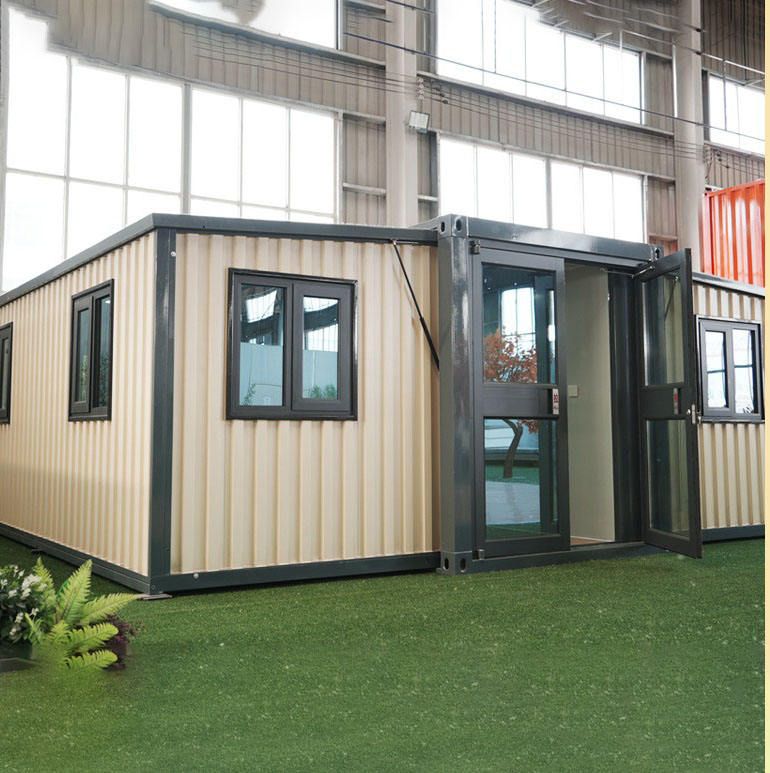
I. Basic Definition and Characteristics A mobile container house, also known as a container home or residential container, is a building form created by structurally modifying and functionally optimizing standard containers. Its core characteristics include:
- Mobility and Rapid Assembly: During transportation, its volume can be compressed to less than 50% of its original size. It can be quickly erected without a foundation and has a short manufacturing period, making it suitable for emergency scenarios.
- Safety and Durability: The main structure is made of steel frames, providing wind, earthquake, and corrosion resistance. The steel plate exterior is acid-resistant, rust-free, and crack-resistant, with a designed service life exceeding 20 years.
- Functional Optimization: The thermal break design enhances sound insulation and heat insulation performance. The modular layout reduces shipping costs for a single unit by nearly 40% and supports stacking up to three layers (primarily double-layered in daily use), accommodating various specification requirements.
II. Application Scenarios
- Temporary Housing: Commonly used for workers' dormitories on construction sites and post-disaster emergency shelters. For example, the 2026 Nagoya Asian Games in Japan used container homes to build the Athletes' Village, and Shanting District, Zaozhuang City, Shandong Province, China, utilized them to create a characteristic homestay scenic area.
- Creative Spaces: Innovative commercial applications include 24-hour self-service fitness pods and mobile cafes, meeting flexible business needs.
- Emergency Facilities: In the medical field, container homes are used for rapid deployment in temporary hospitals and testing sites, such as the transformation of Fangcang hospitals during the pandemic.
III. Advantages and Limitations
- Advantages:
- Low Cost: The construction cost is lower than that of traditional buildings, offering high quality at a reasonable price.
- Aesthetic Flexibility: The exterior comes in a variety of colors and designs, allowing for personalized customization.
- Environmental Protection and Energy Efficiency: The materials are recyclable, and the energy supply system is continuously optimized (e.g., solar integration).
- Limitations:
- Space Constraints: In cases like the Asian Games, room sizes and bed specifications may not meet all needs.
- Budget Risks: Strict cost control is required for large-scale applications to avoid overspending.
IV. Technological Development Trends Current research focuses on improving thermal insulation performance, developing intelligent management systems (e.g., remote monitoring and environmental regulation), and optimizing energy supply to further expand its potential in permanent buildings and high-end application scenarios.



